Table of Contents
ToggleThat old oak or maple in the front yard is a blessing and a puzzle. It offers shade, character, and curb appeal, but the circle of bare dirt around its trunk? Not so much. Landscaping around trees transforms dead zones into focal points, but it requires understanding root systems, light conditions, and plant compatibility. Done right, a well-designed tree bed adds layers of texture and color without stressing the tree. Done wrong, it can suffocate roots, invite pests, or kill the tree outright. This guide walks through proven strategies for planting, mulching, and building around mature trees without the common pitfalls.
Key Takeaways
- Front yard landscaping around trees requires understanding root systems that extend two to three times wider than the canopy, with most feeder roots in the top 12–18 inches of soil.
- Apply 2 to 4 inches of organic mulch while keeping it 3 to 6 inches away from the trunk to prevent disease, rot, and pest infestations.
- Choose shade-tolerant groundcovers like hostas, pachysandra, and wild ginger that thrive under tree canopies without competing for water or stressing shallow roots.
- Avoid mulch volcanoes, landscape fabric, water-hungry annuals, and grade changes near mature trees, as these common mistakes can suffocate roots and trigger decline.
- Use tree wells or retaining structures if raised beds are necessary, never adding more than 2 inches of soil over existing roots to maintain oxygen exchange.
- Install clean edging with mower-friendly placement and layer spring ephemerals with established perennials to add seasonal interest without overwhelming the root zone.
Why Landscaping Around Trees Matters for Your Front Yard
A bare circle of compacted soil under a tree trunk signals neglect, not low maintenance. Exposed roots collect runoff, erode during storms, and become tripping hazards. Meanwhile, turf grass struggling in deep shade wastes water and mowing time.
Proper tree landscaping serves multiple functions. Mulch or groundcover moderates soil temperature, retains moisture, and suppresses weeds, all of which benefit the tree’s root zone. Strategic planting adds seasonal interest: spring bulbs, summer perennials, fall foliage. A well-defined bed also protects bark from mower strikes and string trimmer damage, two leading causes of tree decline in residential settings.
From a design standpoint, landscaped tree beds create visual anchors. They guide the eye, break up lawn monotony, and frame entryways. A mature tree with an under-planted ring looks intentional: the same tree ringed by patchy grass looks forgotten. Curb appeal matters for resale value, but the real payoff is a front yard that works with the tree, not against it.
Understanding Tree Root Systems Before You Start
Tree roots spread two to three times wider than the canopy, not just directly beneath it. The critical root zone (CRZ) extends outward from the trunk roughly one foot per inch of trunk diameter measured at chest height. For a tree with a 20-inch diameter, that’s a 20-foot radius of roots you need to respect.
Most feeder roots sit in the top 12 to 18 inches of soil. They’re fibrous, shallow, and responsible for water and nutrient uptake. Severing them with a spade or rototiller stresses the tree and opens pathways for disease. Large structural roots anchor the tree but don’t absorb much, cutting these can cause instability.
Before digging, scrape away loose soil by hand to expose root locations. If you encounter a root thicker than a pencil, work around it. Never remove more than 20 percent of a tree’s root mass in a single season. For planting beds, aim for pockets between roots rather than a continuous trench. Hand tools, trowels, dibbers, and soil knives, cause less collateral damage than power equipment.
Consider the tree species. Shallow-rooted varieties like maples, willows, and birches have dense surface networks that limit planting options. Deep-rooted oaks and hickories offer more flexibility, though their root flares still demand caution. When in doubt, consult an ISA-certified arborist before altering grade or excavating near valuable specimens.
Best Plants and Groundcovers for Under Tree Canopies
Planting under trees means working with dry shade, root competition, and fluctuating moisture. Not every perennial or shrub tolerates those conditions. Choose species adapted to low light and establish them during spring or early fall when rainfall supports root development.
Shade-tolerant groundcovers perform well and spread to cover bare soil:
- Pachysandra (Pachysandra terminalis): Evergreen, spreads via rhizomes, thrives in dense shade. Space 6 to 8 inches apart.
- Hostas: Dozens of cultivars in varying sizes and leaf colors. Prefer consistent moisture: mulch well.
- Wild ginger (Asarum canadense): Native groundcover with heart-shaped leaves. Excellent for dry shade under oaks.
- Liriope (lilyturf): Clumping or spreading varieties. Tolerates drought once established. Purple flower spikes in late summer.
- Vinca minor (periwinkle): Aggressive spreader: use where containment isn’t critical. Blue flowers in spring.
For seasonal interest, layer in spring ephemerals that bloom before the canopy leafs out: Virginia bluebells, trillium, bleeding heart, and woodland phlox. These go dormant by summer, so they don’t compete during the tree’s active growing season.
Avoid plants requiring full sun or frequent watering. Impatiens and begonias need regular irrigation that can promote shallow rooting in trees. Also skip invasive species like English ivy (Hedera helix), which climbs trunks and harbors pests. Designing shade garden layers with varying textures creates depth without overcrowding the root zone.
Creative Mulch and Edging Ideas for Tree Beds
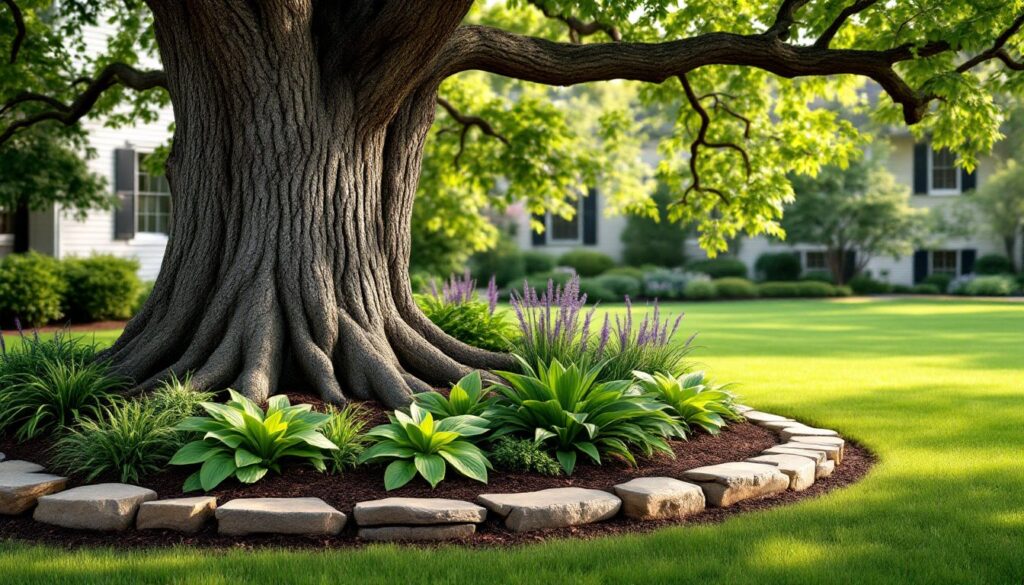
Mulch does more than look tidy, it moderates soil temperature, retains moisture, and adds organic matter as it decomposes. Apply 2 to 4 inches of mulch over the tree’s root zone, tapering to 1 inch near the trunk. Never pile mulch against the bark (the dreaded “mulch volcano”): this traps moisture, encourages rot, and invites rodents and insects.
Organic mulch options include:
- Shredded hardwood bark: Decomposes slowly, knits together to resist washout. Dark brown color.
- Pine bark nuggets: Larger chunks last longer, ideal for sloped beds. Lighter color than hardwood.
- Leaf mold or compost: Excellent soil amendment but breaks down quickly. Replenish twice per season.
- Pine straw: Common in the South. Acidic, so pair with acid-loving plants. Easier to spread than bark.
Avoid dyed mulch if the tree will fruit or if runoff enters waterways. Rubber mulch doesn’t decompose and can leach chemicals, skip it near edibles.
Edging defines the bed and prevents grass creep. Options range from budget to statement:
- Steel or aluminum edging: Clean lines, long-lasting, nearly invisible when installed flush. Bends to follow curves.
- Natural stone: Fieldstone or flagstone laid dry (no mortar) looks organic. Labor-intensive but permanent.
- Brick soldiers: Classic look. Set in sand or mortar depending on soil stability.
- Plastic or composite edging: Affordable, flexible. Less durable: UV exposure causes brittleness over time.
For a no-edge approach, cut a clean trench with a half-moon edger and maintain it seasonally. Whichever material you choose, position the edging so mower wheels stay on the lawn, this protects both the bed and the tree. Combining stone edging elements with organic mulch creates a polished contrast that highlights the tree’s form.
Building Raised Beds and Borders Around Mature Trees
Raising grade around a tree requires caution. Adding more than 2 inches of soil over existing roots can suffocate them by reducing oxygen exchange. If the landscape plan demands raised beds, use a tree well or retaining structure that keeps fill soil away from the trunk and root flare.
Tree well construction:
- Mark the tree’s drip line and critical root zone.
- Build a low retaining wall 3 to 6 feet from the trunk using stone, block, or treated lumber (avoid creosote-treated wood near roots).
- Backfill the outer ring with amended soil, leaving the inner circle at original grade.
- Install perforated drainage tile if the site holds water, sloping it away from the tree.
Retaining walls taller than 24 inches may require engineered footings and drainage, depending on local codes. Even low walls benefit from a gravel base for stability.
Alternatives to raising grade:
- Planter rings or half-barrels placed around the tree, not over roots. Fill with shade annuals or perennials.
- Decorative boulders nestled between surface roots. They add structure without soil disturbance.
- Stepable groundcovers like creeping thyme or mazus planted in existing pockets. No grade change required.
If the tree sits on a slope, consider terracing the bed with stacked stone or timber. This controls erosion and creates planting pockets at different elevations. For complex sites, steep grades, large trees, poor drainage, consult a landscape architect or arborist. Mistakes with raised landscape features can shorten a tree’s lifespan by decades.
Common Mistakes to Avoid When Landscaping Around Trees
Even experienced DIYers trip up when working near mature trees. Here’s what to skip:
Piling soil or mulch against the trunk. The “mulch volcano” is everywhere, and it’s wrong. Bark needs air circulation. Moist mulch in contact with bark invites fungal cankers, insect borers, and root rot. Keep mulch 3 to 6 inches away from the trunk flare.
Cutting major roots without assessment. If a root is thicker than your wrist, removing it can destabilize the tree or trigger decline. Mark any large roots before digging. When roots must be pruned, make clean cuts with a sharp saw or loppers, ragged tears invite disease.
Installing landscape fabric or plastic under mulch. It blocks water, air, and organic matter from reaching roots. Weed barrier also traps moisture against the trunk. Use mulch alone: replenish annually to maintain depth.
Planting water-hungry annuals. Impatiens, petunias, and other thirsty bedding plants demand irrigation that encourages shallow tree rooting. Shallow roots are vulnerable to drought, mower damage, and frost heave. Stick with drought-tolerant perennials once established.
Ignoring the tree’s health. Landscaping can’t fix a dying tree. Look for warning signs: canopy dieback, peeling bark, mushrooms at the base, or cracks in the trunk. Address these with a certified arborist before investing in plantings.
Trenching through the root zone for irrigation or lighting. Directional boring is less damaging than open trenches. If you’re adding low-voltage landscape lighting or drip irrigation, route lines around the dripline, not through it.
Over-fertilizing. Mature trees in maintained landscapes rarely need supplemental nitrogen. Excess fertilizer can burn feeder roots and leach into groundwater. If growth seems poor, test soil pH and nutrient levels before applying amendments. Integrating these front yard strategies with tree-safe practices ensures long-term success.
Conclusion
Landscaping around front yard trees turns underutilized space into a design asset, when approached with respect for root systems and species needs. Choosing shade-adapted plants, applying mulch correctly, and avoiding grade changes near the trunk protects tree health while elevating curb appeal. The result? A front yard where mature trees and understory plantings thrive together, adding layers of interest from spring ephemerals through fall color. Take time to understand the tree’s biology, and the landscape will take care of itself.