Table of Contents
ToggleAgave plants bring architectural drama to a front yard without the constant maintenance of thirsty lawns or finicky annuals. These sculptural succulents thrive in heat, tolerate neglect, and look sharp year-round, making them ideal for homeowners who want curb appeal that doesn’t demand weekend watering sessions. Whether working with a compact bungalow lot or a sprawling ranch-style property, agave landscaping delivers bold visual impact while cutting water bills and upkeep time. This guide covers variety selection, layout planning, planting techniques, and design strategies to create a front yard that stops traffic for all the right reasons.
Key Takeaways
- Front yard agave landscaping eliminates the need for constant watering and maintenance while delivering bold architectural appeal through their sculptural forms and year-round visual impact.
- Select agave varieties based on climate zone compatibility and mature size—cold-hardy Agave parryi works for zone 5, while Agave americana demands 8-foot clearance and suits larger properties.
- Proper drainage is critical; test soil with a 12-inch water-filled hole and amend heavy clay by mixing with coarse sand or creating a raised berm to prevent crown rot.
- Pair agaves with inorganic mulches like crushed granite and low-water companion plants such as red yucca or Mexican feather grass to enhance design cohesion without compromising drainage.
- Avoid common failures by maintaining 4-foot clearance from walkways due to sharp leaf tips, preventing overwatering (the primary agave killer), and researching mature dimensions before planting to avoid costly removal.
- Plan agave placement as permanent since established specimens resent transplanting, and account for their monocarpic lifecycle by staggering plant ages or mixing varieties to maintain long-term visual interest.
Why Agave Plants Are Perfect for Front Yard Landscaping
Agave plants excel in front yard applications because they combine extreme drought tolerance with low maintenance requirements. Once established (typically 6-12 months), most varieties need watering only during extended dry spells, sometimes as infrequently as once per month in temperate climates. This makes them practical for water-restricted areas or homeowners who travel frequently.
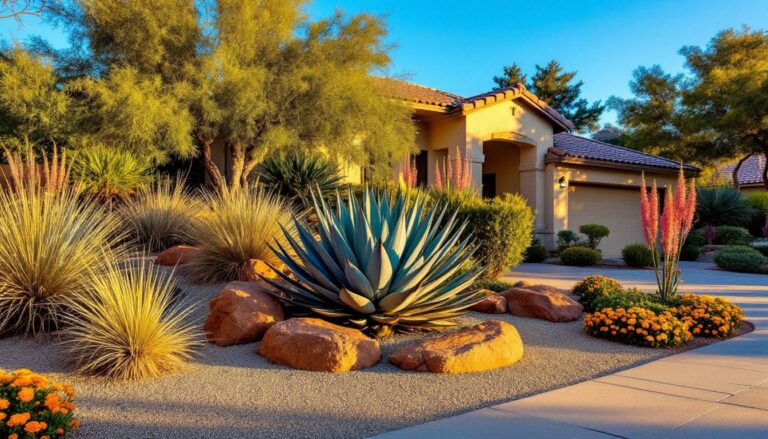
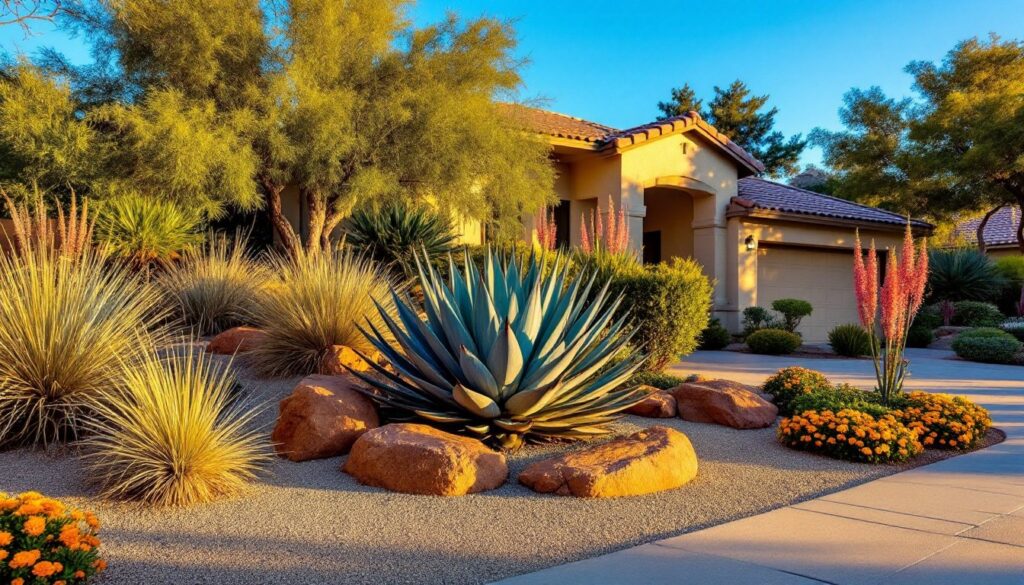
Their architectural form creates instant focal points. Unlike sprawling groundcovers or generic shrubs, agaves offer sharp geometric silhouettes, rosettes of thick, pointed leaves ranging from compact 12-inch clusters to massive 6-foot specimens. This structural quality works particularly well in modern, Mediterranean, or Southwest design schemes where strategic planting choices define the overall aesthetic.
From a practical standpoint, agaves don’t require mowing, seasonal replanting, or fertilization schedules. They’re pest-resistant (deer and rabbits avoid them due to sharp leaf tips and bitter sap) and tolerate poor soil better than most ornamentals. Most varieties handle USDA zones 8-11 without protection, though some cold-hardy species survive zone 5 winters with proper siting. Always verify zone compatibility before purchasing, garden centers sometimes stock varieties unsuited to local frost patterns.
Best Agave Varieties for Front Yard Designs
Choosing the right agave depends on mature size, color, and climate tolerance. Here are proven performers for residential front yards:
Agave parryi (Parry’s Agave): Compact rosettes reaching 18-24 inches wide with blue-gray leaves and dark terminal spines. Cold-hardy to zone 5, making it suitable for transitional climates. Works well in groupings or as container specimens near entryways.
Agave attenuata (Foxtail Agave): Spineless variety with soft, pale green leaves forming graceful 4-foot rosettes. Ideal for high-traffic areas where children or pets are present. Tolerates partial shade but prefers zones 9-11 with no hard frost.
Agave americana (Century Plant): The classic statement piece, growing 6 feet tall and equally wide with blue-green or variegated leaves. Requires significant space, minimum 8-foot diameter clearance, and can lift pavers or sidewalks if planted too close to hardscaping. Best for larger properties.
Agave victoriae-reginae (Queen Victoria Agave): Slow-growing, compact variety (12-18 inches) with dark green leaves edged in crisp white lines. Premium specimen plant for desert-style garden designs where detail matters more than scale.
Agave geminiflora (Twin-Flowered Agave): Narrow, flexible leaves create a softer texture than stiff-leaved varieties. Grows 2-3 feet wide: works well in contemporary designs or mixed borders.
Avoid impulse purchases at big-box stores without checking mature dimensions. A cute 6-inch pot can become a sidewalk-cracking monster in five years if it’s the wrong species.
Planning Your Agave Front Yard Layout
Start by mapping existing features, walkways, utility boxes, irrigation lines, and property lines. Agaves develop extensive shallow root systems (typically 6-12 inches deep but spreading 2-3 times the canopy width), so avoid planting within 3 feet of underground utilities or septic lines.
Spacing guidelines: Allow 1.5 times the mature width between plants. A 4-foot-wide agave needs 6 feet of clearance from its neighbor. Closer spacing creates a crowded look within three years and forces premature removal.
Sightline considerations: Place taller varieties (3+ feet) at least 8 feet from driveways or corners where they might obstruct vehicle visibility. Many municipalities enforce setback requirements for plantings near intersections, check local codes before digging.
For xeriscaping and hardscape integration, combine agaves with decomposed granite pathways, crushed rock mulch, or flagstone accents. Avoid organic mulches like wood chips, which retain moisture against the crown and encourage rot.
Soil Preparation and Drainage Requirements
Agaves tolerate poor soil but absolutely require fast drainage. Standing water around the crown (where leaves meet roots) causes fungal rot, the primary killer of landscape agaves.
Test drainage by digging a 12-inch-deep hole and filling it with water. If water remains after 4 hours, amend the site or choose a different location. For heavy clay soils:
- Excavate planting area to 18 inches deep and 3 feet wide.
- Mix native soil 50/50 with coarse sand or crushed granite (not beach sand, which is too fine).
- Create a raised planting berm 6-8 inches above grade to ensure water sheds away from the crown.
- Slope the berm sides at a 3:1 ratio (3 horizontal inches per 1 vertical inch) for stability.
Avoid adding compost or topsoil to agave planting zones, organic matter retains moisture and breaks down into dense layers that impede drainage. If existing soil drains well (sandy or rocky), plant directly without amendment.
Design Ideas: Combining Agave with Other Landscaping Elements
Agaves shine when paired with complementary textures and colors. Here are field-tested combinations:
Rock mulch and boulders: Use 1-2 inch crushed granite or decomposed granite (DG) as groundcover around agaves. The neutral tones highlight plant architecture without competing visually. Add accent boulders (12-24 inches) in odd-numbered groupings for visual weight. Position boulders partially buried (1/3 underground) rather than sitting on the surface, this looks more natural and prevents shifting.
Companion plants: Pair agaves with low-water perennials that offer contrasting forms:
- Red yucca (Hesperaloe parviflora): Arching grass-like leaves with coral flower spikes
- Mexican feather grass (Nassella tenuissima): Soft, billowing texture that softens agave’s rigid geometry
- Autumn sage (Salvia greggii): Seasonal color in red, pink, or white without high water needs
- Desert marigold (Baileya multiradiata): Bright yellow blooms on silver foliage
Lighting: Install 3-watt LED uplights at the base of mature agaves to cast dramatic shadows on walls or fences after dark. Use warm white (2700-3000K) bulbs to avoid a harsh, commercial look. Position fixtures 12-18 inches from the plant base and angle 45 degrees upward.
Hardscaping: Use agaves to soften angular hardscape elements. Plant them in gaps of flagstone patios, between retaining wall tiers, or along the edges of concrete walkways. Their roots won’t lift properly installed pavers (with compacted base and edge restraint), and they thrive in the reflected heat from stone and masonry materials.
For color variation, mix blue-gray varieties (like Agave parryi) with chartreuse or variegated forms (Agave americana ‘Variegata’). Limit the palette to 2-3 foliage colors to maintain cohesion rather than creating a collector’s garden look.
Planting and Care Tips for Front Yard Agaves
When to plant: Fall or early spring allows root establishment before temperature extremes. Avoid planting during summer heat (above 95°F) or winter cold snaps (below 40°F).
Step-by-step planting:
- Dig the hole: Make it 2 inches shallower than the nursery pot depth and twice as wide. Agaves should sit slightly high (root crown 1-2 inches above grade) to prevent moisture accumulation.
- Remove the pot carefully: Agaves have brittle roots. Tip the container sideways and slide the plant out rather than pulling by the leaves. Wear leather gloves, most varieties have needle-sharp leaf tips and serrated edges.
- Position and backfill: Place the plant in the hole without disturbing the root ball. Fill around sides with native soil (or amended mix if drainage required it), tamping gently to eliminate air pockets. Don’t mound soil against the stem.
- Water deeply once: Saturate the planting zone to settle soil. Then leave it alone for 7-10 days, overwatering new agaves is more dangerous than underwatering.
Ongoing care:
- Watering: After establishment, water deeply every 2-4 weeks during active growth (spring/summer) and monthly or less in fall/winter. When in doubt, wait another week, agaves signal water stress by slightly curling leaves inward.
- Fertilizing: Generally unnecessary. If growth seems unusually slow, apply a balanced slow-release fertilizer (10-10-10) at half strength in early spring. Excess nitrogen causes weak, floppy growth.
- Pruning: Remove dead lower leaves as needed by cutting cleanly at the base with bypass pruners (not anvil-style, which crush plant tissue). Wear safety goggles when working under spiny varieties.
- Freeze protection: For borderline-hardy species, cover with frost cloth when temperatures drop below their tolerance. Don’t use plastic sheeting, which traps moisture and causes more damage than cold alone.
Consider long-term placement carefully, agaves resent transplanting once established. Moving a mature specimen requires excavating a root ball 2-3 times the canopy width and often results in a year or more of stunted growth. When planning layouts for comprehensive landscaping projects, treat agave locations as permanent.
Common Mistakes to Avoid with Agave Landscaping
Planting too close to walkways or entries: Agave leaf tips are rigid and sharp enough to puncture skin or clothing. Maintain a minimum 4-foot clearance from high-traffic areas or choose spineless varieties like Agave attenuata for these zones. Some municipalities classify spiny agaves near sidewalks as hazards, verify local landscaping ordinances before planting street-facing beds.
Ignoring mature size: That gallon-pot agave can reach 6 feet wide in five years if it’s Agave americana. Research mature dimensions and plan accordingly. Undersizing is the #1 reason for premature removal and wasted investment.
Overwatering: More agaves die from too much water than too little. Symptoms include soft, discolored leaves at the crown and a foul odor from rotting tissue. If rot develops, the plant is usually unsalvageable, remove it promptly to prevent fungal spread to neighbors. When designing irrigation systems, create separate zones for agaves and other low-water plants, distinct from lawn or higher-water-use areas.
Using the wrong mulch: Organic mulches (bark, wood chips, compost) hold moisture against agave crowns and break down into drainage-blocking layers. Stick with inorganic options: crushed granite, pea gravel (3/8 inch), lava rock, or decorative landscape stones. Apply 2-3 inches deep, keeping mulch 2-3 inches away from the plant crown.
Planting in heavy shade: While some agaves tolerate partial shade, most need at least 6 hours of direct sun for compact growth and good color. Shade-grown specimens become leggy (elongated leaves with wide spacing) and lose their architectural form. If the front yard has limited sun due to mature trees or building orientation, consider shade-tolerant alternatives like Agave attenuata or switch to different succulents entirely.
Neglecting pup management: Many agaves produce offsets (pups) around the base. Left unchecked, these create crowded clumps that lose visual impact. Remove pups when they’re 3-6 inches wide by severing the connecting root with a clean, sharp soil knife or old kitchen knife (dedicated to garden use). Allow cut surfaces to dry for 24 hours before replanting pups elsewhere or gifting them to neighbors. Some varieties, like Agave attenuata, rarely produce pups and maintain a single-stem form.
Ignoring bloom implications: Most agaves are monocarpic, they die after flowering, typically after 10-25 years. The plant produces a dramatic flower stalk (some reaching 20+ feet tall), blooms for several weeks, then the main rosette dies. Pups usually develop before bloom, ensuring continuation. Factor this lifecycle into long-term landscape plans, especially if using a single large specimen as a focal point. When planning multi-season designs with resources from home improvement retailers, consider staggering plant ages or mixing agave varieties with different maturation timelines to avoid simultaneous die-offs.