Table of Contents
ToggleA plain fence dividing a backyard from the neighbor’s property doesn’t have to stay that way. The strip of ground running alongside fencing, often neglected or reduced to a mow-and-forget zone, holds serious potential for turning a utilitarian boundary into a layered, functional, and attractive landscape feature. Whether the goal is added privacy, seasonal color, wildlife habitat, or simply softening a stark wood or vinyl barrier, strategic planting and hardscape choices can completely change how a yard feels. This guide walks through practical, proven approaches for transforming fence lines into hardworking, good-looking parts of the landscape.
Key Takeaways
- Backyard fence line landscaping transforms bare, utilitarian boundaries into attractive landscape features that increase property value, reduce heat reflection, and create usable garden space.
- Use a layered planting approach with tall shrubs or grasses in back (5–7 feet), mid-height perennials in the middle, and compact groundcovers in front to create visual depth and draw the eye along the fence.
- Evergreen shrubs like arborvitae and Leyland cypress provide fast privacy screening, extending vertical coverage beyond a standard 6-foot fence without permitting hassles when planted on 3–4-foot centers.
- Low-maintenance perennial groundcovers such as creeping phlox, sedum, and liriope thrive in specific conditions—shade-tolerant or sun-loving—while suppressing weeds and eliminating the need for constant mowing.
- Vertical elements like clematis vines, climbing roses, and espaliers maximize planting area without consuming yard space; allow a 6-inch gap between vines and wood fences to prevent moisture damage and rot.
- Integrate hardscaping features such as raised beds, dry creek beds, and gravel mulch to improve drainage, reduce turf area, and add structure alongside plantings for a complete, low-maintenance fence line design.
Why Fence Line Landscaping Matters for Your Backyard
Fences do their job, marking boundaries, keeping pets in, and blocking sightlines, but they often create visual dead zones. A bare fence exposes the full height of the structure, emphasizing its rigidity and drawing attention to any weathering, warping, or mismatched panels.
Planting along the fence line breaks up that monotony. Layered vegetation softens hard edges, adds depth, and creates a transition between the lawn and the boundary. It also solves practical problems: a southern or western fence radiates heat in summer, but a planted buffer with shrubs or vines moderates temperature and reduces glare. Northern exposures, meanwhile, benefit from shade-tolerant groundcovers and evergreens that stay green year-round.
From a property value standpoint, mature, well-planned <a href="https://thecreakingchair.com/home-depot-landscaping-rocks/”>landscaping signals maintenance and care to potential buyers. And from a day-to-day livability perspective, it turns an overlooked strip into usable garden space, whether that’s a pollinator corridor, a cutting garden, or a low-maintenance green screen.
Layered Planting for Depth and Visual Interest
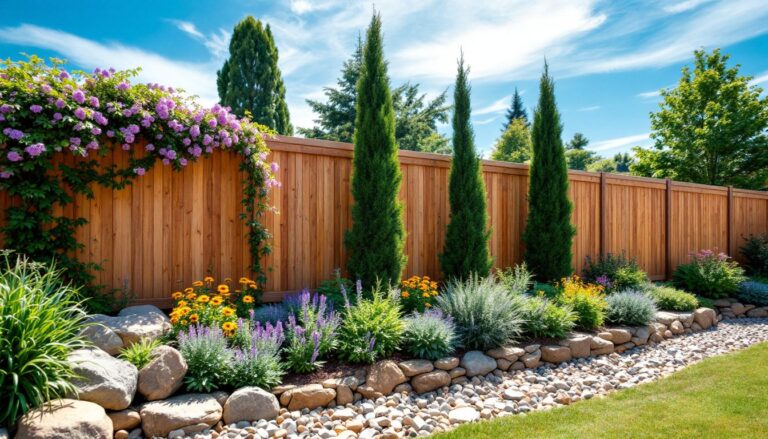
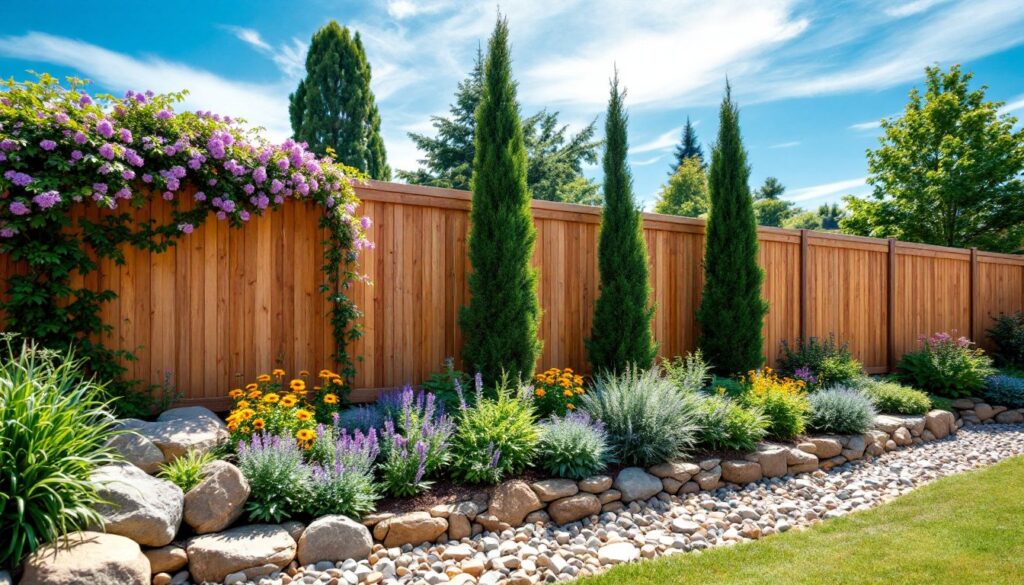
The most effective fence line designs borrow from traditional border planting: tallest plants in back, mid-height specimens in the middle, and low growers or groundcovers up front. This creates a tiered effect that draws the eye along the fence rather than stopping abruptly at a single row of shrubs.
Start with a structural backbone. Tall shrubs or ornamental grasses, like arborvitae, viburnum, or maiden grass, anchor the back row, typically planted 18–24 inches from the fence to allow air circulation and prevent rot on wood panels. For a 4- to 6-foot fence, aim for plants that mature to 5–7 feet: going much taller risks blocking sunlight to foreground plantings.
Mid-layer plants add seasonal interest. Perennials such as black-eyed Susans, Russian sage, or coneflowers bring color and texture from late spring through fall. Space them 12–18 inches apart to allow mature spread without crowding.
Finish with a front edge of compact perennials or sprawling groundcovers like creeping thyme, sedum, or dwarf daylilies. This front row softens the transition to lawn or hardscape and suppresses weeds.
Use odd-numbered groupings (threes, fives, or sevens) of the same species for visual cohesion. A single shrub every few feet looks spotty: clusters read as intentional design. Keep a mix of evergreen and deciduous material to prevent the border from going dormant and bare in winter.
Creating a Living Privacy Screen with Evergreens and Shrubs
A 6-foot fence may meet code, but it doesn’t always block second-story windows or elevated decks. Evergreen shrubs and small trees extend that privacy vertically without the cost or permitting hassle of raising the fence itself.
Arborvitae (Thuja occidentalis) and Leyland cypress are go-to choices for fast, dense growth. Arborvitae ‘Emerald Green’ tops out around 12–15 feet with a narrow 3–4 foot spread, ideal for tight spaces. Plant on 3- to 4-foot centers for a solid screen within three to four years. Leyland cypress grows faster, up to 3 feet per year in favorable conditions, but requires more lateral space (6–8 feet at maturity) and can suffer in poorly drained soil.
For a more textured look, mix in broadleaf evergreens like skip laurel, Portuguese laurel, or holly. These tolerate pruning well and offer seasonal berries or fragrant blooms. Skip laurel (Prunus laurocerasus ‘Schipkaensis’) handles partial shade and stays dense to the ground with occasional shearing.
In warmer zones (USDA 7 and up), bamboo species like clumping bamboo (Fargesia) provide rapid screening without the invasive rhizome spread of running types. Install a root barrier (40-mil HDPE plastic, sunk 24–30 inches) if using any running bamboo: otherwise, it will colonize the neighbor’s yard and your own lawn.
Water new evergreens deeply once a week during the first growing season. Mulch with 2–3 inches of shredded bark to retain moisture and regulate soil temperature, keeping mulch a few inches away from trunks to prevent rot.
Low-Maintenance Ground Cover and Perennial Border Ideas
Not every fence line needs height. For areas where privacy isn’t a concern, or where overhead utility easements, HOA restrictions, or personal preference rule out tall plantings, a low-maintenance perennial border keeps the strip tidy without constant intervention.
Perennial groundcovers are workhorses here. Creeping phlox (Phlox subulata) carpets slopes and flat ground with spring blooms in pink, white, or purple, then stays evergreen through winter. Liriope (lilyturf) tolerates deep shade under trees, spreads slowly via rhizomes, and produces purple flower spikes in late summer: ‘Evergreen Giant’ grows 18 inches tall and works well as a textural filler.
For sunny, dry fence lines, especially common along southern and western exposures, sedum and ice plant (Delosperma) thrive in lean soil with minimal water once established. Both are pollinator magnets and handle reflected heat from vinyl or metal fencing.
If the goal is year-round greenery with zero mowing, consider pachysandra or vinca minor (periwinkle) in shaded areas, though both can become aggressive in favorable conditions. Edge the bed with metal or plastic landscape edging to contain spread.
Combine groundcovers with clumping perennials for vertical interest. Daylilies (Hemerocallis) offer reliable summer blooms, multiply readily, and tolerate neglect. Hostas fill shaded fence lines with bold foliage in dozens of cultivars, from chartreuse to blue-gray. Space hostas 12–24 inches apart depending on mature size: most reach full spread in three to four years.
Apply a pre-emergent herbicide (such as corn gluten meal for organic approaches, or a granular product containing dithiopyr) in early spring to suppress annual weeds. Mulch replenishment every other year keeps beds looking sharp and reduces watering frequency.
Adding Vertical Elements: Trellises, Climbing Vines, and Espaliered Plants
Vertical gardening along a fence maximizes planting area without eating into yard space. Climbing vines and trellises transform a flat barrier into a living tapestry, adding color, texture, and seasonal variety.
Clematis is a top performer for temperate climates. It requires a support structure, wire, lattice, or trellis, but rewards with prolific blooms from late spring through fall depending on variety. Plant clematis with roots in shade and vines in sun: mulch the root zone heavily and provide a simple wire trellis (galvanized steel wire, tensioned between eye screws every 18 inches) for tendrils to grip.
Climbing roses work on wood or vinyl fencing, though they need regular tying to supports since they don’t self-cling. Select disease-resistant cultivars like ‘Zephirine Drouhin’ (thornless, fragrant pink blooms) or ‘New Dawn’ (pale pink, vigorous). Prune after flowering to control size and encourage lateral growth.
For fast, dense coverage with minimal fuss, annual vines like morning glory or hyacinth bean (Lablab purpureus) grow from seed to full cover in a single season. They’re ideal for renters or anyone testing layout before committing to perennials.
Espalier, training fruit trees or ornamental shrubs flat against a fence, adds structure and edible yield. Apples, pears, and figs espalier well: it requires pruning two to three times per growing season to maintain form. Install horizontal wires at 12-inch intervals, anchored to fence posts or masonry, and tie branches as they grow.
Check fence material before planting vines. Wood fences trap moisture behind dense vine growth, accelerating rot: allow a 6-inch gap or use a freestanding trellis set a few inches off the fence surface. Vinyl and metal fencing handle vine load better but may heat up in sun, stressing tender growth.
Incorporating Hardscaping and Decorative Features Along Your Fence
Plants alone don’t have to carry the design. Hardscaping elements, stone, gravel, pavers, and raised beds, add structure, improve drainage, and reduce maintenance by shrinking turf area.
A dry creek bed running parallel to the fence handles runoff and doubles as a design feature. Use ¾-inch to 2-inch river rock for the streambed, edged with larger 6- to 12-inch boulders for a naturalistic look. Dry creeks work especially well in swales or along fence lines that collect water after rain: they prevent erosion while adding visual interest. Homeowners looking to incorporate stone hardscaping elements can create durable, low-maintenance borders that define planting zones.
Raised beds built along the fence offer better drainage, warmer soil in spring, and easier access for planting and weeding. Construct beds from 2×8 or 2×10 untreated cedar or composite lumber: avoid pressure-treated wood in edible gardens due to chemical leaching concerns. Standard bed height is 10–12 inches: fill with a mix of native soil, compost, and coarse sand for improved tilth.
Gravel mulch (⅜-inch pea gravel or decomposed granite) suits arid or xeriscape designs and never needs replacement like organic mulch. Lay landscape fabric first to suppress weeds: the fabric allows water penetration but blocks light. Gravel works especially well around succulents, ornamental grasses, and Mediterranean plants that prefer sharp drainage.
Add decorative features sparingly: a single large planter, a vertical garden panel, or a run of solar post cap lights on fence posts. Overlighting or cluttering the fence line with tchotchkes detracts from plantings. Incorporating practical hardscape design principles ensures the space remains functional while enhancing curb appeal.
For homeowners managing multiple outdoor improvement projects, coordinating fence line work with broader yard updates prevents redundant labor and soil disturbance.
Conclusion
Transforming a fence line from afterthought to asset doesn’t require a landscape architect or a five-figure budget. It takes a plan, appropriate plant selection for sun and soil conditions, and willingness to prep the ground properly. Start with one section, say, the most visible stretch from the patio, and expand as time and budget allow. The result is a yard that feels larger, more private, and genuinely intentional.