Table of Contents
ToggleA traditional lawn demands constant mowing, watering, fertilizing, and edging, turning weekends into a never-ending maintenance cycle. For homeowners who’d rather spend time enjoying their yard than maintaining it, low maintenance landscaping offers a smarter alternative. By replacing turf-heavy designs with drought-tolerant plants, hardscaping, and strategic ground covers, it’s possible to create a front yard that looks polished year-round without the weekly chore list. This guide walks through seven practical design strategies that cut maintenance time while delivering curb appeal that holds up through every season.
Key Takeaways
- Low maintenance front yard landscaping reduces water consumption by up to 70% through drought-tolerant ground covers, native plants, and efficient irrigation systems.
- Replacing traditional turf with alternatives like clover, creeping thyme, or sedum eliminates 30 to 40 hours of annual lawn care while maintaining curb appeal year-round.
- Hardscaping features such as patios, pathways, and retaining walls permanently reduce mowing areas and create functional outdoor spaces without ongoing upkeep.
- Strategic mulch beds and rock gardens suppress weeds, conserve soil moisture, and provide visual interest with minimal replenishment or maintenance.
- Drip irrigation and smart watering controllers deliver water directly to plant roots, cutting water waste and enabling hands-free irrigation management through timers.
- Native plants and ornamental grasses require only one annual cut-back and naturally resist pests, making them ideal foundational elements for low-maintenance landscape design.
Why Low Maintenance Front Yard Landscaping Is Worth the Investment
Switching to a low maintenance front yard isn’t just about convenience, it’s a strategic investment that pays dividends in time, money, and property value.
Water savings top the list. Traditional turf lawns consume roughly 1 to 1.5 inches of water per week during the growing season. In arid climates, that can translate to thousands of gallons annually. Drought-tolerant alternatives like clover, creeping thyme, or native ground covers need a fraction of that once established.
Reduced chemical inputs follow closely. Lawns typically require multiple applications of fertilizer, herbicides, and pesticides to stay green and weed-free. Low maintenance designs rely on mulch, native plants, and proper soil prep, eliminating the need for routine chemical treatments.
Lower equipment costs add up over time. Homeowners can skip or drastically reduce mower fuel, blade sharpening, trimmer line, and the inevitable repair bills that come with aging equipment.
From a resale perspective, well-executed low maintenance landscaping appeals to buyers looking for turnkey properties. Curb appeal matters, and a thoughtfully designed front yard with perennial plantings, clean hardscaping, and minimal upkeep signals that the home has been cared for without ongoing burden.
Time savings remain the biggest motivator. Most homeowners spend 30 to 40 hours per year on lawn care alone. That time can be reallocated to projects that actually add value, or to simply enjoying the outdoor space instead of maintaining it.
Replace Traditional Grass with Drought-Tolerant Ground Covers
Turf grass isn’t the only option for a green front yard. Ground covers offer texture, color, and coverage with a fraction of the water and mowing.
Clover (Trifolium repens) is a nitrogen-fixer, meaning it enriches the soil naturally. It stays green through dry spells, tolerates foot traffic, and only needs mowing once or twice a season if you want a manicured look. White clover blooms attract pollinators, which some homeowners appreciate and others avoid depending on household needs.
Creeping thyme (Thymus serpyllum) works well in full sun and tolerates light foot traffic. It releases a pleasant scent when walked on and produces small purple or pink flowers in late spring. Thyme requires well-draining soil and minimal water once established.
Sedum varieties (stonecrop) thrive in poor soil and full sun. They’re ideal for areas that receive little irrigation and need zero fertilization. Sedum spreads slowly but steadily, forming a dense mat that chokes out weeds.
For shaded areas, creeping Jenny (Lysimachia nummularia) or pachysandra provide evergreen coverage. Both tolerate dry shade once established, though they spread aggressively, install root barriers if planting near garden beds.
When transitioning from turf to ground cover, remove existing grass by solarizing with clear plastic for 6 to 8 weeks in summer, or use a sod cutter for immediate results. Amend soil with compost, then plant ground cover plugs on 6- to 12-inch centers depending on the species. Mulch between plugs to suppress weeds until the canopy fills in, typically within one to two growing seasons. Many successful ground cover installations rely on proper soil prep and patience during establishment.
Create Structure with Native Plants and Ornamental Grasses
Native plants and ornamental grasses deliver year-round structure without the fertilizer, pesticides, or supplemental watering that non-native species demand.
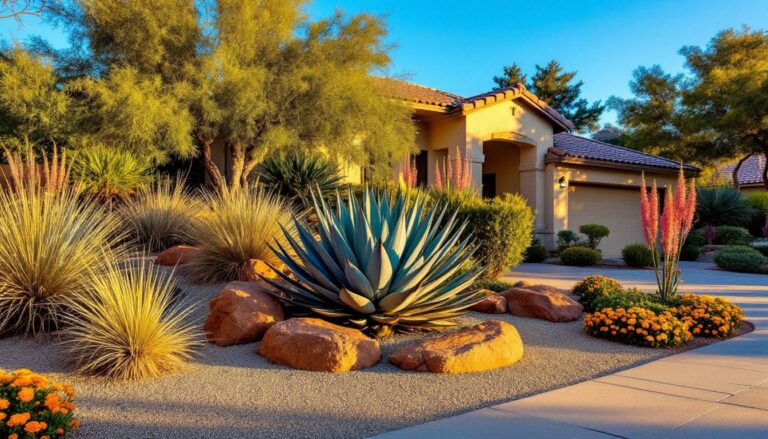
Choose regionally appropriate natives. In the Southwest, consider desert marigold, penstemon, or agave. In the Southeast, try beautyberry, Carolina jessamine, or muhly grass. Pacific Northwest gardeners can rely on salal, Oregon grape, or sword fern. Native plants have evolved alongside local insects, birds, and soil microbes, making them naturally pest-resistant and low-input.
Ornamental grasses add movement and texture with minimal care. Feather reed grass (Calamagrostis x acutiflora) forms upright clumps that stay tidy without staking, thriving in full sun to part shade. Blue fescue (Festuca glauca) offers blue-gray foliage in compact mounds, ideal for edging or mass plantings. Switchgrass (Panicum virgatum) tolerates wet or dry conditions and provides autumn color before fading to golden tan in winter.
These grasses require one annual cut-back in late winter, use hedge shears or a string trimmer to cut foliage to 4 to 6 inches above ground before new growth emerges.
Group plants by water needs. Place drought-tolerant species in zones that receive little to no irrigation, and reserve occasional watering for transitional plantings. This approach, called hydrozoning, reduces waste and ensures each plant gets appropriate moisture.
Spacing matters. Plant shrubs and perennials at mature width to avoid overcrowding. A 3-gallon shrub with a 4-foot mature spread should be planted 4 feet on center. Tight spacing creates maintenance headaches down the line as plants compete for light and air circulation. Homeowners exploring broader yard transformation strategies often integrate native plantings as foundational elements.
Use Hardscaping to Minimize Lawn Area
Hardscaping replaces turf with permanent, zero-maintenance surfaces, patios, walkways, retaining walls, and decorative rock features.
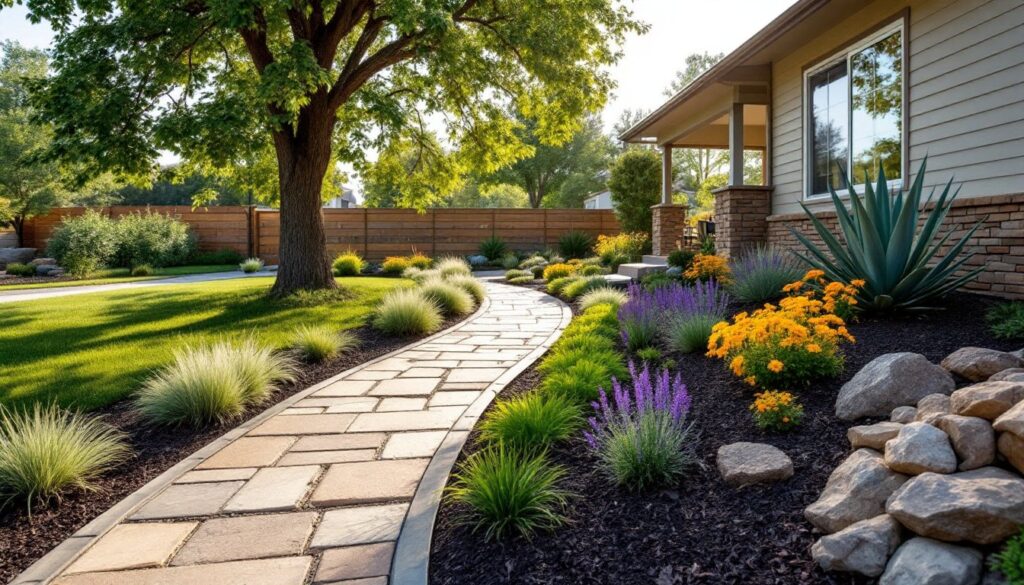
Pathways made from flagstone, pavers, or decomposed granite guide foot traffic and break up large lawn areas. A 3-foot-wide path is comfortable for single-file walking: bump it to 4 to 5 feet for side-by-side strolling. Set pavers on a 4- to 6-inch compacted gravel base topped with 1 inch of sand for stability and drainage. Polymeric sand swept into joints locks pavers in place and resists weed growth.
Patios extend usable outdoor space while eliminating turf. A 12-by-16-foot patio provides room for a small seating area and reduces mowing by roughly 200 square feet. Concrete, natural stone, and porcelain pavers all work: choose based on budget, climate (freeze-thaw cycles affect some materials), and aesthetic.
Retaining walls made from concrete block, natural stone, or timber create terraced planting beds on slopes, reducing erosion and making mowing safer on steep grades. Walls over 3 feet high typically require engineering and permits per local building codes, check with your jurisdiction before starting. Shorter walls (under 3 feet) are usually DIY-friendly with proper footing and drainage considerations.
Gravel courtyards offer a budget-friendly alternative to paving. Use ¾-inch crushed rock over landscape fabric for a stable surface that drains well and suppresses weeds. Edge with steel or aluminum landscape edging to contain the stone.
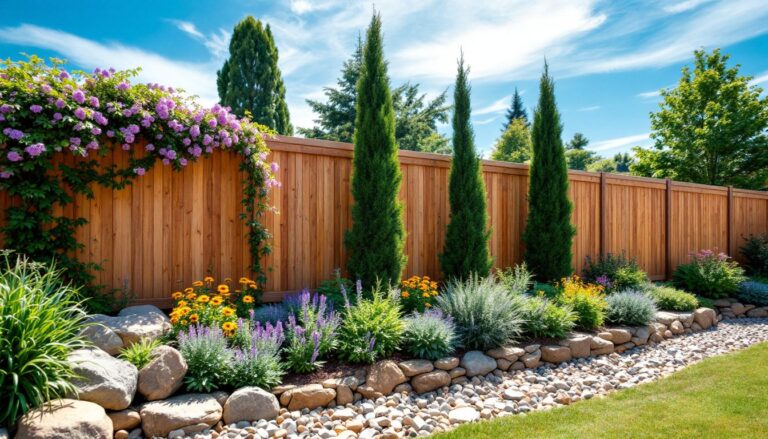
Dry creek beds channel runoff while adding visual interest. Line the depression with landscape fabric, then layer river rock or cobbles. Plant the banks with grasses or low shrubs to soften edges. This approach is especially effective on properties with drainage issues, where it doubles as functional stormwater management. Those working with stone materials find that integrating hardscape features reduces overall yard maintenance significantly.
Install Mulch Beds and Rock Gardens for Year-Round Appeal
Mulch beds and rock gardens suppress weeds, conserve moisture, and eliminate the need for weekly mowing or trimming.
Organic mulch, shredded bark, wood chips, or pine straw, breaks down over time, enriching the soil. Apply a 2- to 3-inch layer around plantings, keeping mulch 2 to 3 inches away from stems and trunks to prevent rot. Refresh mulch annually or biannually as it decomposes. Hardwood mulch lasts longer than softwood: cedar and cypress offer natural insect resistance.
Mulch suppresses weeds by blocking sunlight, but install landscape fabric or cardboard beneath the mulch layer for additional weed control in high-traffic or heavily weeded areas. Overlap fabric seams by 6 inches and secure with landscape staples.
Rock gardens use decorative stone, river rock, lava rock, or crushed granite, for a permanent, low-maintenance ground cover. Unlike organic mulch, rock doesn’t decompose or need replenishment. It does absorb and radiate heat, making it less suitable for plantings that prefer cool roots.
For a balanced approach, combine both: use organic mulch around shrubs and perennials that benefit from soil enrichment, and reserve rock mulch for pathways, borders, or xeric plantings (cacti, succulents, and other heat-loving species).
Edge beds cleanly with metal or plastic landscape edging to separate mulch zones from turf or hardscaping. This keeps materials in place and reduces the need for constant re-edging. A flat-blade shovel or half-moon edger works well for creating crisp lines initially: the edging maintains that line long-term.
Calculate mulch needs by measuring bed area in square feet and multiplying by desired depth in feet. A cubic yard of mulch covers roughly 100 square feet at 3 inches deep. Most suppliers deliver in bulk (less expensive) or bagged (more convenient for small jobs). Projects involving decorative rock installations benefit from mixing textures and colors to add depth without increasing upkeep.
Smart Watering Solutions That Reduce Maintenance
Efficient irrigation delivers water where it’s needed, when it’s needed, without daily intervention.
Drip irrigation places water directly at the root zone, reducing evaporation and runoff. A basic drip system includes a backflow preventer, pressure regulator (typically 25 PSI for drip), filter, main tubing (½ or ¾ inch polyethylene), and emitters or drip line. Emitters are rated by gallons per hour (GPH), use 1 to 2 GPH emitters for shrubs and perennials.
Layout drip tubing along planting rows, securing it with landscape staples. Bury the line under 1 to 2 inches of mulch to protect it from UV degradation and hide it from view. Run the system on a timer for 20 to 40 minutes two to three times per week during dry periods, adjusting based on rainfall and plant maturity.
Soaker hoses offer a simpler alternative for beds and borders. They weep water along their length and work well for linear plantings. Like drip systems, they’re best run on timers to ensure consistency without manual intervention.
Rain barrels capture roof runoff for supplemental irrigation. A single inch of rain on a 1,000-square-foot roof yields roughly 600 gallons of water. Use harvested rainwater for hand-watering new plantings or topping off irrigation during dry spells. Install an overflow hose and keep barrels covered to prevent mosquito breeding.
Smart controllers adjust watering schedules based on weather data, soil moisture sensors, or evapotranspiration rates. They reduce water waste during rainy periods and ensure plants receive adequate moisture during heat waves. Many models integrate with home automation systems for remote monitoring.
Mulch and soil amendment remain the foundation of water-efficient landscaping. Healthy soil with good structure and organic matter holds moisture longer, reducing irrigation frequency. Mulch reduces surface evaporation by up to 70%, meaning less frequent watering overall. Techniques featured on comprehensive gardening guides emphasize moisture retention as the first step in reducing irrigation needs.
PPE for installation: Wear gloves when handling irrigation components and digging, and use safety glasses if cutting PVC or poly tubing with power tools. Many landscape rock projects pair well with drip systems to maintain plantings between hardscape elements.
Conclusion
Low maintenance front yard landscaping isn’t about cutting corners, it’s about designing smarter from the start. By replacing high-input turf with ground covers, natives, hardscaping, and efficient irrigation, homeowners reclaim weekends without sacrificing curb appeal. The upfront planning and installation pay off in reduced water bills, fewer chemical inputs, and years of hassle-free outdoor space. For those exploring boulder accents or other statement features, the same principles apply: choose durable materials, design for minimal intervention, and let the landscape do the work. With the right approach, front yards can look great year-round, without the constant upkeep.