Table of Contents
ToggleFirst impressions matter, and your front yard is doing all the talking before guests even knock on the door. Whether you’re looking to boost resale value or just want to stop apologizing for the weeds taking over, a well-designed front landscape pays dividends in both pride and property value. This isn’t about perfectly manicured golf-course lawns or high-maintenance flower beds that demand weekend warrior status. It’s about creating a cohesive design that works with your home’s architecture, your climate, and, let’s be honest, your actual willingness to maintain it. From plant selection to hardscaping choices, here’s how to tackle front yard landscaping without very costly or your back.
Key Takeaways
- Professional landscaping for your front yard can return 100-200% of investment at resale, making it one of the highest-ROI home improvements available.
- Effective front yard landscaping starts with a plan: measure your space, assess sun exposure and soil conditions, and sketch a site design before purchasing any plants.
- Choose native and adapted plants suited to your climate and light conditions, and group them in odd-numbered clusters for a cohesive, intentional appearance.
- Hardscaping elements like walkways, edging, and mulch provide the structural foundation of your landscape and significantly reduce long-term maintenance demands.
- Reducing lawn area by 30-40% and installing drip irrigation systems can cut maintenance time and water usage in half while improving plant health.
- Low-voltage LED lighting and automated timers transform front yard landscaping into a sophisticated, low-maintenance outdoor space that enhances curb appeal 24/7.
Why Your Front Yard Landscaping Matters More Than You Think
Curb appeal isn’t just real estate jargon, it’s the 15-second judgment call every visitor, delivery driver, and potential buyer makes about your home. A neglected front yard signals deferred maintenance throughout the property, while a thoughtfully designed landscape suggests care and attention to detail.
Real estate studies consistently show that professional landscaping can return 100-200% of investment at resale, with front yard improvements delivering the highest return. But even if you’re not selling, there’s value in daily quality of life. Coming home to a space that looks intentional and cared-for simply feels better than navigating cracked pavers and overgrown shrubs.
Beyond aesthetics, smart front yard design solves practical problems. Proper grading directs water away from your foundation. Strategic tree placement reduces cooling costs. Native plantings cut water bills and maintenance time. Professional landscaping choices boost property value measurably, but the benefits extend far beyond the appraisal.
Don’t underestimate the neighborhood effect, either. A well-maintained front yard raises property values for surrounding homes and often inspires neighbors to up their game. You’re not just improving your lot, you’re contributing to the street’s overall appeal.
Planning Your Front Yard Landscape Design
Good front yard design starts on paper, not at the garden center. Impulse buying plants because they look pretty in the pot is how you end up with a hodgepodge that never gels into a cohesive look.
Assess Your Space and Set a Budget
Start by documenting what you’re working with. Measure your yard dimensions, noting foundation to sidewalk depth, driveway locations, and property line boundaries. Take photos from multiple angles, including straight-on from the curb, that’s the view that counts most.
Analyze your site conditions:
- Sun exposure throughout the day (full sun = 6+ hours, partial sun = 3-6 hours, shade = less than 3 hours)
- Soil type and drainage (clay, sand, loam, this affects plant selection dramatically)
- Existing grade and slope (water should flow away from the house at minimum 1/4″ per foot for the first 10 feet)
- Overhead or underground utilities (call 811 before digging anything)
- HOA restrictions or local ordinances on fence heights, mailbox styles, or water-wise requirements
Sketch a simple site plan to scale on graph paper, you don’t need AutoCAD, but understanding proportions prevents buying a plant that’ll block your front window in three years. Design tools from landscaping resources like Hunker can offer visualization help, but a pencil sketch often works just fine.
Budget realistically for both installation and ongoing maintenance. A basic front yard refresh runs $3,000-8,000 for most suburban homes (materials plus DIY labor), while full professional redesigns can hit $10,000-20,000+ depending on region and hardscaping extent. Don’t forget to budget for amendments, compost, mulch, and quality topsoil often represent 20-30% of plant bed costs but make the difference between thriving and struggling plants.
Phase projects over multiple seasons if cash flow is tight. Tackle hardscaping and foundation beds first, then add layers like seasonal color or lighting in subsequent years.
Best Plants and Features for Front Yard Landscaping
Plant selection makes or breaks a front yard design. The goal is year-round interest with manageable upkeep, not a spring explosion followed by months of brown.
Foundation Plantings and Flower Beds
Foundation plantings frame your home and soften the transition from structure to ground. Avoid the classic builder mistake of planting shrubs too close or choosing varieties that’ll swallow windows in five years. The mature spread matters more than the size at purchase.
Recommended foundation shrubs by region:
- Northern zones (5-6): Boxwood (Buxus), Inkberry holly (Ilex glabra), Dwarf burning bush (Euonymus)
- Temperate zones (7-8): Nandina, Loropetalum, Camellia, Hydrangea
- Southern/warm zones (9-10): Dwarf yaupon holly, Indian hawthorn, Pittosporum, Ti plant
Space shrubs at least 3-4 feet from the foundation to allow air circulation and prevent moisture issues. For two-story homes, layer heights: low-growers (1-2 feet) under windows, medium shrubs (3-4 feet) at corners, and one or two taller specimens (5-6 feet) as accent points.
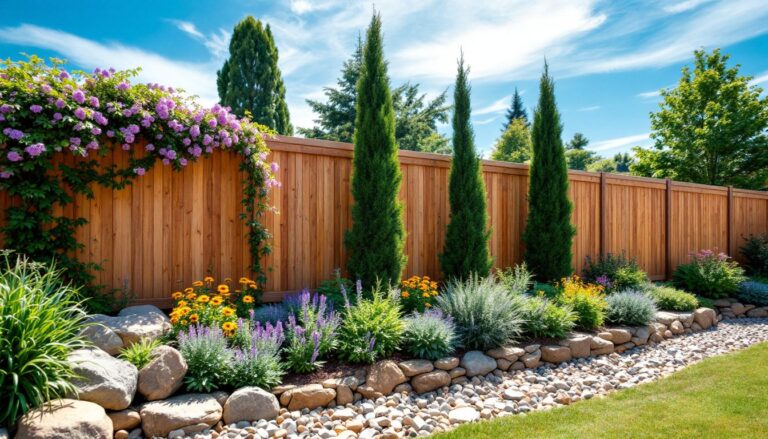
Flower beds add seasonal color but require more maintenance than woody plants. For front yards where you won’t be working daily, stick with perennials that return each year rather than annuals requiring replanting. Consider integrating stone edging or borders to define beds and reduce mowing time.
Reliable perennials for front yard beds:
- Black-eyed Susan (Rudbeckia) – drought-tolerant, blooms mid-summer through fall
- Daylily (Hemerocallis) – nearly indestructible, thousands of varieties
- Hosta – shade specialist with interesting foliage
- Salvia – attracts pollinators, low water needs
- Coneflower (Echinacea) – native, handles heat and drought
Group plants in odd-numbered clusters (3, 5, or 7) for visual impact. One lonely plant looks like an afterthought: a grouping reads as intentional.
Tree selection deserves special attention. The wrong tree can buckle sidewalks, invade sewer lines, or require constant cleanup. For front yards, choose trees with non-invasive root systems, tidy habits, and scale appropriate to your lot. Ornamental varieties like Japanese maple, Serviceberry (Amelanchier), or Crape myrtle work well. Keep mature height and spread in mind, that cute 15-gallon container tree might reach 30 feet wide. Plant large trees at least 15-20 feet from the house and 10 feet from sidewalks or driveways.
Essential Hardscaping Elements for Maximum Impact
Hardscaping provides the bones of your landscape, the permanent structure that looks good even in winter when plants are dormant. It also reduces maintenance by replacing lawn or mulched areas with durable materials.
Walkways and paths should be functional first, attractive second. Building code typically requires a minimum 36-inch-wide primary walkway to the front door (48 inches is better for two people side-by-side). Materials matter for both aesthetics and longevity:
- Concrete: Most affordable ($6-12/sq ft installed), durable, but can crack with freeze-thaw cycles
- Pavers (concrete or brick): More expensive ($12-20/sq ft), but allows for drainage and easy individual replacement
- Flagstone: Natural look ($15-30/sq ft), irregular shapes create visual interest
- Decomposed granite: Budget-friendly ($3-6/sq ft), permeable, needs edging and periodic top-dressing
Whichever material you choose, proper base preparation is non-negotiable. Excavate 6-8 inches deep, install landscape fabric, then add 4 inches of compacted gravel base before setting pavers or pouring concrete. Skipping base prep is why DIY walkways sink and crack within two years.
Edging defines beds and keeps mulch from migrating into the lawn. Options include plastic landscape edging ($0.50-1/linear foot), metal edging ($2-4/linear foot), or natural stone. Whatever you use, secure it properly, nothing looks worse than edging heaving out of the ground.
Retaining walls may be necessary if your lot slopes toward the house or you want to create terraced planting beds. Walls under 24 inches high are typically DIY-friendly using retaining wall blocks: anything taller may require engineered plans and permits due to load-bearing concerns. Check local codes before building.
Mulch isn’t technically hardscape, but it’s the finishing touch that makes beds look professional. Apply 2-3 inches depth of shredded hardwood, pine bark, or cedar mulch to suppress weeds and retain moisture. Avoid piling mulch against plant stems or tree trunks, leave a 2-3 inch gap to prevent rot. Plan to refresh mulch annually: it breaks down and fades.
Low-Maintenance Front Yard Landscaping Ideas
If the phrase “weekend gardening” makes you break out in hives, design for minimal upkeep from the start. Low-maintenance doesn’t mean low-impact, it means smart choices that look intentional without constant fussing.
Reduce lawn area. Turf grass demands weekly mowing, fertilizing, aerating, and irrigation. Replacing even 30-40% of front lawn with beds, groundcovers, or hardscaping cuts maintenance significantly. Diverse yard transformations show how mixing elements reduces overall labor.
Native and adapted plants require less water, fertilizer, and pest management once established because they evolved for your climate. Contact your local extension office for regional native plant lists. The Gardenista collection of lawn-free front yards demonstrates how eliminating grass entirely creates striking, low-care designs.
Drip irrigation beats hand-watering or sprinklers for efficiency and plant health. A basic drip system costs $100-300 for a typical front yard and cuts water use by 30-50% compared to overhead watering. Put it on a timer and forget about it. Most systems use 1/2-inch mainline tubing with 1/4-inch distribution lines and emitters at each plant.
Groundcovers fill space without weekly mowing. For sunny areas, try creeping thyme, sedum, or ice plant. For shade, consider vinca minor, pachysandra, or ajuga. These spread to cover bare ground, suppress weeds, and need trimming maybe twice a year.
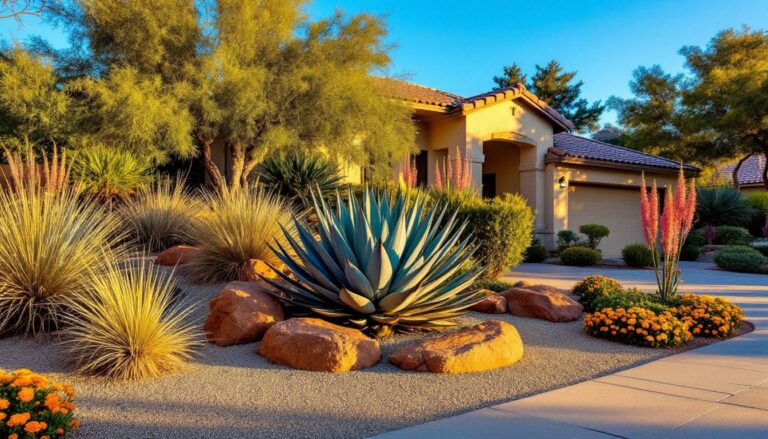
Gravel or river rock beds eliminate weeds and watering entirely if you want a more hardscape-heavy look. Lay down commercial-grade landscape fabric (not the flimsy stuff), then top with 2-3 inches of decorative gravel. Tuck in a few drought-tolerant specimens like agave, yucca, or ornamental grasses for visual interest without the water bill. Consulting home improvement resources for design inspiration can help refine your approach.
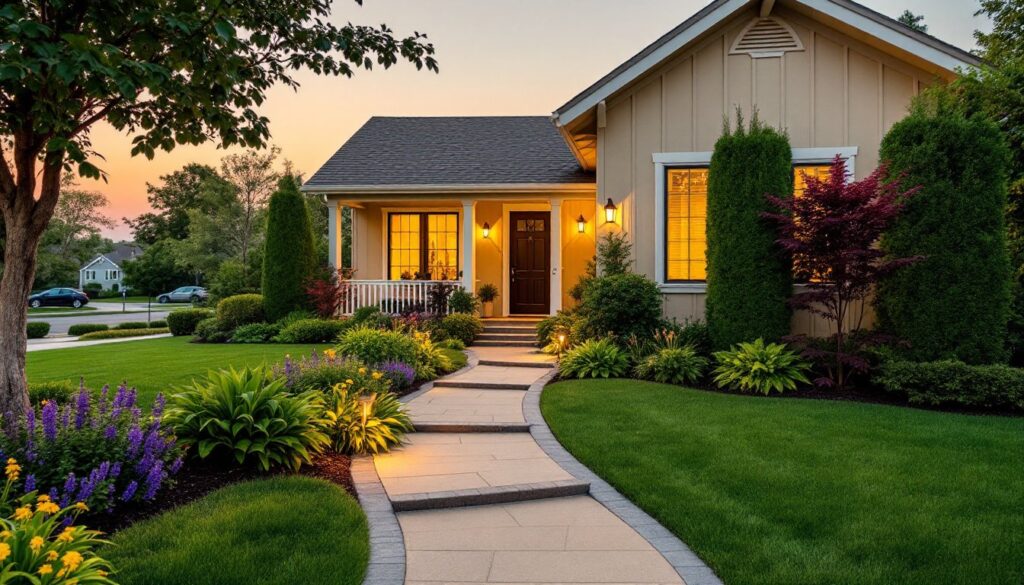
Lighting extends curb appeal into evening hours and improves safety. Low-voltage LED path lights and uplights are DIY-friendly, most kits run off a plug-in transformer requiring no electrical permit. Position lights to highlight architectural features, specimen plants, or walkways. Avoid overlighting, which looks like a used car lot.
Automatic features save time. Beyond irrigation timers, consider landscape lighting on photocell or timer controls. If you’re installing new beds, pre-emergent herbicide applied twice yearly (early spring and fall) prevents 80% of weed seeds from germinating, it’s not organic, but it works if low-maintenance is the priority.
The best low-maintenance landscapes balance hardscaping, strategic plant selection, and automated systems so the yard looks cared-for with minimal weekend labor. Front yard work should enhance your home, not become a second job.