Table of Contents
ToggleTurning a plain patio into a tropical retreat doesn’t require a beachfront property or a landscaping crew. With the right plants, materials, and design elements, homeowners can create a backyard escape that feels like a permanent vacation. This transformation involves more than scattering palm fronds and calling it done, it requires thoughtful choices about greenery, shade structures, hardscape materials, and accessories that work together. Whether starting from scratch or retrofitting an existing slab, these strategies will help build an outdoor space that delivers year-round island appeal without the airfare.
Key Takeaways
- Tropical patio ideas succeed by layering plants at varying heights—tall perimeter plants, mid-height foliage, and low ground covers—to create depth and mimic natural jungle canopy structure.
- Choose moisture-resistant hardscape materials like travertine or textured concrete pavers that provide good traction in wet conditions, and ensure proper drainage sloping away from your house at ¼ inch per foot.
- Select tropical plants based on your hardiness zone: true tropicals thrive in zones 9–11, while cold-hardy palms and substitutes like elephant ears work in cooler regions with seasonal care.
- Layer shade structures using pergolas with vines, bamboo screening, or fast-growing shrubs spaced 3–4 feet apart to create living privacy walls that mature within one to two seasons.
- Invest in quality outdoor furniture made from teak, eucalyptus, or powder-coated aluminum frames rather than particle board wicker; use solution-dyed acrylic fabrics rated for 1,000+ UV hours to prevent fading.
- Enhance ambiance with GFCI-protected water features like recirculating fountains or pondless waterfalls, and extend usability with low-voltage LED path lights and commercial-grade string lights that resist corrosion.
Essential Elements of a Tropical Patio Design
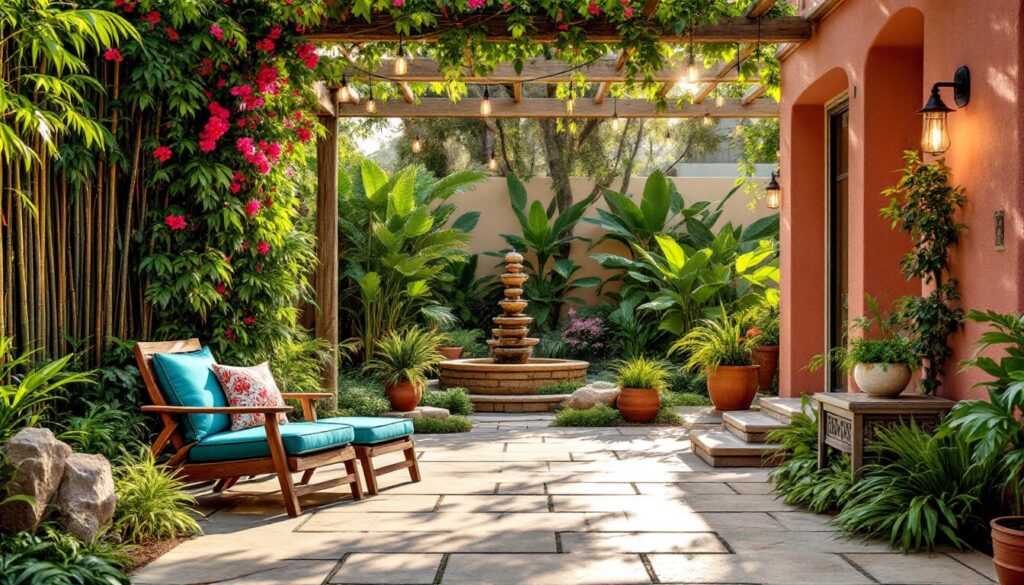
A successful tropical patio balances lush greenery with functional hardscape. Start with the foundation: concrete pavers, natural stone, or pressure-treated wood decking all work, but choose materials that handle moisture and won’t become slippery in humid conditions. Travertine and textured concrete pavers offer good traction when wet.
Layering is critical. Tropical landscapes rarely feature wide-open sight lines, they use vertical and horizontal planes to create depth. Position taller plants at the perimeter, mid-height foliage in the middle zones, and ground covers or low grasses near seating areas. This staged approach mimics natural jungle canopy structure and makes even small patios feel immersive.
Incorporate organic textures through natural fiber rugs, woven rattan, or bamboo screens. These materials weather differently than synthetic alternatives, they’ll develop patina and may require seasonal replacement, but the aesthetic payoff is worth it. Seal bamboo and rattan with exterior-grade polyurethane to extend lifespan in outdoor conditions.
Don’t forget drainage. Tropical themes involve abundant watering, so ensure the patio slopes away from the house at ¼ inch per foot. If adding container gardens, use pot feet or risers to prevent standing water that breeds mosquitoes and stains hardscape.
Selecting the Perfect Tropical Plants for Your Patio
Plant selection depends on hardiness zone, but many tropical-looking species tolerate climates well beyond the actual tropics. In zones 9-11, true tropicals like bird of paradise (Strelitzia reginae), hibiscus, and ginger thrive year-round. For cooler regions, focus on hardy substitutes that deliver similar visual impact.
Cold-hardy palms work in zones 7-8: windmill palm (Trachycarpus fortunei) and needle palm (Rhapidophyllum hystrix) survive occasional freezes. Pair them with elephant ears (Colocasia), which die back in winter but return aggressively from rhizomes. Dig and store the rhizomes indoors if you’re in zone 6 or colder.
For container planting, the most flexible approach, use crotons, cordyline, and bromeliads. Standard potting mix drains too slowly for most tropicals: blend in 30% perlite or coarse sand to improve aeration. Containers should have drainage holes, no exceptions. Many outdoor plant varieties benefit from slightly acidic soil (pH 5.5-6.5), so avoid alkaline amendments like lime.
Banana plants (Musa basjoo) add dramatic height and massive leaves but need protection below 20°F. They’ll die to the ground in hard freezes but resprout from the root zone if mulched heavily. Expect 6-10 feet of growth per season in ideal conditions.
Creating Shade and Privacy With Natural Features
Effective tropical patios balance sun exposure with shaded retreats. Pergolas offer the best structural option: build them from pressure-treated 4×4 posts and 2×6 rafters spaced 12-16 inches apart for dappled light. Stain or paint with exterior-grade products rated for ground contact.
For faster coverage, train vines like mandevilla, passionflower, or bougainvillea (zones 9+) along pergola beams using galvanized wire or jute twine. These bloom heavily and fill in within one season. In cooler zones, hops and hardy kiwi provide similar leaf density without the flowers.
Bamboo screening creates instant privacy but requires containment. Clumping varieties (Bambusa species) stay put: running bamboo (Phyllostachys) spreads aggressively and needs rhizome barriers buried 24-30 inches deep. Alternatively, build freestanding bamboo fence panels from 1-inch diameter poles lashed with UV-resistant zip ties or galvanized wire. These panels typically measure 6×8 feet and attach to 4×4 posts set in concrete.
Living privacy walls work well with fast-growing shrubs. Arborvitae and Leyland cypress grow 3-5 feet annually but don’t read as tropical. Better choices include tropical hibiscus (zones 9+), Ti plants (Cordyline fruticosa), or for colder areas, hydrangea varieties that tolerate pruning. Space plants 3-4 feet apart for a solid hedge within two seasons.
Furniture and Decor That Capture the Tropical Vibe
Furniture choice impacts both aesthetics and maintenance. Teak offers the gold standard, naturally rot-resistant, weatherproof, and ages to a silver patina unless treated with teak oil annually. It’s expensive but lasts decades. Eucalyptus provides a budget alternative with similar durability when sealed properly.
Avoid particle board or MDF-core wicker, which delaminates in humidity. True rattan and woven resin hold up better, though natural rattan requires covered storage in wet climates. Check weight ratings, quality outdoor furniture uses powder-coated aluminum frames rather than hollow steel that rusts through welded joints.
Accessorize with purpose. Outdoor throw pillows in bold tropical prints fade quickly in direct sun: choose solution-dyed acrylic fabric (Sunbrella or equivalent) rated for 1,000+ UV hours. Store cushions during heavy rain to prevent mildew, even “waterproof” fabrics trap moisture at seams.
Hammocks and hanging chairs add authentic island flair but require solid attachment points. Anchor eye bolts into ceiling joists or beams, not drywall or fascia boards. Use galvanized or stainless steel hardware rated for 400+ pounds. For freestanding options, look for hammock stands with powder-coated steel tubing at least 1.5 inches in diameter.
Incorporate natural elements: driftwood sculptures, coral (legally sourced or faux), woven palm baskets, and carved wooden bowls. Hit estate sales and import shops rather than big-box stores, the patina of aged wood and hand-carved details makes a difference.
Color Schemes and Materials for Authentic Island Appeal
Tropical color palettes lean bold but balanced. Think vibrant greens, coral pinks, turquoise blues, and sunny yellows against neutral backgrounds. Avoid the temptation to use every bright color at once, pick two or three accent tones and let the greenery provide the rest.
For hardscape, natural materials outperform synthetic lookalikes. Flagstone and slate offer irregular shapes and earth tones that contrast beautifully with tropical foliage. Pea gravel (3/8-inch size) works well for pathways and around plant bases, it drains instantly and stays cooler underfoot than solid pavers. Edge gravel beds with steel landscape edging or pressure-treated 2x4s to prevent migration.
Stucco walls painted in warm terracottas, soft corals, or sandy beiges reflect regional design traditions from the Caribbean and Mediterranean. Use exterior acrylic latex paint with mildew inhibitors in humid climates. One gallon typically covers 250-400 square feet depending on surface texture.
Textile choices matter as much as structure. Use outdoor canvas for shade sails (triangular or rectangular panels tensioned between anchor points) in jewel tones, emerald, sapphire, or ruby. These provide UV protection and visual pop. Install with stainless steel turnbuckles and eye bolts anchored into solid framing or masonry.
Weathered wood tones, driftwood grays, sun-bleached whites, balance brighter accents. If staining a pergola or privacy fence, skip the red-toned cedar stains and choose semi-transparent grays or weathered oak tones instead. These fade gracefully and don’t compete with plants.
Water Features and Lighting for Ambiance
Moving water anchors tropical ambiance. A simple recirculating fountain requires only a submersible pump (150-400 GPH for most patio-scale features), a reservoir basin, and decorative elements. Bury the reservoir basin flush with grade, cover it with galvanized steel mesh (to prevent debris clogging), then stack natural stone or ceramic vessels above.
GFCI-protected outdoor outlets are mandatory for any water feature, this isn’t optional. If the patio lacks electrical access, hire a licensed electrician to run a dedicated circuit. Attempting DIY electrical near water is dangerous and violates code in most jurisdictions. The 2023 NEC (National Electrical Code) requires GFCI protection for all outdoor receptacles.
For larger budgets, consider a pondless waterfall. These use a buried reservoir and pump system to create cascading water over stacked stone without a standing pool (safer for households with young children). Expect to excavate a hole roughly 2×3 feet and 18 inches deep, line it with 45-mil EPDM rubber, and fill with river rock around the pump vault. Hiring a landscaper for installation typically runs $1,500-$4,000 depending on size and stone selection.
Lighting extends usability after dark. Low-voltage LED path lights (12V systems) are DIY-friendly and energy-efficient. Transformers convert standard 120V to safe 12V: look for units with photocell timers and at least 300-watt capacity. Bury wire 6 inches deep in conduit if crossing walkways.
String lights (Edison-style bulbs or globe lanterns) add instant charm. Choose commercial-grade strings with rubberized sockets, residential-grade versions corrode within a season. Support cables with galvanized wire tensioned between screw eyes, not the light strand itself. For detailed lighting placement strategies, consider layering ambient, task, and accent lighting to highlight plantings and seating zones.
Conclusion
Building a tropical patio rewards homeowners who commit to layered design, appropriate plant selection, and materials that handle moisture. The result isn’t just decoration, it’s a functional outdoor room that extends living space and delivers a genuine sense of escape. Start with solid hardscape, add strategic greenery, then refine with lighting and water elements that turn the space into something used daily, not just admired from inside.