Table of Contents
ToggleSpring’s arrival signals a natural time to shake off the heaviness of winter and refresh living spaces. The bedroom, where people spend roughly a third of their lives, deserves just as much seasonal attention as the front porch or garden beds. These spring bedroom ideas focus on practical updates anyone can tackle in a weekend, no full-scale renovation required. From swapping textiles to adjusting window treatments, the goal is to create a lighter, brighter space that mirrors the season’s shift from hibernation to renewal.
Key Takeaways
- Spring bedroom ideas focus on lightweight, airy updates that can be completed in a weekend, from swapping textiles to refreshing wall art without requiring a full renovation.
- Light and airy color palettes in soft mint, blush pink, sky blue, and sage green instantly brighten a bedroom and reflect the season’s renewal, with painting being the fastest way to shift the room’s mood.
- Replace winter’s heavy textiles with breathable cotton, linen, and bamboo blends that keep the space feeling light and fresh while improving sleep comfort.
- Bring nature indoors with low-maintenance potted plants like snake plants and pothos, or opt for botanical prints and pressed flowers framed in simple wood or metal for a no-commitment seasonal refresh.
- Maximizing natural light through clean windows, mirrors, lighter window treatments, and daylight-balanced LED bulbs amplifies spring’s brightness and energy in the bedroom.
- Simple DIY projects like painting nightstand hardware, building a fabric-covered headboard, or adding a window box planter allow personalized seasonal touches at minimal cost and effort.
Embrace Light and Airy Color Palettes
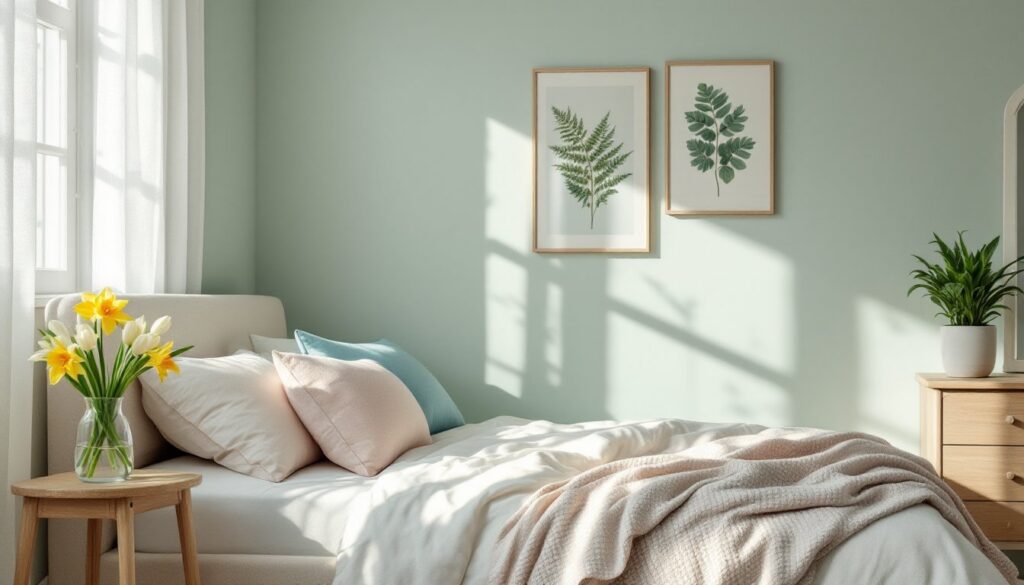
Spring color palettes lean toward soft, airy tones that bounce natural light around a room. Think pale mint, blush pink, sky blue, warm ivory, or sage green, colors that sit somewhere between white and full saturation.
Painting is the fastest way to shift a bedroom’s mood. A single gallon of interior latex paint covers roughly 350–400 square feet with one coat (check the manufacturer’s spec sheet for exact coverage). For a standard 12×14-foot bedroom with 8-foot ceilings, budget two gallons if applying a new color over a darker base. Choose a matte or eggshell finish for walls: they hide imperfections better than satin or semi-gloss.
If painting feels too committal, try accent updates: swap dark lamp shades for linen or cotton versions in cream or pale gray, replace heavy curtain panels with lighter alternatives, or add a few throw pillows in spring tones. These smaller changes work cumulatively to lighten the visual weight of the room.
Avoid the temptation to repaint without proper prep. Wash walls with a trisodium phosphate (TSP) substitute to remove grease and grime, fill nail holes with spackle, and sand smooth. Skipping this step leads to uneven coverage and a finish that looks rushed. Apply a coat of primer if switching from a dark color to a light one, it blocks bleed-through and reduces the number of topcoats needed.
Swap Out Heavy Textiles for Breezy Fabrics
Winter bedding, thick duvets, flannel sheets, velvet throws, traps heat and visually weighs down a space. Spring calls for lightweight cotton, linen, or bamboo blends that breathe better and dry faster after washing.
Start with the duvet cover or quilt. Linen wrinkles easily but softens with every wash and wicks moisture efficiently. Cotton percale (a plain weave with a thread count around 200–400) feels crisp and cool, ideal for warmer nights. Skip high thread counts above 600: they often trap heat and don’t breathe as well as marketing suggests.
Remove heavy drapes and swap in sheer or semi-sheer curtain panels made from cotton voile or polyester blends. These diffuse harsh midday sun without blocking the soft morning light that helps regulate circadian rhythms. If privacy is a concern, layer sheers over cellular shades or matchstick blinds, which offer adjustable coverage without bulk.
Throw pillows and blankets offer another easy swap. Replace faux fur or chunky knit throws with waffle-weave cotton or lightweight quilts. Aim for a color story that includes two or three spring tones plus one neutral to anchor the palette. Too many colors create visual clutter, especially in smaller bedrooms.
Wash all new textiles before use, most shrink 2–5% in the first laundry cycle, and pre-washing removes manufacturing residue.
Bring Nature Indoors with Botanical Accents
Spring’s defining feature is the return of greenery. Bringing that theme indoors doesn’t require a green thumb, just a few strategic placements.
Potted plants improve air quality and add texture. Snake plants (Sansevieria) tolerate low light and irregular watering, making them ideal for bedrooms with limited sun exposure. Pothos and philodendrons thrive in moderate light and cascade nicely from shelves or dressers. Avoid heavily scented plants like jasmine or gardenia in sleeping spaces: some people find strong floral scents disruptive to sleep.
For rooms with ample south- or west-facing windows, consider a fiddle-leaf fig or a rubber plant in a 10- or 12-inch pot. These larger specimens serve as living sculpture and fill vertical space that might otherwise feel empty. Use a moisture meter (a simple analog version costs under ten dollars) to avoid overwatering, the most common plant killer.
If live plants feel like too much commitment, botanical prints and pressed flowers under glass offer a no-maintenance alternative. Frame pressed ferns, eucalyptus, or wildflowers in simple wood or metal frames and arrange them in a grid above the bed or dresser. This approach works especially well for seasonal bedroom updates that shift with the calendar.
Fresh Flowers and Greenery
Fresh-cut flowers provide instant impact but require weekly replacement. Choose seasonal stems, tulips, daffodils, ranunculus, or peonies, from a local market or grocery floral section. Avoid overly large arrangements on nightstands: they tip easily and crowd reading lamps.
Change the water every two days and recut stems at a 45-degree angle to extend vase life. Add a drop of bleach to the water (one drop per quart) to inhibit bacterial growth. Remove any foliage that sits below the waterline: submerged leaves decompose quickly and foul the water.
Dried arrangements, bundles of eucalyptus, pampas grass, or lavender, offer a longer-lasting alternative. Hang them upside down in a dry, dark space for one to two weeks until fully desiccated, then arrange in ceramic or glass vases. Avoid placing dried florals in direct sunlight, which bleaches color over time.
Refresh Your Bedroom with Spring-Inspired Wall Art
Wall art sets the visual tone of a room. Spring-themed pieces, landscapes, botanical illustrations, abstract watercolors in soft tones, can replace darker or heavier winter artwork.
When selecting new pieces, consider scale. A single large piece (24×36 inches or larger) works over a bed or dresser. Smaller prints look lost on expansive walls: group them in clusters of three or five for better visual weight. Use a level and painter’s tape to mock up arrangements before hammering nails.
Framing matters. Light wood tones (oak, ash, maple) or simple white frames complement spring palettes better than heavy, ornate options. For budget-friendly framing, check thrift stores for used frames and repaint or refinish them. A quick scuff with 150-grit sandpaper followed by a coat of acrylic paint transforms tired frames in under an hour.
DIY wall art is another option. Watercolor paper, a basic watercolor set, and a few hours of experimentation yield original pieces. For those less inclined to paint, fabric-covered canvas boards offer a textile-forward alternative. Stretch a remnant of linen or cotton duck cloth over a pre-made canvas frame, secure with a staple gun, and hang. The texture alone adds warmth without competing visually with other elements.
Avoid the gallery wall trap: too many pieces in too many styles create chaos. Stick to a cohesive theme, all botanical prints, all black-and-white photography, or all abstract watercolors, to maintain visual calm.
Maximize Natural Light for a Brighter Space
Natural light is spring’s most valuable (and free) resource. Maximizing it requires adjusting window treatments, reflective surfaces, and furniture placement.
Start with the windows. Clean both sides of the glass with a vinegar-water solution (one part white vinegar to four parts water) and a microfiber cloth. Dirty windows block up to 40% of incoming light. If windows haven’t been cleaned in months, expect a noticeable difference.
Replace heavy drapes or dark blinds with lighter options. Cellular shades (also called honeycomb shades) diffuse light while maintaining energy efficiency. For privacy without bulk, install a top-down/bottom-up shade that allows light in from the top while covering the lower half of the window.
Mirrors amplify available light. Place a large mirror (36 inches or larger) opposite or adjacent to a window to reflect daylight deeper into the room. Lean a full-length mirror against the wall for an informal look, or mount it securely with D-ring hangers and wall anchors rated for the mirror’s weight. Standard drywall anchors hold up to 50 pounds: for heavier mirrors, locate studs with a stud finder and screw directly into the framing.
Move furniture away from windows. A dresser or bookshelf blocking a window reduces both light and airflow. If the layout requires furniture near a window, choose low-profile pieces (under 30 inches tall) that won’t obstruct the lower pane.
Lightbulbs matter more than many DIYers realize. Swap any remaining incandescent or warm-toned LEDs (2700K) for daylight-balanced LEDs (5000K–6500K), which mimic natural light. This is especially useful in rooms with limited windows or north-facing exposures that receive less direct sun.
Add Seasonal Touches with Simple DIY Projects
DIY projects allow for personalized touches that off-the-shelf decor can’t match. Spring-focused projects range from quick one-hour updates to weekend builds.
Painted Nightstand or Dresser Hardware: Replacing drawer pulls and cabinet knobs takes minutes but creates a surprisingly strong visual shift. Choose ceramic or brushed brass knobs in soft tones, pale blue, mint, or blush, to complement spring palettes. Most hardware installs with a single screw from the back of the drawer face: measure the existing hole spacing (center-to-center distance) before buying replacements.
DIY Headboard: A simple plywood headboard covered in fabric or painted in a spring color personalizes the bed without major expense. Cut a piece of 3/4-inch plywood to the width of the mattress plus a few inches on each side (a queen mattress is 60 inches wide, so cut to 66–70 inches). Sand the edges smooth with 120-grit sandpaper, then either paint or upholster with batting and fabric secured with a staple gun. Mount to the wall using French cleats or L-brackets screwed into wall studs. This project takes 3–4 hours and costs $40–$80 depending on materials.
Window Box Planter: For bedrooms with accessible exterior windows, a window box planter adds greenery visible from inside. Build a simple box from 1×6 cedar or redwood boards (naturally rot-resistant), line with landscape fabric, and fill with potting soil and seasonal plants. Secure to the window sill or exterior wall with galvanized L-brackets. Ensure the bracket fasteners hit solid framing, not just siding or trim.
Stenciled Accent Wall: For renters or anyone hesitant about bold paint, stenciling adds pattern without permanence. Use a reusable stencil (available at craft stores) and craft paint in a slightly darker or lighter shade than the base wall color. Tape the stencil in place, dab paint with a foam roller or stencil brush, and repeat across one accent wall. The result mimics wallpaper at a fraction of the cost. This project suits anyone comfortable with a level and painter’s tape.
Many DIY room makeovers start with one small project that builds confidence for larger updates. The key is choosing projects that match skill level and available time, unfinished projects create clutter, not charm.