Table of Contents
ToggleSingle patio doors offer a smart alternative to traditional French or sliding double doors, especially in tighter spaces or budget-conscious renovations. They provide solid outdoor access, natural light, and design flexibility without eating up floor space with a wide swing radius or requiring a double-width rough opening. Whether replacing an old slider, converting a window, or planning new construction, single patio doors deserve consideration for kitchens, home offices, master suites, and small patios where a full double-door setup feels like overkill. This guide walks through styles, placement strategies, decorating options, and installation basics to help homeowners make informed decisions.
Key Takeaways
- Single patio door ideas offer 30 to 50 percent cost savings over double doors while providing space-efficient outdoor access and requiring less structural modification.
- Modern single patio door styles range from hinged French designs and sliding pocket doors to contemporary pivot and multi-slide options, each suited to different aesthetic and functional needs.
- Low-E tempered or laminated glass, paired with thermal breaks and argon fills, ensures energy compliance and safety for ground-floor installations.
- Strategic placement in kitchens, home offices, and master suites maximizes natural light and egress requirements without sacrificing interior layout or functionality.
- Proper installation requires careful rough-opening measurement, exterior flashing with sill pans, and weatherproofing to prevent the 90 percent of door leaks caused by improper flashing.
- Decorative upgrades like contrasting trim, sidelites, transoms, and hardware swaps can elevate a single patio door’s visual impact while maintaining affordability and ease of installation.
Why Choose a Single Patio Door Over Double Doors?
A single patio door typically measures 32 to 36 inches wide, fitting standard door frames and requiring less structural modification than double doors, which span 60 to 72 inches. This makes them ideal for narrow wall sections, additions, or retrofits where framing a wider opening isn’t practical or permitted without engineering.
Space efficiency is a major draw. A single inswing or outswing door doesn’t demand clearance for two panels, freeing up adjacent wall space for furniture, cabinetry, or electrical outlets. In galley kitchens or compact master bedrooms, that extra 30 inches can mean the difference between functional layout and cramped quarters.
Cost savings stack up quickly. Single doors need one lockset, one threshold, less hardware, and roughly half the glass area, cutting material and labor costs by 30 to 50 percent compared to double French or sliding systems. For DIYers, a single door is also easier to hang solo, though having a helper to check plumb and level speeds things up.
Finally, single doors often meet egress code requirements more cleanly. The International Residential Code (IRC) mandates egress openings in bedrooms provide a minimum clear width of 20 inches and clear height of 24 inches, with a net clear opening of 5.7 square feet. A standard 32-inch single door with sidelites can satisfy this without the bulk of double doors.
Modern Single Patio Door Styles to Elevate Your Home
Hinged French-style single doors bring classic elegance with full-length divided lites or large single panes framed in wood, fiberglass, or steel. Exterior-grade wood species like mahogany or fir offer rich grain but require periodic sealing: fiberglass mimics wood texture with minimal maintenance, and steel doors deliver security and energy efficiency when insulated with polyurethane foam cores.
Sliding single patio doors (also called bypass or pocket doors) work in ultra-tight spaces where swing clearance is impossible. The door panel slides along a track into a wall pocket or overlaps a fixed sidelight. Install quality rollers and tracks rated for exterior use, stainless steel or nylon wheels resist corrosion and roll smoothly under weather sealing pressure.
Contemporary all-glass pivot doors rotate on top and bottom pivot hinges instead of side-mounted hardware, creating a minimalist look with narrow stiles. These require a reinforced header to support pivot loads and precision installation to prevent binding. Not a beginner project, but the payoff is dramatic when paired with modern or industrial interiors.
Multi-slide single panels (technically a hybrid) combine a single operable panel with one or more fixed panels in the same frame. This setup offers wide views while keeping the moving parts simple. Look for aluminum or vinyl extrusions with thermal breaks to prevent condensation in cold climates.
Glass Options and Privacy Solutions
Low-E (low-emissivity) glass is standard for energy-code compliance in most jurisdictions. It reflects infrared light to reduce heat gain in summer and heat loss in winter. Double-pane insulated glass units (IGUs) with argon or krypton gas fills boost R-value to 3.0 or higher, essential in IECC Climate Zones 4 and above.
Tempered or laminated glass is required by code for doors and adjacent sidelites within 24 inches of the door edge and less than 60 inches above the floor (per CPSC 16 CFR 1201). Tempered glass shatters into small, blunt pieces: laminated glass holds together with an inner plastic layer, offering better security and sound damping.
For privacy without curtains, consider obscured glass patterns like rain, reeded, or frosted options. Frosted glass can be applied as a factory treatment or added with aftermarket window film. Alternatively, install smart glass (switchable privacy glass) that toggles between transparent and opaque with a voltage switch, pricey at $50 to $100 per square foot but eliminates window treatments entirely.
Creative Design Ideas for Single Patio Door Placement
Kitchen to deck transitions benefit from single doors because they don’t interfere with appliance runs or countertops. Position the door near the end of a galley or L-shaped layout so the swing clears work zones. An outswing model saves interior floor space and keeps the threshold flush or nearly flush, reducing trip hazards when carrying trays or groceries.
Home office or studio exits meet egress requirements while adding natural light and quick backyard access. Pair the door with a fixed transom above to boost daylight without enlarging the rough opening. If the office doubles as a guest bedroom, ensure the door’s clear opening exceeds IRC minimums and install an audible egress alarm if required.
Master suite private patios turn a standard bedroom into a resort-style retreat. A single French door with one sidelight provides symmetry and wide views. For second-story installations, add a Juliet balcony (a railing with no standing platform) or a small cantilevered deck, both require structural ledger attachment to rim joists and may need engineer-stamped plans depending on local amendments to the IRC.
Basement walkouts often use single doors because grade-level access points tend to be narrow. Incorporating stylish door designs can instantly upgrade these transitional spaces while maintaining functionality. Make sure the door is rated for below-grade moisture exposure: fiberglass or steel with rot-resistant jambs and a pan flashing system under the threshold prevents water infiltration.
Decorating Around Your Single Patio Door
Frame the door with trim upgrades. Swap builder-grade 2¼-inch casing for 4- to 6-inch flat or profiled trim in MDF, pine, or paint-grade poplar. Add plinth blocks at the base and a crosshead or pediment above for traditional detailing. Paint trim in a contrasting color, black, navy, or charcoal against white walls, to draw focus to the door.
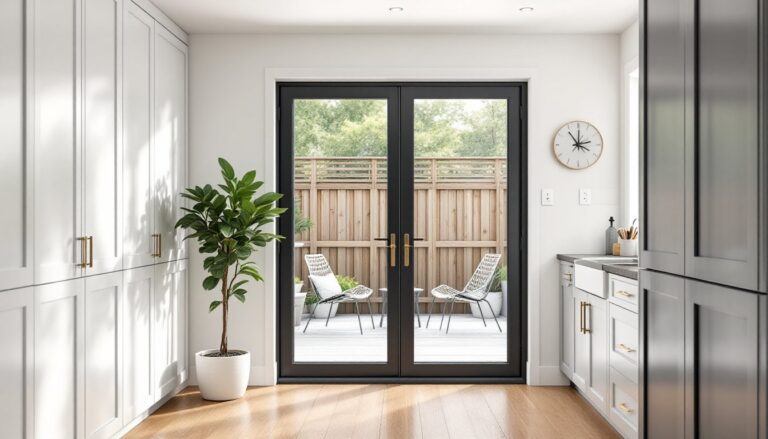
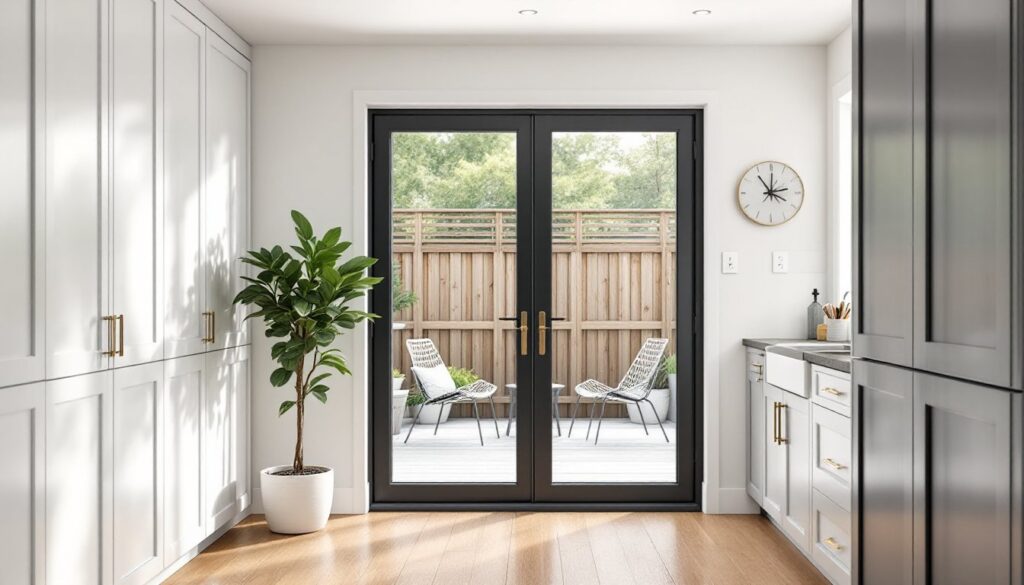
Flank with built-ins or tall plants. A pair of floor-to-ceiling bookcases or shallow cabinets on either side balances the door opening and provides functional storage. For a softer look, place 6- to 8-foot potted palms, fiddle-leaf figs, or bird-of-paradise in decorative planters. Ensure pots have saucers to protect flooring from drainage.
Use tile or hardwood transitions intentionally. When the patio door opens from tile to wood or vice versa, install a T-molding or transition strip that complements both surfaces. For flush thresholds (common with outswing doors), match interior flooring to outdoor pavers or decking for a seamless indoor-outdoor flow. This technique is popular in modern patio door ideas that emphasize visual continuity.
Add architectural interest with sidelites or transoms. If the rough opening allows, a fixed sidelight (typically 10 to 14 inches wide) beside a 36-inch door fills a 5-foot opening and floods the room with light. Transoms above the door header can be operable for ventilation or fixed for aesthetics. Use matching divided-lite patterns for cohesion.
Window Treatments and Hardware Upgrades
Roller shades or cellular shades mount inside or outside the door frame, offering clean lines and blackout or light-filtering options. Cordless or motorized lifts eliminate dangling cords, a must for child and pet safety per CPSC guidelines. For doors with sidelites, order separate shades or a continuous headrail system.
Curtain panels on a single rod work for inswing doors if the rod extends 6 to 12 inches beyond the frame on each side, allowing fabric to stack off the glass when open. Use wrap-around or bypass brackets to minimize light gaps. Outdoor-rated curtains in fade-resistant polyester or Sunbrella fabric suit south- and west-facing doors.
Plantation shutters (3½- to 4½-inch louvers) provide adjustable privacy and insulation. Custom-fit shutters are pricey, $25 to $45 per square foot installed, but add resale value and never need washing like fabric treatments. For French doors with interior grilles, choose shutters that mirror the lite divisions.
Hardware swaps make a dramatic impact for minimal cost. Replace builder-grade lever sets with oil-rubbed bronze, matte black, or brushed brass locksets from brands like Schlage, Kwikset, or Baldwin. Ensure the lockset is ANSI/BHMA Grade 1 or 2 for exterior security. Deadbolts are optional on patio doors but recommended for ground-floor installations.
Installation Tips and Considerations
Check local codes and permits before cutting. Any structural modification, removing studs, altering headers, or changing exterior openings, typically requires a building permit. Load-bearing walls need engineered headers sized to span the rough opening: a 4-foot opening usually requires a double 2×8 or 2×10 header in single-story construction, but consult local amendments to the IRC.
Measure rough opening carefully. Single patio door units need a rough opening 2 inches wider and 2½ inches taller than the door frame to allow for shimming and leveling. For a 36-inch door (actual frame width around 37½ inches), cut a 39½-inch-wide opening. Use a 4-foot level on the sill plate and shim until dead level, patio doors won’t operate smoothly if the frame is racked.
Flashing and weatherproofing aren’t optional. Apply a sill pan or flexible flashing membrane (like Vycor or similar) to the rough sill, lapping up the sides at least 6 inches. Run drip cap flashing above the header and integrate it with the water-resistive barrier (WRB) or house wrap. Improper flashing causes 90 percent of door leaks and rot, especially around thresholds. Planning your project thoroughly, including reviewing home renovation cost guides, helps budget for quality materials and proper installation.
Pre-hang doors simplify DIY installs. Pre-hung units arrive with the door already mounted in the jamb, sill, and header, with weatherstripping and sometimes exterior brickmold attached. Slide the unit into the rough opening, shim at hinge points and lockset, check plumb and level, then fasten through the jamb into framing with 3-inch exterior-grade screws. Screw spacing should be 12 to 16 inches along hinge and strike jambs.
Use a helper or door jack. Even a single patio door weighs 80 to 150 pounds with glass. A door hanging jack or sturdy sawhorse supports the unit while you shim and fasten. Trying to hold, level, and screw solo risks injury and misalignment.
Install threshold properly. The sill must slope outward at least 4 degrees (about ⅛ inch per foot) to shed water. Apply a continuous bead of polyurethane or silicone sealant under the threshold before setting the door, then caulk the exterior perimeter after fastening. Leave weep holes open, these small slots at the bottom of the exterior frame allow trapped water to escape.
PPE matters. Wear safety glasses, work gloves, and hearing protection when cutting framing or using power tools. If drilling into masonry or concrete for threshold anchors, use a dust mask rated N95 or better to avoid silica dust exposure.
Test operation before finishing. Open and close the door a dozen times, checking for smooth swing, even gaps, and positive latch engagement. Adjust hinges and strike plates as needed. Once satisfied, insulate gaps around the frame with low-expansion foam (not high-expansion, which can bow jambs), then install interior and exterior trim.