Table of Contents
ToggleA well-placed boulder can do more for a front yard than a dozen shrubs. These natural stone features add instant dimension, texture, and permanence to otherwise flat, forgettable landscapes. Unlike flowerbeds that need seasonal replanting or mulch that washes away in heavy rain, boulders stay put and require zero maintenance. They anchor a design, draw the eye, and give a property the kind of polished, intentional look that makes neighbors slow down. Whether a homeowner is working with a steep slope, a narrow parkway strip, or a wide-open lawn, strategic boulder placement offers practical and visual benefits that smaller decorative elements can’t match.
Key Takeaways
- Front yard boulder landscaping ideas offer practical and aesthetic benefits—boulders require zero maintenance, control erosion, and add dimension without seasonal replanting or watering.
- Choose boulders that match local geology and your home’s scale; group them in odd numbers, bury them one-third into the soil, and maintain at least a two-foot buffer from the foundation.
- Strategic boulder placement should mimic natural formations like rocky outcroppings, with varied sizes used to anchor slopes, define walkways, and create focal points that enhance curb appeal.
- Pair boulders with evergreen plants, ornamental grasses, and low-growing groundcovers to balance hardscape with greenery and create year-round visual interest.
- Boulder landscaping is cost-effective long-term since stones don’t need irrigation, fertilizer, or replacement, making them ideal for drought-prone regions and xeriscaping designs.
Why Boulders Are a Game-Changer for Front Yard Landscaping
Boulders solve problems that softscape alone can’t handle. On slopes, they act as natural erosion barriers, slowing runoff and anchoring soil in place. In flat yards, they create elevation changes and break up monotonous turf or groundcover. They’re also surprisingly cost-effective over time, no watering, no fertilizer, no replacement every few seasons.
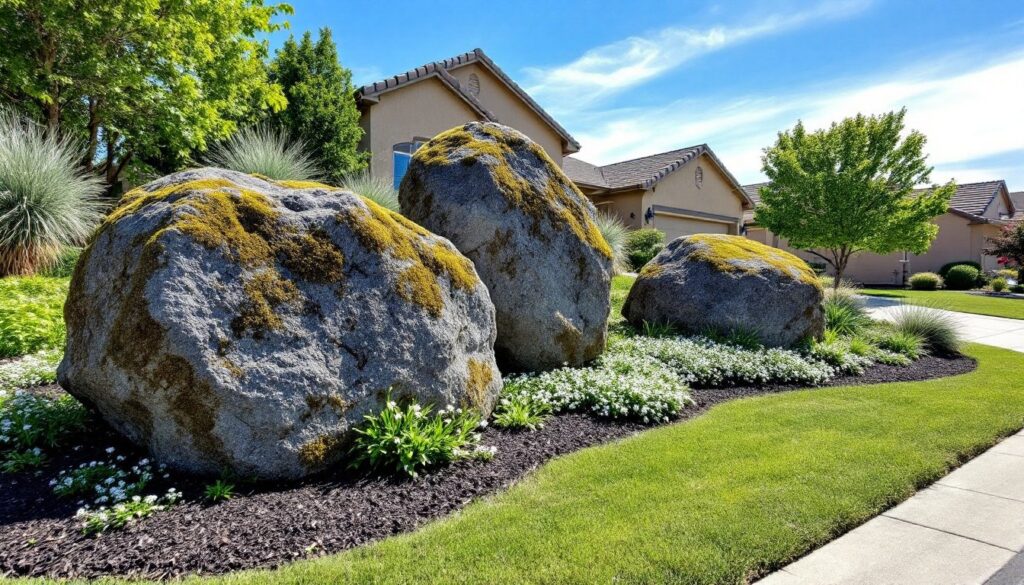
From a design perspective, boulders introduce scale and contrast. A 300-pound moss rock next to low-growing sedum creates a focal point that pulls the eye from the street. Paired with ornamental grasses or evergreens, they provide year-round structure when perennials go dormant.
Boulders also handle high-traffic areas better than plants. Positioned at driveway edges or walkway transitions, they prevent accidental tire strikes on delicate plantings and define boundaries without fencing. If the front yard sees regular foot traffic from kids, dogs, or delivery drivers, stone won’t get trampled or compacted.
One practical advantage: boulders don’t require irrigation lines or amendments. Once set, they’re permanent. That makes them ideal for xeriscaping or low-water landscapes in regions with drought restrictions. They pair well with drought-tolerant plants like lavender, blue fescue, or agave, reinforcing a cohesive, climate-appropriate design.
Choosing the Right Boulders for Your Front Yard
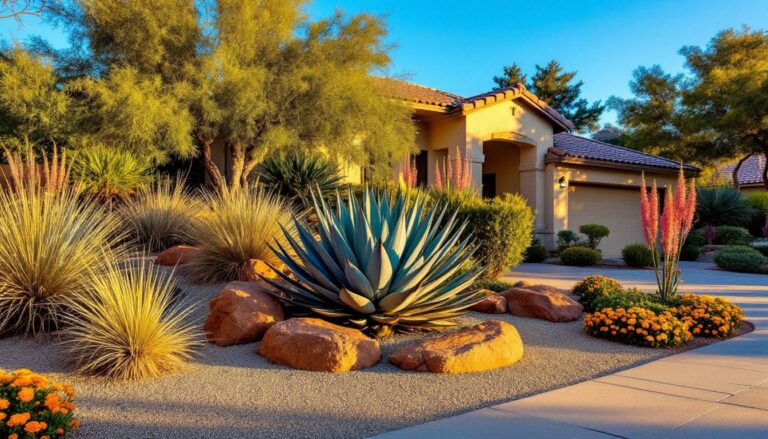
Not all boulders are created equal. Local quarries and landscape suppliers stock different stone types based on regional geology, and choosing a material that echoes the area’s natural terrain makes a design feel more grounded. In the Southwest, decomposed granite or red sandstone boulders blend with desert surroundings. In the Pacific Northwest, moss-covered basalt or river rock suits the cooler, damper climate.
Before ordering, measure the space and consider access. Delivery trucks can’t always maneuver into tight side yards, and a 500-pound boulder won’t roll easily over existing turf without tearing it up. Most suppliers use a boom truck or mini excavator to set large stones. If equipment can’t reach the site, the homeowner may need to hire a skid steer or use a pallet jack and plywood ramps for smaller rocks.
Pricing varies, but expect to pay by the ton or per piece. A half-ton boulder (roughly 24–36 inches across) typically costs $100–$300 depending on stone type and delivery distance. Buying from a local quarry often beats big-box stores on price and selection. Always inspect stones in person if possible, photos don’t capture color variation, weathering, or surface texture.
Size, Shape, and Color Considerations
Size should match the scale of the house and yard. A 1,200-square-foot cottage looks overwhelmed by a 1,000-pound specimen boulder, but a sprawling ranch can handle multiples of that size. As a rule, use a mix of large anchor stones (300+ pounds) and smaller accent rocks (50–150 pounds) to create natural-looking clusters.
Shape affects placement and visual flow. Rounded river rock suggests water-worn landscapes and pairs well with grasses and flowing groundcovers. Angular, fractured stone (like quarried granite or limestone) conveys a rugged, alpine feel and works with conifers or rock gardens. Flat-sided boulders can double as informal seating or stepping stones if positioned carefully.
Color should complement the home’s exterior and existing hardscape. Warm-toned stones (tan, rust, ochre) harmonize with brick, stucco, or wood siding. Cool grays and charcoals suit modern or industrial architecture. Avoid stark white limestone in shaded areas, it can look sterile and shows every stain from leaf litter or algae. When combining <a href="https://thecreakingchair.com/stone-for-landscaping/”>stone for landscaping types, stick to a single color family to avoid a chaotic, mismatched look.
Creative Boulder Placement Ideas to Maximize Impact
Random scattering doesn’t work. Successful boulder placement mimics natural formations, think rocky outcroppings, glacial erratics, or streambed deposits. Start by grouping boulders in odd numbers (three, five, or seven) with varied sizes. Bury each stone at least one-quarter to one-third of its height into the soil so it looks settled, not plopped.
For sloped front yards, nestle boulders into the grade to create terraced pockets for planting. This breaks up erosion channels and gives roots a protected microclimate. On flat lots, use boulders to define a dry creek bed, a swale lined with river rock that channels runoff and adds visual interest even when dry. Edge the creek with sedges, ferns, or native grasses.
Another approach: frame the entry. Flanking a walkway or driveway with symmetrical boulder groupings creates a natural gateway. Keep clearance at least 36 inches from paved edges to allow safe passage and avoid scraping car doors. For mailbox surrounds, anchor a large boulder behind the post and tuck smaller rocks around the base, mulching with pea gravel or shredded bark to finish.
Avoid placing boulders too close to the foundation. Heavy stone can settle unevenly and trap moisture against siding or block weep holes. Maintain at least a two-foot buffer from the house and slope grade away from the structure.
Accent Features and Focal Points
Use a single statement boulder to anchor a corner bed or terminus of a walkway. This draws the eye and gives the design a deliberate endpoint. Pair it with a specimen plant, Japanese maple, ornamental grass, or dwarf conifer, to soften the stone’s mass.
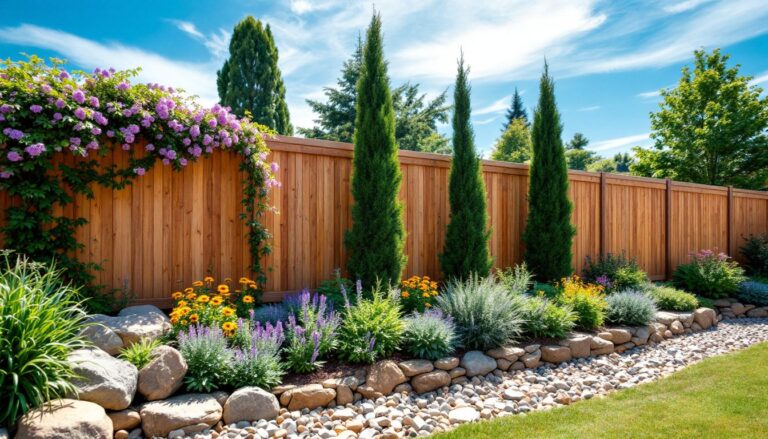
Boulders also work as naturalistic edging for flowerbeds. Instead of plastic or metal borders, line a perennial bed with a mix of landscaping rocks and smaller cobbles. This creates a gradual transition from turf to planted area and holds mulch in place during heavy rain.
For drought-prone yards, boulders can anchor a rock garden featuring succulents, cacti, or alpine plants. Arrange stones in staggered tiers, backfilling with well-draining soil mix (half native soil, half coarse sand or pumice). Plant sedums, sempervivums, or yucca in crevices between rocks. This low-water strategy reduces mowing and irrigation costs while boosting curb appeal.
Combining Boulders with Plants and Ground Cover
Stone and greenery need each other. Bare boulders on bare dirt look unfinished: lush plantings without hardscape lose structure. The goal is balance.
Start with evergreen foundation plants that provide year-round interest. Dwarf mugo pine, boxwood, or juniper anchor boulder groupings and keep the design from looking seasonal. Add ornamental grasses like blue oat grass, feather reed grass, or muhly grass for movement and texture contrast. Their fine blades soften stone’s hard edges.
For color, tuck perennials into gaps between boulders. Sedum, dianthus, creeping phlox, or catmint spill over rock faces and bloom at different times. In shaded areas, hostas, heuchera, or ferns thrive in the cool pockets boulders create. Avoid aggressive spreaders like English ivy or vinca, they’ll swallow the stones and require constant trimming.
Ground covers tie the composition together. Landscape design strategies often incorporate low-growing groundcovers to unify hardscape and plantings. Creeping thyme, Scotch moss, or blue star creeper fill gaps between pavers and boulders, reducing weeds and creating a cohesive carpet. In arid climates, decomposed granite or pea gravel mulch around boulders suppresses weeds and reflects heat, benefiting drought-tolerant plants.
Mulch depth matters. Apply 2–3 inches of shredded bark or wood chips around boulders, pulling mulch back a few inches from plant crowns to prevent rot. Avoid piling mulch against stone, it hides the base and makes boulders look like they’re floating.
Lighting adds drama after dark. Uplights positioned at the base of large boulders cast dramatic shadows and highlight texture. Use low-voltage LED fixtures (3–5 watts) on timers to conserve energy. Bury wiring at least 6 inches deep and run conduit under walkways to meet NEC code. Check local building codes, some jurisdictions require permits for low-voltage landscape lighting if it exceeds a certain wattage.
Conclusion
Boulders aren’t just decorative, they’re functional design elements that solve erosion, define spaces, and reduce maintenance. The key is choosing stones that fit the site’s scale, burying them deep enough to look natural, and pairing them with plants that complement rather than compete. With thoughtful placement and a little sweat equity, a front yard boulder project delivers curb appeal that lasts decades without weekly upkeep.