Table of Contents
ToggleThat majestic oak in the front yard adds curb appeal, until someone trips over its gnarled roots or the grass beneath it turns to dust. Tree roots that surface or dominate the root zone aren’t just unsightly: they’re landscaping puzzle pieces that don’t fit traditional lawn-and-garden plans. But with the right approach, these problem areas become design opportunities. Instead of fighting the tree, homeowners can work with its root system to create low-maintenance, visually striking landscape features that protect the tree’s health and solve drainage, erosion, and bare-soil headaches in one stroke.
Key Takeaways
- Front yard landscaping ideas around tree roots succeed by working with the tree’s biology rather than against it, transforming problem areas into attractive, low-maintenance design features.
- Surface roots emerge from soil compaction, poor drainage, and shallow hardpan layers, and attempting to mow or cut them damages both equipment and the tree’s protective bark.
- Shade-tolerant ground covers like periwinkle, pachysandra, and ajuga eliminate grass failures by requiring less water and sunlight while protecting tree roots from foot traffic and erosion.
- Raised beds around tree roots should maintain 6-12 inches of clearance from the trunk and add no more than 2-3 inches of soil to prevent rot and root suffocation.
- Mulch and stone design options—from shredded hardwood bark to decomposed granite—provide clean, finished landscaping that suppresses weeds while protecting root zones.
- Tree rings and circular mulched beds require minimal DIY effort and serve as anchor points that visually tie together walkways, flower beds, and lawn areas.
Why Tree Roots Create Landscaping Challenges
Mature trees send roots outward in a shallow, wide-spreading pattern, often extending 2-3 times the diameter of the canopy. Surface roots emerge when soil compaction, poor drainage, or a shallow hardpan layer forces them upward in search of oxygen and water. Species like maples, poplars, willows, and shallow-rooted oaks are notorious offenders.
Grass struggles in these zones because tree roots monopolize water and nutrients while the canopy blocks sunlight. Turf needs at least 4-6 hours of filtered light and consistent moisture, conditions that don’t exist under dense shade. Attempting to mow over exposed roots damages both mower blades and the tree’s protective bark, opening wounds that invite pests and disease.
Safety note: Tripping hazards are real. If roots protrude more than an inch above grade near walkways, addressing them isn’t just aesthetic, it’s liability prevention. Never cut or grind down surface roots without consulting an arborist: severing major structural roots can destabilize the tree.
Compacted soil around tree bases, common in established front yards, further stresses roots. Foot traffic, vehicle parking, and years of lawn maintenance crush soil particles, reducing pore space and limiting gas exchange. The result: weaker root systems that surface even more aggressively.
Ground Cover Solutions That Work With Tree Roots
Ground covers eliminate the need for grass while protecting tree roots from foot traffic and soil erosion. Choose shallow-rooted, low-growing species that tolerate shade and root competition without requiring deep soil.
Top performers:
- Periwinkle (Vinca minor): Evergreen, spreads quickly, tolerates dry shade. Plant 8-10 inches apart: expect full coverage in 2-3 seasons.
- Pachysandra: Classic woodland ground cover. Prefers moist, acidic soil. Space plants 6-8 inches apart.
- Wild ginger (Asarum canadense): Native option with heart-shaped leaves. Slow spreader but virtually maintenance-free once established.
- Ajuga (bugleweed): Low rosettes with spring flower spikes. Handles foot traffic better than most ground covers.
Installation tips:
Plant in pockets between roots rather than digging trenches. Use a trowel or soil knife to create small planting holes 2-3 inches deep, just enough for the root ball. Backfill with quality topsoil mixed with compost: don’t pile soil against the tree trunk or bury surface roots more than an inch. This approach minimizes root disturbance while giving ground cover plants a fighting chance.
Many complete landscaping transformations incorporate ground covers as foundational layers that unify tree zones with the rest of the yard. Water new plantings regularly for the first season until they establish: after that, most ground covers thrive on neglect.
Creating Raised Beds and Borders Around Exposed Roots
Raised beds solve two problems: they provide planting depth without disturbing tree roots, and they create a defined boundary that signals “don’t mow here.” But, piling soil directly against a tree trunk invites rot and suffocates roots, so design matters.
Construction guidelines:
- Maintain a clearance zone: Leave 6-12 inches of exposed trunk base. Never mound soil or mulch against the bark, this is called “volcano mulching” and it kills trees slowly by promoting decay and pest invasion.
- Limit soil depth: Add no more than 2-3 inches of soil over the existing root zone. Trees adapted to shallow roots can’t tolerate deep burial. If more depth is needed for plants, build the bed’s outer edge higher and slope it down toward the trunk.
- Use low borders: Stack natural stone, landscape timbers, or composite edging material (which won’t rot in contact with moist soil). Keep walls 6-12 inches high, this is a planting bed, not a retaining wall.
- Choose lightweight soil: Amend native soil with compost and perlite or pine bark fines to keep the mix loose and well-draining. Heavy clay soils compress over time, creating the same compaction problems the tree’s trying to escape.
Once the bed is framed, plant shallow-rooted perennials and annuals. Hostas, ferns, impatiens, and begonias work well, as discussed in the next section. Water the bed separately from the lawn, tree roots will thank you for deep, infrequent soaks rather than daily sprinkler runs.
Mulch and Stone Design Options for Root Zones
When plants aren’t practical, or if a low-maintenance aesthetic is the goal, mulch and stone create clean, finished looks that protect tree roots and suppress weeds.
Organic mulch options:
- Shredded hardwood bark: Affordable, widely available, lasts 2-3 years. Apply a 3-4 inch layer but keep it pulled back from the trunk.
- Pine bark nuggets: Larger chunks stay in place better on slopes: slower to decompose.
- Leaf mold or shredded leaves: Free if you’ve got deciduous trees. Breaks down quickly, adding organic matter to the soil.
Inorganic options:
- River rock or pea gravel: Permanent solution with zero decomposition. Use a landscape fabric underlayment (not plastic) to suppress weeds. Radius stones (2-4 inches) or smaller pea gravel (⅜-½ inch) both work: larger stones create a bold statement, smaller ones read more refined.
- Decomposed granite (DG): Compactable gravel that creates a firm, walkable surface. Excellent for high-traffic tree zones near walkways.
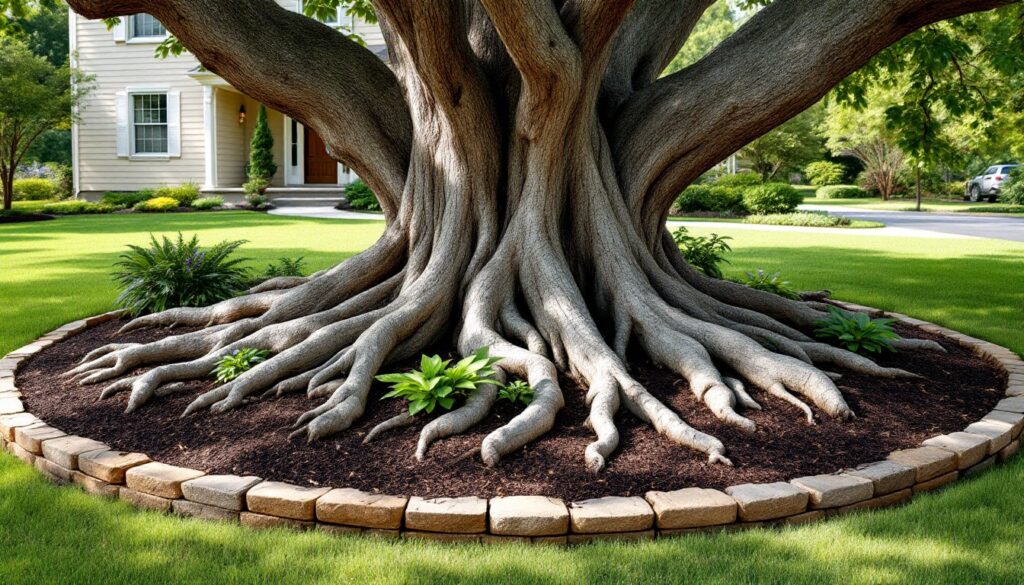
Design tip: Combine materials for visual interest. Frame a mulch-based tree ring with a border of stacked stone or a single course of brick set on edge. The contrast defines the planting area and keeps mulch from migrating into lawn zones.
Replenish organic mulch annually: it decomposes and thins over time. Check depth with a ruler, if it’s below 2 inches, top it off. Avoid dyed mulches in tree root zones: some dyes contain chemicals that leach into soil as the mulch breaks down.
Shade-Tolerant Plants That Thrive Near Tree Roots
The trifecta of shade, root competition, and dry soil under established trees narrows plant options, but plenty of species evolved for exactly these conditions.
Perennials for dry shade:
- Hostas: Dozens of varieties in sizes from 4-inch miniatures to 3-foot giants. Slug-resistant varieties like ‘Sum and Substance’ and ‘Halcyon’ perform best.
- Ferns: Autumn fern (Dryopteris erythrosora) and Japanese painted fern (Athyrium niponicum) tolerate drier conditions than most ferns.
- Epimedium (barrenwort): Delicate flowers in spring, attractive foliage year-round. Once established, it’s nearly indestructible.
- Liriope (lilyturf): Grass-like clumps with purple flower spikes. Handles deep shade and root competition.
Annuals for seasonal color:
- Impatiens: Traditional shade annual. Newer varieties like SunPatiens tolerate more light.
- Begonias: Both fibrous and tuberous types work. Wax begonias handle dry soil better.
- Coleus: Grown for foliage, not flowers. Hundreds of color combinations available.
Planting strategy:
Plant in gaps between roots using the same technique as ground covers, small holes with amended backfill. Space plants according to their mature spread: overcrowding leads to weak, leggy growth. Many successful garden designs using shade plants layer heights and textures, placing taller hostas or ferns toward the back and shorter edging plants like ajuga or lamium at the border.
Water new plantings thoroughly. The first season is critical: tree roots will outcompete new plants for any available moisture. Drip irrigation or soaker hoses placed between roots deliver water efficiently without waste.
DIY Tree Ring and Circle Designs
Tree rings, circular beds or mulched areas around a trunk, are the most straightforward front yard solution. Done right, they’re clean, professional-looking, and DIY-friendly.
Step-by-step installation:
- Measure and mark: Use a garden hose or spray paint to outline a circle extending at least 2-3 feet beyond the dripline (the outer edge of the canopy). Larger is better: it includes more of the root zone and creates better visual proportions.
- Edge the perimeter: Options include:
- Plastic or metal landscape edging: Flexible, easy to install, about $0.50-1.50 per linear foot. Pound stakes through the edging to anchor it.
- Stone or brick border: More permanent and visually substantial. Dig a shallow trench, set stones on a 1-inch sand base for stability.
- Cut edge: Use a half-moon edger or flat spade to cut a clean line into the soil. Re-cut annually to maintain the border.
- Remove existing turf: Slice under the grass with a flat spade, cutting roots 1-2 inches below grade. Shake off loose soil and compost the sod. If the area is large, rent a sod cutter (about $80/day) to save your back.
- Install landscape fabric (optional): Lay it over bare soil, cut an X around the trunk, and secure with landscape staples. This isn’t necessary if you’re using a thick mulch layer, but it helps in weedy areas.
- Add mulch or stone: Spread evenly to the recommended depth. Rake smooth and pull material back from the trunk.
Design variations:
For multiple trees in proximity, connect individual rings with curved mulch paths, this creates a cohesive planting bed rather than isolated islands. When planning larger yard projects, tree rings often serve as anchor points that tie together walkways, flower beds, and lawn areas.
If the tree sits near a property line or walkway, install a half-circle or kidney-shaped bed rather than a full ring. Adjust the design to fit the space rather than forcing symmetry.
Conclusion
Tree roots don’t have to be the enemy of a polished front yard. With ground covers, raised beds, mulch layers, or simple tree rings, homeowners turn root zones into design features that require less maintenance than struggling grass. The key is working with the tree’s biology, not against it, by choosing shallow-rooted plants, protecting surface roots, and never piling soil or mulch against the trunk. A little planning and a weekend’s work converts that problematic spot into a front yard asset.