Table of Contents
ToggleA bare patio slab surrounded by grass or dirt looks unfinished, like a stage without a set. But proper landscaping around a patio turns that concrete or paver pad into the focal point of a yard, blending hardscape with living plants, creating visual flow, and extending usable outdoor space. Whether the goal is privacy, curb appeal, or a seamless indoor-outdoor vibe, the right plant choices, hardscaping details, and lighting make all the difference. This guide walks through practical, field-tested landscaping ideas around patios that suit most climates, budgets, and skill levels.
Key Takeaways
- Strategic landscaping ideas around patio blend hardscape with living plants to transform an isolated slab into a welcoming outdoor room that defines boundaries and extends usable space.
- Choose border plants based on sun exposure and soil type—full-sun areas suit daylilies and ornamental grasses, while partial-shade zones work well with hostas, ferns, and shade-tolerant groundcovers.
- Install edging between planting beds and your patio with a 2–3 inch mulch depth to contain soil, prevent weed encroachment, and create clean visual lines without damage to pavers.
- Evergreen hedges like Arborvitae or columnar trees such as ‘Sky Pencil’ holly provide year-round privacy screening when space-conscious patio layouts demand vertical solutions.
- Low-voltage LED path lights spaced 6–8 feet apart and uplights on specimen plants extend patio usability into evening while highlighting landscaping features safely and efficiently.
- Start with one or two priority areas like border plantings or privacy screens rather than tackling all landscaping ideas around patio improvements at once, allowing plants to mature and the space to evolve naturally.
Why Landscaping Around Your Patio Matters
A patio without surrounding landscaping looks isolated and uninviting. Strategic planting and hardscape work around a patio does several things: it softens the transition from structure to yard, defines the patio boundary visually (important when the edge isn’t obvious), provides shade and windbreak, and conceals utility eyesores like AC units or hose bibs. Aesthetically, it frames the patio like a rug frames a room.
From a functional standpoint, good patio landscaping reduces mud splash during rain, minimizes weed encroachment from lawn edges, and can reduce reflected heat off pavers on hot days. Plants also help manage stormwater runoff if drainage is an issue.
Consider the patio’s material and grading before planting. Soil should slope away from the patio at a minimum 2% grade (1/4 inch per foot) to prevent water pooling against the slab or undermining the base. If the patio sits on a raised base or has a retaining wall on one side, adjust planting zones accordingly. Don’t pile soil or mulch against paver edges, this invites settling and insect problems.
Border Plantings That Frame Your Patio Beautifully
Border plantings act as the green “frame” around the patio. Done right, they guide the eye, add color through the seasons, and create a sense of enclosure without blocking views.
Choosing the Right Plants for Patio Borders
Start by assessing sun exposure and soil type. Most patios get full to partial sun: check conditions at different times of day. For full-sun borders (6+ hours of direct light), consider perennials like daylilies, black-eyed Susans, and ornamental grasses such as Karl Foerster feather reed grass or little bluestem. These tolerate heat reflected off paving and require minimal water once established.
Partial-shade zones (morning sun, afternoon shade, or dappled light) suit hostas, astilbe, ferns, and coral bells. If the patio sits under a tree canopy, shade-tolerant groundcovers like ajuga or creeping Jenny work well but need edging to prevent spreading onto pavers.
For year-round interest, incorporate evergreen shrubs like boxwood, dwarf Alberta spruce, or compact hollies. Keep mature size in mind, actual plant width at maturity should fit the planting bed with 6–12 inches of clearance from patio edges. Overgrown shrubs crowd seating areas and create maintenance headaches.
Avoid plants with aggressive root systems (willows, poplars, silver maples) within 10 feet of paver or concrete patios: roots can lift and crack the surface over time. Also skip high-pollen or messy-fruit species near seating unless regular cleanup isn’t an issue.
Edging is non-negotiable. Install plastic, metal, or stone edging between planting beds and the patio to contain mulch and soil. This prevents erosion onto pavers and gives a clean visual line. Mulch beds to a depth of 2–3 inches with shredded hardwood or pine bark to suppress weeds and retain moisture, but keep mulch at least an inch away from plant stems to avoid rot.
Hardscaping Elements to Define Your Patio Area
Hardscaping, non-plant materials like stone, gravel, or pavers, adds structure and reduces maintenance compared to plant-only borders. It also solves practical problems like muddy walkways or undefined patio edges.
Pea gravel is a budget-friendly option for creating a transition zone between patio and lawn. A 2–3 inch layer over landscape fabric provides good drainage and a casual look. Pea gravel installations work especially well around irregular patio shapes. Install edge restraint (plastic or metal) to keep gravel from migrating into the lawn: plan to rake and top-dress annually.
For a more formal look, extend the patio with a border of matching or complementary pavers. This creates a visual “halo” and simplifies mowing by eliminating tight corners. Leave 1/8–1/4 inch spacing between pavers for joint sand: polymeric sand locks them in place and resists weed growth better than standard masonry sand.
Dry-stacked stone walls or low retaining walls (12–24 inches tall) work well on sloped yards to create level planting beds around the patio. For walls under 2 feet, most jurisdictions don’t require permits, but confirm local codes. Use landscape adhesive on cap stones to prevent shifting. Backfill with gravel for drainage and avoid placing walls where they’ll trap water against the patio.
Those looking to integrate natural stone materials should consider flagstone stepping stones leading from the patio into the yard or garden. Set stones on a 2-inch sand bed with gaps for groundcover like creeping thyme, which tolerates foot traffic and releases fragrance when stepped on.
Creating Privacy with Strategic Landscaping
Privacy is a top priority for patios visible from neighboring properties or streets. Living screens take time to establish but offer better aesthetics and habitat value than solid fencing.
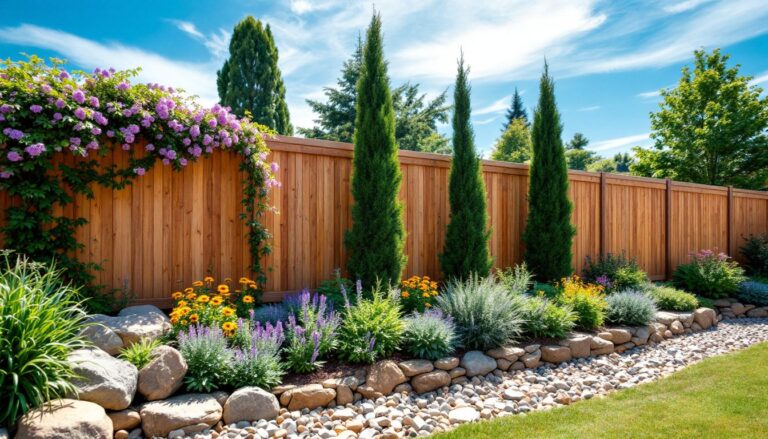
Evergreen hedges provide year-round screening. Arborvitae (Thuja) varieties like ‘Green Giant’ or ‘Emerald’ grow 1–2 feet per year and tolerate pruning well. Space them 3–4 feet on center for a solid screen within 3–4 years. Skip Leyland cypress in humid regions, they’re prone to bagworms and canker disease. For a more relaxed look, mix in deciduous shrubs like lilac or viburnum, which flower in spring but lose leaves in winter.
If space is tight, columnar trees like ‘Sky Pencil’ holly or fastigiate hornbeam provide vertical screening without wide lateral spread. Plant them 4–6 feet from the patio edge to allow for root growth and avoid foundation issues.
Lattice panels (wood or vinyl) with climbing vines offer faster privacy than shrubs alone. Install 4×4 posts in concrete footings spaced 6–8 feet apart, then attach lattice panels with galvanized screws. Train clematis, climbing roses, or honeysuckle up the lattice: most need 2–3 seasons to fill in. Use galvanized wire or soft ties, not staples, which damage stems.
Planters with tall ornamental grasses like miscanthus or bamboo (clumping varieties only, never running bamboo without root barriers) create mobile privacy screens on large patios. Use containers at least 18 inches in diameter and 16 inches deep to prevent toppling in wind. Drip irrigation simplifies watering: containers dry out faster than in-ground plantings.
For inspiration on integrating screening with other outdoor living elements, consider layering plants at different heights, low groundcovers in front, medium shrubs mid-layer, and tall grasses or small trees as the backdrop.
Lighting and Decorative Touches for Ambiance
Lighting extends patio usability into evening hours and highlights landscaping features. Aim for layers: ambient (overall illumination), task (cooking or dining areas), and accent (highlighting plants or hardscape).
Low-voltage landscape lighting (12V systems) is DIY-friendly and safe. Path lights along patio borders improve safety and define edges after dark. Space fixtures 6–8 feet apart for even coverage without light pollution. LED bulbs last 25,000+ hours and draw minimal power: look for warm white (2700–3000K color temperature) to avoid harsh blue tones.
Uplights positioned at the base of trees or large shrubs create dramatic shadows and depth. Use fixtures with adjustable heads to direct light where needed. For specimen plants or focal point landscaping features, well lights recessed into the ground provide clean lines but require more installation effort, bury the housing flush with soil and route wire through PVC conduit to prevent accidental cuts during future digging.
String lights or cafe lights strung overhead add festive ambiance. Suspend them between posts, pergola beams, or eye hooks screwed into fascia boards. Use outdoor-rated cord (14- or 16-gauge) and weatherproof sockets. Most setups require a GFCI-protected outlet: if running new wiring, hire a licensed electrician, outdoor electrical work often requires permits per NEC Article 210.
Decorative touches like outdoor rugs define seating zones and add color without permanent commitment. Polypropylene rugs resist mildew and fade less than natural fibers. Anchor corners with furniture or rug pads to prevent wind lift.
Planters and container gardens bring seasonal color close to seating areas. Group containers in odd numbers (three or five) for visual interest. Use a mix of heights, tall grasses or small shrubs in back, mounding annuals in middle, trailing plants like ivy or sweet potato vine to spill over edges. Self-watering containers or drip irrigation keep plants healthy with less effort.
For those working with landscaping rock accents, consider using river rock or decorative boulders as anchors for planting beds or to create dry creek beds that double as drainage features and visual interest around the patio perimeter.
Conclusion
Landscaping around a patio transforms an isolated slab into an integrated outdoor room that feels purposeful and welcoming. The key is balancing hardscape structure with living plants, thinking through maintenance before planting, and addressing practical needs, drainage, privacy, lighting, alongside aesthetics. Start with one or two priority areas (a border planting or privacy screen, for example) rather than tackling everything at once. Most patio landscaping improves with time as plants mature and the space gets dialed in to how it’s actually used.