Table of Contents
ToggleA well-executed modern landscape can boost a home’s curb appeal instantly, and the payoff goes beyond aesthetics. It increases property value, makes a memorable first impression, and signals to potential buyers or visitors that the property is well-maintained. Unlike traditional landscaping with its fussy flower beds and high-maintenance lawns, modern front yard design emphasizes clean geometry, intentional plant placement, and hardscaping that does the heavy lifting. Whether you’re prepping to sell or simply want your home to stand out on the block, modernizing your front yard is a project that delivers visible results without requiring a contractor’s budget.
Key Takeaways
- Modern front yard landscaping boosts curb appeal by emphasizing clean geometry and intentional plant placement, making homes more attractive to buyers while increasing property resale value.
- A restrained plant palette of three to five repeated species with geometric shapes—combined with purposeful negative space—creates a polished, low-maintenance design that requires less weekend maintenance than traditional yards.
- Hardscaping elements like concrete pavers, Corten steel edging, and stacked stone planters define modern landscapes and add structure, with budget-friendly options like gravel beds and painted cinder blocks delivering high-impact results.
- Ornamental grasses, evergreen shrubs, and succulents provide architectural form over floral fuss; choose plants rated for your hardiness zone and space them in odd-numbered groupings for visual rhythm.
- DIY-friendly projects such as gravel beds ($30–$60 per cubic yard), concrete stepping stones, and minimalist planters with succulents can transform curb appeal in just a few weekends without contractor costs.
Why Modern Landscaping Boosts Curb Appeal
Modern landscaping works because it simplifies decision-making for the eye. Traditional yards can feel cluttered, seasonal annuals fighting for attention, ornate borders, lawn ornaments competing with architectural features. Modern design strips away the noise.
This approach centers on horizontal lines, repetition, and negative space. Gravel beds, stacked stone planters, and geometric pathways guide the viewer’s attention toward the home’s architecture rather than distracting from it. The result is a cohesive, polished look that photographs well and requires less weekend maintenance than traditional designs.
From a financial perspective, landscaping investments can significantly increase resale value, often recouping 100% or more of the cost according to real estate studies. Modern landscapes especially appeal to younger buyers who value low-maintenance outdoor spaces and water-conscious plantings. If your neighborhood leans traditional, a well-executed modern yard becomes a standout rather than an eyesore, provided the materials and scale respect the home’s existing style.
Key Elements of Modern Front Yard Design
Clean Lines and Minimalist Plantings
Modern landscapes rely on restrained plant palettes and strong architectural forms. Instead of crowding beds with a dozen species, select three to five plants and repeat them in groupings. Ornamental grasses like Miscanthus or Blue Fescue add vertical movement without excessive width. Evergreen shrubs, Boxwood, Yew, or Japanese Holly, provide year-round structure and can be sheared into clean geometric shapes.
Avoid mixed-color flower borders. Stick to a monochromatic or two-tone palette: white blooms against dark foliage, or cool blues and silvers for a cohesive look. Agave, Echeveria, and other succulents work beautifully in arid climates and require minimal water once established. In cooler zones, consider Hosta varieties with bold leaves or clumping grasses that hold their shape through winter.
Plant spacing matters more in modern design than traditional. Leave intentional gaps between groupings, this negative space isn’t wasted: it’s visual breathing room that highlights each plant’s form. Mulch or gravel fills the gaps, creating a continuous, polished surface that suppresses weeds and reduces maintenance.
Hardscaping That Makes a Statement
Hardscaping, pavers, gravel, stone, and concrete, defines modern landscapes. These materials create structure and contrast that plants alone can’t deliver.
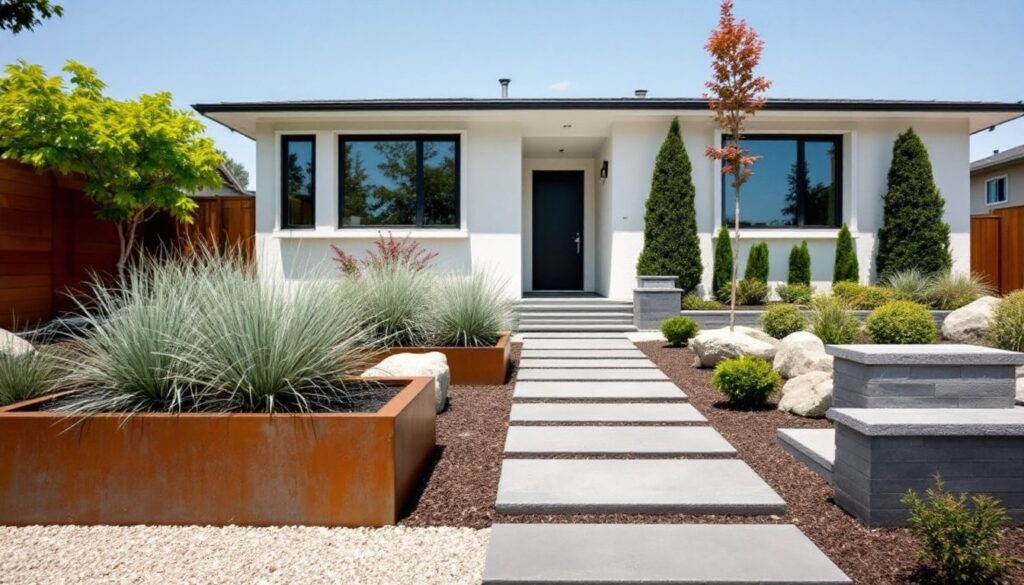
Concrete pavers in large format (18″x18″ or larger) set in a staggered grid make a bold entrance path. Pair them with decomposed granite or pea gravel to soften edges and allow for drainage. For a higher-end look, porcelain pavers offer the appearance of natural stone without the maintenance: they resist staining and don’t require sealing.
Corten steel edging is a modern favorite. It develops a rust patina over time that complements both warm and cool color schemes. It’s available in 1/8″ or 3/16″ thickness and can be cut with an angle grinder to create curves or straight runs. Install it at least 4 inches deep to prevent shifting.
Stacked stone planters or retaining walls using flat-profile stone like bluestone or limestone add vertical interest and level changes, especially useful on sloped lots. Most stone is sold by the ton: expect to pay $200–$400 per ton depending on type and region. Budget about 1 ton per 25 square feet of wall face.
Consider using stone for hardscaping accents to add texture and permanence to high-traffic zones. If you’re replacing a traditional lawn, permeable pavers or gravel with landscape fabric underneath reduce water runoff and meet many local stormwater codes.
Budget-Friendly Modern Landscaping Projects You Can DIY
Modern doesn’t have to mean expensive. Several high-impact projects can be tackled over a few weekends with basic tools and modest budgets.
1. Gravel Beds with Edging
Remove turf in defined areas using a flat shovel or sod cutter. Lay landscape fabric (4 oz/sq yd minimum) to suppress weeds. Install metal or polymer edging along borders, then spread 3/4″ crushed gravel or pea gravel 2–3 inches deep. Expect to pay $30–$60 per cubic yard of gravel: a typical 10’x15′ bed requires about 1.5 cubic yards. This project can be completed in a weekend and instantly modernizes overgrown or patchy lawn areas.
2. Minimalist Planters with Succulents
Concrete planters in geometric shapes (cube, trough, or bowl) are widely available at home centers for $40–$150 depending on size. Fill with cactus/succulent potting mix and group three to five plants per container. Water sparingly, overwatering is the top killer of succulents. Position planters flanking an entryway or along a walkway for symmetry.
3. Painted Cinder Block Retaining Walls
Standard 8″x8″x16″ concrete blocks cost around $2 each. Stack them dry (no mortar needed for walls under 24″ tall) in a running bond pattern. Paint with masonry primer and exterior latex or acrylic paint in matte black, charcoal, or white. This transforms cheap material into a striking design feature. Always check local codes: walls over 3 feet typically require engineering and permits.
4. DIY Concrete Stepping Stones
Mix 60 lb bags of concrete mix (about $5 each) and pour into reusable forms or DIY frames made from 2×4 lumber. Finish with a trowel for a smooth surface or add exposed aggregate for texture. Space stones 18–24 inches apart through gravel or groundcover for an informal path. This approach to enhancing curb appeal feels custom without the cost of professional paving.
5. Mulched Beds with Boulders
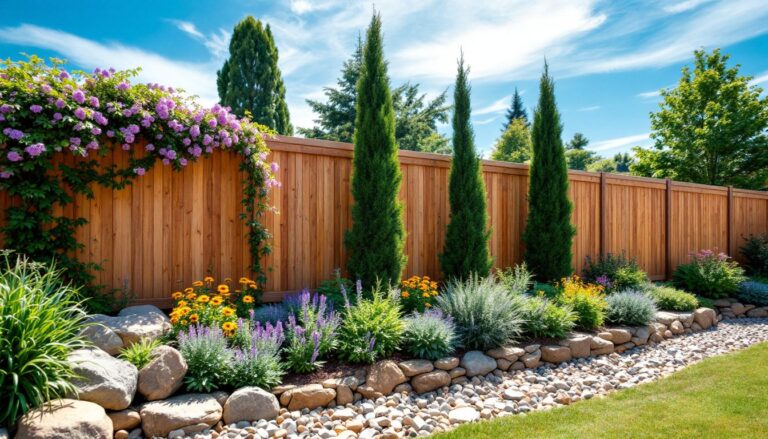
Large accent boulders (200–500 lbs) can be sourced from landscape supply yards for $100–$300 each. Position them as focal points in mulched beds. Use hardwood mulch or shredded bark (not dyed red, stick to natural brown or black) spread 2–3 inches deep. Mulch costs $25–$40 per cubic yard: a cubic yard covers roughly 100 square feet at 3″ depth.
Choosing the Right Plants for a Modern Aesthetic
Plant selection makes or breaks a modern design. The goal is architectural form over floral fuss.
Grasses
Ornamental grasses deliver movement and texture. Karl Foerster Feather Reed Grass grows upright to 4–5 feet and holds its form through winter. Blue Oat Grass stays compact (2–3 feet) with steely blue foliage. Plant grasses in odd-numbered groups (3, 5, or 7) for visual rhythm.
Evergreen Shrubs
Boxwood (Buxus) varieties like ‘Green Velvet’ or ‘Winter Gem’ tolerate shearing into tight balls or hedges. They’re hardy in zones 5–9. For a larger specimen, Japanese Yew (Taxus cuspidata) can be shaped into columns or clouds. Both prefer well-drained soil and partial to full sun.
Succulents and Agaves
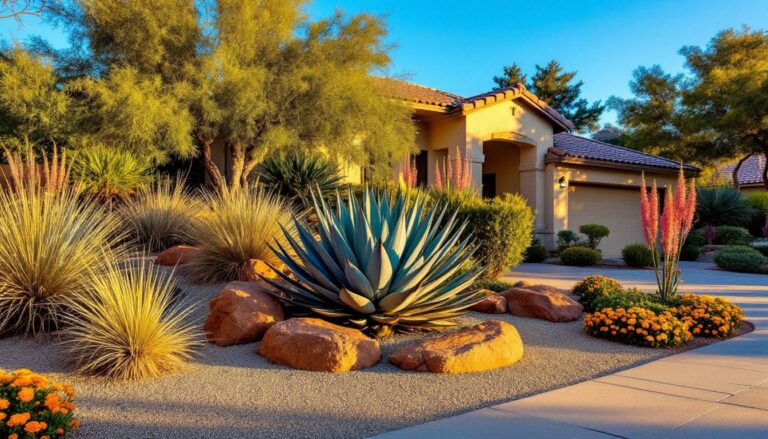
In zones 8–11, Agave americana and Aloe varieties provide bold, sculptural forms. Pair them with low-growing Sedum or Sempervivum for layered interest. In colder climates, grow them in containers and overwinter indoors, or substitute with cold-hardy sedums like Autumn Joy.
Groundcovers
Replace lawn with Dymondia margaretae (zones 9–11), a low-maintenance groundcover that tolerates light foot traffic. In cooler climates, Creeping Thyme (Thymus serpyllum) or Blue Star Creeper work well between pavers. Both are hardy to zone 4 and stay under 3 inches tall.
Trees
Modern yards benefit from single-trunk, clean-branching trees. Japanese Maple cultivars like ‘Bloodgood’ or ‘Sango Kaku’ offer elegant structure without overwhelming a small front yard. Crape Myrtle (zones 7–9) provides multi-season interest with smooth bark and summer blooms. For a desert look in arid regions, consider Palo Verde or Desert Willow.
When shopping, confirm hardiness zones and mature sizes. A plant that looks perfect at 24 inches in a nursery pot may reach 8 feet wide in five years. Resources like Gardenista’s lawn-free landscaping ideas showcase how strategic plant choices create low-maintenance, high-impact designs.
Before planting, amend soil with compost if drainage is poor. Dig holes twice as wide as the root ball but no deeper, and water deeply at planting. Mulch around the base, keeping it 2–3 inches away from stems to prevent rot.
Conclusion
Modern front yard landscaping isn’t about following a rigid template, it’s about editing down to the essentials and letting each element shine. Whether you’re laying gravel beds, installing geometric pavers, or planting a minimalist palette of grasses and evergreens, the goal is cohesion and clarity. Start with one high-impact project, refine as you go, and remember that the best landscapes evolve over seasons, not weekends.