Table of Contents
ToggleSide yards are often the forgotten real estate of a property, too narrow for a patio, too awkward for a garden bed, and typically just a dirt path or a collection of weeds between the house and fence. But that narrow strip doesn’t have to be wasted space or a maintenance headache. With smart material choices, strategic planting, and a little upfront planning, homeowners can turn that neglected corridor into a low-maintenance, attractive feature that adds curb appeal without draining time or money. This guide walks through budget-friendly strategies, plant selections, and design tricks that keep side yard <a href="https://thecreakingchair.com/mobile-home-landscaping-ideas/”>landscaping simple and sustainable.
Key Takeaways
- Low-maintenance side yard landscaping works because small footprints require less material and labor than larger yard areas, making it ideal for budget-conscious homeowners.
- Choose shade-tolerant plants like hostas and ferns, or drought-tolerant options like sedum and ornamental grasses that thrive with minimal watering once established.
- Gravel pathways, concrete pavers, and crushed stone are the most affordable hardscaping solutions, costing $30–$60 per cubic yard and eliminating long-term mowing and weeding expenses.
- Native ground covers such as creeping phlox and Pennsylvania sedge adapt to local conditions, require no fertilizer or pest control, and reduce maintenance costs over time.
- Smart design elements like vertical trellises, repetitive plantings, and mulch layering create visual impact in narrow spaces without requiring expensive materials or complex installations.
- Sourcing materials strategically—through municipal compost programs, native plant sales, online marketplaces, and clearance events—can cut landscaping costs by 50% or more.
Why Side Yards Are Perfect for Budget-Friendly Landscaping
Side yards offer a unique advantage: they’re small. That limited square footage means less material, fewer plants, and less labor compared to front or back yards. A 30-foot by 4-foot side yard is only 120 square feet, roughly the size of a small bathroom.
These narrow spaces also tend to have consistent conditions. Most side yards share similar sun exposure throughout the day (full shade, partial shade, or narrow strips of sun). That predictability makes plant selection easier and reduces trial-and-error waste.
Another bonus: side yards are low-traffic zones. Unlike the front yard that faces the street or the backyard where kids and pets play, the side yard usually just serves as a pathway or utility corridor. This means plantings and materials don’t need to withstand constant foot traffic, so less expensive or delicate options can work well.
Finally, side yards are forgiving. Mistakes or budget compromises aren’t as visible as they would be in prime areas. Homeowners can experiment with DIY projects, test out new ground covers, or phase improvements over time without the pressure of immediate perfection.
Smart Plant Choices That Thrive With Minimal Care
The key to low-maintenance landscaping is selecting plants that match the site conditions and require little intervention once established. Side yards often deal with poor drainage, compacted soil, and either deep shade (from adjacent structures) or harsh reflected heat. Choose plants adapted to those stresses.
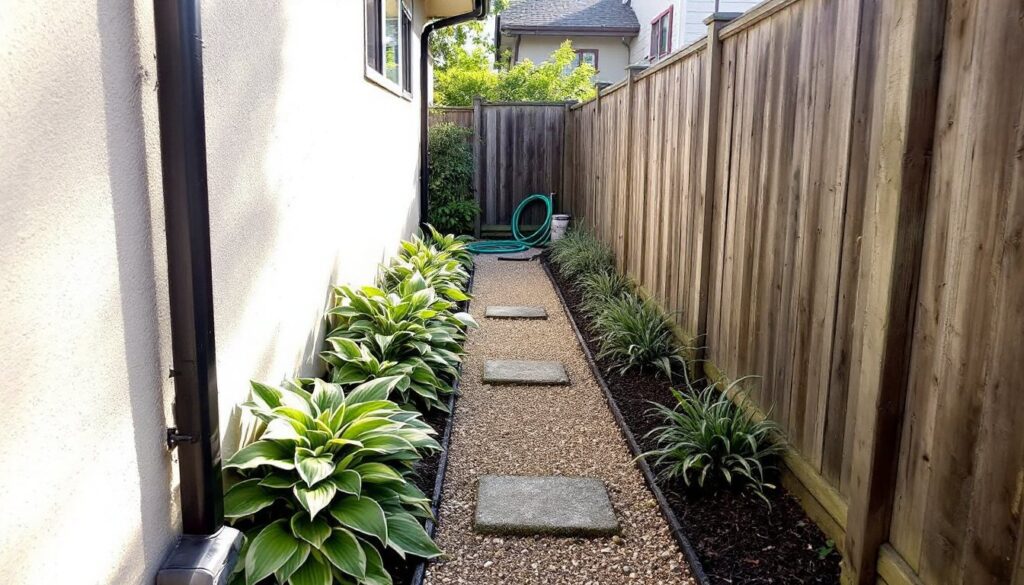
For shaded side yards, consider hostas, ferns (autumn fern, Japanese painted fern), and liriope (lilyturf). These perennials tolerate neglect, spread slowly to fill space, and require minimal watering once their root systems are established, usually after the first growing season.
In sunnier or drier side yards, drought-tolerant options like sedum, yarrow, and ornamental grasses (blue fescue, Karl Foerster feather reed grass) handle heat and infrequent watering. Ornamental grasses also add vertical interest in narrow spaces without taking up much lateral room.
Avoid high-maintenance plants that need deadheading, regular division, or pest management. Roses, hybrid tea varieties, and finicky annuals might look appealing at the nursery, but they’ll demand more time and money than they’re worth in a side yard.
Native Ground Covers and Perennials
Native plants are the ultimate low-maintenance choice. They’re adapted to local climate, soil, and pests, which means they require less water, no fertilizer, and minimal pest control once established. Native ground covers can replace traditional turf or mulch, reducing both mowing and mulch replenishment costs.
For example, creeping phlox works well in sunny, dry conditions and provides spring color. Wild ginger (Asarum canadense) thrives in shade and spreads slowly to form a dense mat. Pennsylvania sedge (Carex pensylvanica) is a native grass-like ground cover that tolerates shade and requires no mowing.
Check with local extension offices or native plant societies to identify species suited to the region. Many native perennials are available at comparable prices to non-native cultivars, and some municipalities offer native plant sales or rebates as part of water conservation programs.
When planting, prepare the soil properly. Remove existing weeds (physically or with a non-selective herbicide like glyphosate, following label instructions and safety precautions). Amend compacted soil with compost, about 2-3 inches worked into the top 6 inches improves drainage and root penetration. Mulch around new plantings with 2-3 inches of shredded hardwood mulch to suppress weeds and retain moisture during establishment.
Affordable Hardscaping Solutions for Side Yards
Hardscaping reduces long-term maintenance by eliminating the need for mowing, watering, or weeding in key areas. Side yards are ideal for hardscaping because the small footprint keeps material costs manageable.
Gravel pathways are one of the most budget-friendly options. A ton of pea gravel (approximately 0.5 cubic yards) covers about 80-100 square feet at a 2-inch depth and typically costs $30-$50 depending on region and delivery fees. Lay down landscape fabric first to prevent weed growth, then spread the gravel. Edging with steel or plastic lawn edging (about $1-$2 per linear foot) keeps the gravel contained and creates a clean look.
For a more solid surface, crushed stone or decomposed granite (DG) compacts better underfoot than pea gravel and resists displacement. DG costs roughly $40-$60 per cubic yard and works well in dry climates. In wet regions, it can become muddy, so consider adding a stabilizer product.
Stepping stones or pavers add visual interest without covering the entire area. Buy concrete pavers or flagstone remnants at big-box stores or landscape supply yards. Concrete pavers run $1-$3 each for basic 12×12-inch or 16×16-inch sizes. Space them 18-24 inches apart and fill gaps with gravel or ground cover to stretch materials further.
Recycled or salvaged materials can cut costs significantly. Broken concrete (urbanite) makes durable, free or low-cost pathways. Check local suppliers or online marketplaces for leftover pavers, bricks, or stone from other projects.
For drainage issues common in side yards, a French drain may be necessary. Dig a trench 12-18 inches deep, line it with landscape fabric, fill with 3/4-inch drain rock, and place a 4-inch perforated drain pipe at the bottom. This prevents standing water that damages foundations and plantings. While it adds labor, it’s a one-time fix that eliminates ongoing drainage problems.
Creative Design Ideas That Save Money and Time
Good design maximizes impact with minimal materials. In a narrow side yard, layering and repetition create cohesion without requiring a huge plant palette or complex installations.
Vertical elements draw the eye up and make narrow spaces feel larger. Install a simple trellis (DIY from 2×2 lumber or buy pre-made for $20-$40) and train climbing plants like clematis or climbing hydrangea. Vertical planting uses less ground space and reduces the need for ground cover.
Repeating a single ground cover along the length of the side yard creates a unified, intentional look. Rather than mixing multiple plants, choose one reliable species (like liriope or sedum) and plant it in a continuous band. This approach reduces plant variety costs and simplifies maintenance, one watering schedule, one set of care requirements.
Mulch as a design element is underrated. A deep layer of dark hardwood mulch or pine straw creates contrast against the house and fence, defines planting beds, and suppresses weeds. At $3-$5 per 2-cubic-foot bag, mulch is one of the most cost-effective ways to cover large areas. For a 4-foot by 30-foot side yard at 3 inches deep, expect to use about 10 bags for full coverage.
Consider a dry creek bed design if the side yard handles runoff. Arrange river rock and larger stones to mimic a natural stream channel. This approach is especially effective when working with stone materials, turning a drainage problem into a visual feature. Line the bed with landscape fabric, add 3-4 inches of 1-3 inch river rock, and place larger accent stones along the edges.
If the side yard is very shaded, embrace it. Rather than fighting low light with sun-loving plants that will struggle, create a shade garden with simple landscaping solutions like ferns, hostas, and dark mulch. Add a small bench or a piece of garden art to signal that the space is intentional, not neglected.
Low-Cost Materials and Where to Find Them
Material costs can quickly escalate, but strategic sourcing keeps budgets in check. Start by calculating exactly how much material is needed, measure the side yard’s length and width, then use online calculators to determine cubic yards of mulch, gravel, or soil amendments.
Big-box stores like Home Depot offer competitive prices on bagged materials and often run spring sales on mulch, soil, and stone. Buying in bulk (by the cubic yard) from local landscape supply yards is cheaper for larger areas. A cubic yard of mulch delivered typically costs $25-$45, compared to $30-$50 for the equivalent in bags.
Municipal compost programs often provide free or low-cost compost to residents. Check with the city or county for availability and pick-up schedules. Quality varies, but it’s suitable for amending soil or topdressing planting beds.
Native plant sales hosted by botanical gardens, conservation groups, or university extensions offer regionally appropriate plants at lower prices than retail nurseries. These sales typically happen in spring and fall. Buying smaller pot sizes (4-inch or gallon containers instead of 3-gallon) also cuts costs: the plants catch up in size within a season or two.
Online marketplaces (Craigslist, Facebook Marketplace, Nextdoor) are goldmines for free or cheap materials. Homeowners frequently give away extra pavers, stone, soil, or plants from their own projects. Be prepared to haul materials yourself and inspect for quality (avoid treated wood with rot, broken pavers, or diseased plants).
End-of-season clearance sales at garden centers offer deep discounts on perennials and shrubs. Plants marked down 50-75% in late summer or fall can be planted immediately if there’s adequate time before frost. They’ll establish roots over winter and emerge strong in spring.
For gravel and stone, compare prices between landscape suppliers, masonry yards, and even agricultural co-ops that sell crushed limestone or chat (a byproduct of mining). Prices can vary by $10-$20 per ton depending on the supplier.
Another option: consider alternative materials like recycled rubber mulch for high-traffic paths. While not suitable for planting beds, rubber mulch lasts longer than organic mulch and doesn’t need annual replenishment. It costs more upfront ($5-$7 per bag) but eliminates replacement costs.
Conclusion
Side yards don’t require elaborate designs or expensive installations to look good and stay manageable. By focusing on durable materials, regionally adapted plants, and simple layouts, homeowners can transform these narrow spaces into attractive, functional areas that need minimal upkeep. Start with one section, work within a realistic budget, and prioritize choices that reduce future labor. The result is a side yard that enhances the property without becoming another weekend chore.