Table of Contents
ToggleA dead fireplace doesn’t have to sit empty, collecting dust and looking like the forgotten corner of your living room. Whether it stopped working years ago, came with the house as a decorative relic, or simply doesn’t fit your lifestyle, that hearth holds serious potential. With the firebox already recessed and the mantel providing natural framing, you’ve got a built-in alcove that’s begging for a purpose. The key is treating it like any other architectural feature, work with its dimensions, leverage the existing surround, and commit to a conversion that matches how you actually use the space. Here are practical, actionable ideas that turn a non-functioning fireplace into something useful.
Key Takeaways
- An unused fireplace can be transformed into a functional and stylish space, such as a book nook, display area, or plant sanctuary, by assessing its dimensions and matching the conversion to how you actually use the space.
- Installing shelving for a book nook requires sealing the damper, priming the interior with stain-blocking primer, and using masonry anchors or toggle bolts, making it an accessible DIY upgrade for most homeowners.
- Creating an eye-catching display space in your fireplace with bold accent colors, layered decor, and proper lighting can make underused alcoves into compelling focal points that work well for rotating seasonal displays.
- Plant sanctuaries work best when you protect the hearth with waterproof lining, use pots with proper drainage, and install supplemental grow lights if natural light is limited.
- For media centers or storage solutions, carefully measure the firebox opening, ensure adequate ventilation, and plan electrical access before committing to any permanent installation.
- Reversible conversions like baskets, bins, or non-invasive storage are ideal for renters, while built-in solutions and cabinetry preserve resale value when finish work is treated as intentional architectural design.
Turn Your Fireplace Into a Stylish Book Nook
Create a Cozy Reading Corner with Built-In Shelving
A firebox with standard dimensions (typically 30–36 inches wide, 24–30 inches tall) can hold more books than you’d think. Start by assessing the firebox depth, most run 16–20 inches, enough for a single row of paperbacks or hardcovers stacked spine-out.
Materials needed:
- ¾-inch plywood or MDF for shelving (cut to firebox width minus ½ inch for clearance)
- Shelf brackets or floating shelf hardware rated for 20+ lbs
- Wood primer and paint to match existing trim
- LED puck lights or battery-operated strip lights (optional)
Steps:
- Clean the firebox thoroughly. Remove soot, ash, and creosote with a stiff brush and TSP substitute. Let it dry completely, any moisture will cause paint adhesion issues.
- Seal the damper. Close it fully and use high-temp silicone caulk around the edges to block drafts and prevent heat loss in winter.
- Prime interior surfaces. Use a stain-blocking primer (BIN or Kilz) to cover soot stains and odors. Two coats if the brick is porous.
- Install shelving. Measure and mark shelf placement with a level. Use masonry anchors if attaching to brick: toggle bolts work for metal fireboxes. Space shelves 10–12 inches apart for standard book heights.
- Add lighting. Battery-powered LED strips along the top or back wall make books easier to browse and add ambiance without running new electrical.
This setup works best in living rooms or dens where the fireplace is already a focal point. If the firebox is shallow (under 14 inches), consider installing shelves that extend slightly past the opening and frame them with trim to tie into the mantel. Home improvement experts often highlight creative storage solutions as one of the highest-impact DIY upgrades for underused spaces.
Design a Eye-Catching Display Space
Showcase Artwork and Decorative Objects
The recessed firebox acts like a shadow box, use it. This approach works for rotating seasonal decor, collections, or a single large piece that needs depth to pop.
What fits:
- Framed artwork (lean or hang with picture wire anchored to the back wall)
- Sculptural objects (ceramic vases, driftwood, metal art)
- Mirrors (especially convex or vintage styles that reflect light back into the room)
- Vintage signs, architectural salvage, or oversize candles on pedestals
Execution tips:
- Paint the interior. A bold accent color (charcoal, deep green, or matte black) makes lighter objects stand out. Flat or eggshell sheen reduces glare.
- Create layers. Place taller items in back, shorter in front. Odd-numbered groupings (3 or 5 pieces) look more intentional than pairs.
- Anchor with scale. If the firebox is wide, one large piece (24+ inches) commands attention better than a cluster of small trinkets.
- Light it properly. A single pendant or two adjustable picture lights mounted inside the firebox opening can dramatically change the look after dark.
This method requires minimal construction skill and can be changed seasonally. If you’re displaying heavier objects (stone sculptures, large pottery), make sure any shelving or pedestals are secured to the firebox floor or back wall with construction adhesive and appropriate anchors. The flexibility to swap out displays makes this one of the easiest fireplace transformations for renters or anyone hesitant to commit to permanent changes.
Transform It Into a Plant Sanctuary
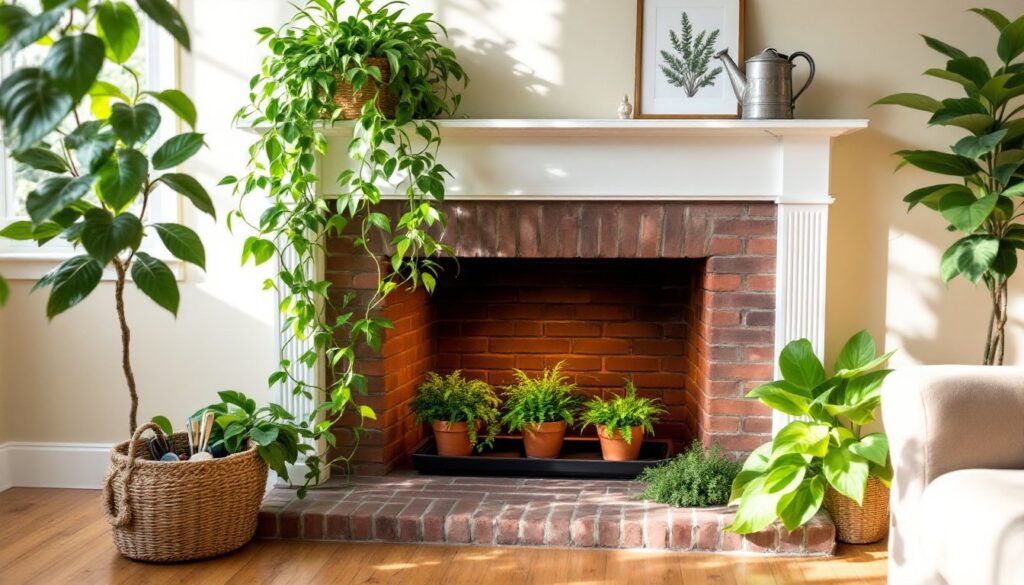
Fireplaces often sit on exterior walls with adjacent windows, which means decent natural light for plants. If yours doesn’t, supplemental grow lights make this viable.
Best plant types:
- Low-light tolerant: pothos, snake plants, ZZ plants, philodendrons
- Moderate light: ferns, prayer plants, peperomia
- High light (with grow lights): succulents, cacti, herbs
Setup steps:
- Protect the hearth and firebox. Line the floor with a waterproof boot tray or cut a piece of pond liner to size. Moisture damage to brick or tile is avoidable with this simple step.
- Add drainage. Use pots with drainage holes and saucers, or elevate pots on plastic risers so water doesn’t pool.
- Install grow lights if needed. A full-spectrum LED strip or clip-on grow light (20–40 watts) mounted to the underside of the mantel provides 12–14 hours of light daily. Plug into a timer.
- Vary heights. Use plant stands, overturned pots, or stacked bricks to create visual interest. Trailing plants like pothos can cascade from the mantel or upper shelves.
- Maintain airflow. Stagnant air in a closed firebox encourages mold. Leave the damper open slightly or run a small fan nearby.
This works particularly well in rooms where you want to soften hard architectural lines. The combo of greenery against brick or stone surround reads as intentional biophilic design. Just don’t skip the waterproofing, water stains on century-old brick are nearly impossible to remove.
Add Functional Storage Solutions
If your home lacks closets or you’re drowning in gear, a fireplace can become hidden or semi-concealed storage.
Storage options:
- Baskets and bins: Woven baskets or fabric bins stacked inside the firebox hide remotes, toys, or pet supplies. Measure the firebox opening and buy containers 2 inches narrower for easy access.
- Built-in cabinetry: For a cleaner look, build or install a flush-mounted cabinet door that matches surrounding trim. Use concealed hinges and a push-latch mechanism for a seamless front.
- Firewood storage: Ironic but practical, stack split firewood for a functional, rustic look even if you’re never burning it. Line the floor with a tarp first to contain bark and dirt.
- Media equipment: Routers, modems, gaming consoles, and cable boxes can live inside the firebox if ventilation is addressed. Drill vent holes in the back wall or leave the damper cracked.
Installation notes:
For built-in cabinetry, frame the opening with 1×2 pine or poplar, then hang a ¾-inch plywood door cut to fit. Piano hinges work well for wider openings. Paint to match trim or stain to contrast.
If storing electronics, run a surge protector inside and route cables through the existing flue or behind the surround. Check that heat from equipment won’t build up, most modern gear runs cool, but older AV receivers can get hot.
Storage conversions are reversible, making them renter-friendly. Just remove baskets or unscrew doors if you move. For homes with valuable antique mantels, keeping interventions non-invasive preserves resale value.
Convert Your Fireplace Into a Media Center
Mounting a TV above a mantel is common, but placing a screen inside the firebox is an emerging trend that hides the TV when not in use and makes better use of the recess.
Planning requirements:
- Measure the firebox opening carefully. Standard fireboxes fit 32–43 inch TVs comfortably. Depth matters, you need at least 6 inches behind the screen for a tilting or fixed wall mount.
- Check electrical access. If there’s no outlet inside the firebox, you’ll need to run cable through the wall or flue. This may require a licensed electrician, especially if the fireplace shares a wall with exterior brick or masonry.
- Ensure ventilation. TVs generate heat. Leave the damper open or drill ventilation holes in the firebox back wall (¾-inch holes, spaced 6 inches apart).
- Address viewing angle. If the fireplace is low (hearth at floor level), viewers will be looking down. A tilting mount helps, but seating height matters.
Installation steps:
- Prep the firebox. Clean, prime, and paint the interior matte black to reduce glare.
- Mount the TV. Use a low-profile or tilting wall mount rated for the TV’s weight. Anchor into brick with tapcon screws or toggle bolts into metal.
- Conceal cables. Use a cord management kit or run cables through the flue if it’s not actively venting gas appliances. For gas fireplaces, consult local code, some jurisdictions prohibit running wiring through vents.
- Add a soundbar or speakers. Mount a soundbar on the hearth or mantel, or recess speakers into the surround if you’re comfortable with carpentry.
Alternatives: If a full TV install feels like overkill, mount a tablet or digital photo frame instead. These draw less power, need less ventilation, and can cycle through family photos or artwork when idle.
This conversion suits media rooms, basements, or bedrooms where a traditional TV setup competes with furniture placement. Just don’t attempt this with an active gas fireplace, disconnect and cap the gas line first, which requires a licensed plumber or HVAC tech in most areas.
Many homeowners find inspiration for mixing technology with traditional architecture on comprehensive home design platforms that cover both aesthetic and functional considerations. The key to any fireplace conversion is making it look intentional, not like an afterthought. Measure twice, commit to the finish work, and treat the surround and mantel as part of the overall design.