Table of Contents
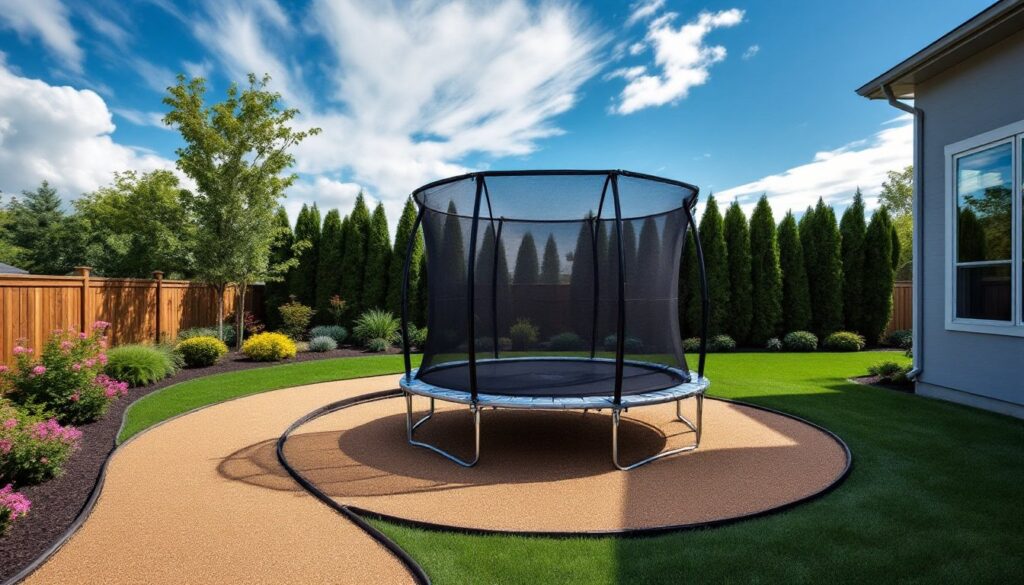
ToggleA trampoline sitting bare in the middle of a lawn sticks out like a sore thumb. But with thoughtful landscaping, that same trampoline becomes part of a cohesive outdoor space, one that balances safety, function, and curb appeal. The right ground cover prevents injuries, strategic plantings soften hard edges, and smart hardscaping keeps foot traffic from turning grass into mud. This isn’t about hiding the trampoline: it’s about integrating it into a yard that works harder and looks better. Let’s walk through how to landscape around a trampoline without compromising safety or spending a fortune.
Key Takeaways
- Backyard trampoline landscaping solves three critical problems at once—safety, maintenance, and curb appeal—by using proper ground cover, strategic plantings, and hardscaping to integrate the trampoline into your yard.
- Maintain at least a 6-foot safety clearance zone around your trampoline with impact-absorbing materials like rubber mulch, engineered wood fiber, or pea gravel installed 6–12 inches deep to reduce fall injuries.
- Position your trampoline on level ground with 24 feet of vertical clearance overhead, within sight lines from your house, and in an area with good drainage to prevent mud and standing water.
- Choose low-growing, foot-traffic-tolerant plants like Spirea, daylilies, and ornamental grasses for perimeter planting beds at least 3 feet outside the safety zone, avoiding thorny or toxic varieties.
- Define high-traffic routes from your house to the trampoline with gravel paths, stepping stones, or mulch pathways to prevent worn dirt trails and keep mud out of your home.
- Add privacy and year-round screening with evergreen shrubs like Arborvitae or clumping bamboo, or combine a 4–6 foot fence with climbing vines for seasonal interest without sacrificing sightlines for supervision.
Why Landscaping Around Your Trampoline Matters
Landscaping around a trampoline solves three problems at once: safety, maintenance, and aesthetics. Bare soil or patchy grass beneath and around a trampoline becomes a mud pit after rain and a dust bowl in summer. That mess tracks into the house and makes the yard look neglected.
From a safety standpoint, the American Academy of Pediatrics recommends a clearance zone of at least 6 feet around trampolines to reduce injury risk from falls. The right ground cover within that zone, whether wood chips, rubber mulch, or engineered impact-absorbing materials, can soften landings. Hard surfaces like concrete or exposed tree roots increase injury severity.
Aesthetically, an unadorned trampoline dominates the visual space. Strategic plantings, low borders, and pathways break up that visual weight, making the trampoline feel like part of the landscape rather than an afterthought. Homeowners investing in complete yard transformations often start with high-traffic play zones like trampolines, then expand outward. Done right, trampoline landscaping adds value without boxing in the fun.
Choosing the Best Location for Your Trampoline
If the trampoline isn’t installed yet, location is the first decision that affects everything downstream. Level ground is non-negotiable, trampolines on slopes create uneven bounce and frame stress. Check for level using a 4-foot spirit level or a laser level across the proposed site.
Overhead clearance matters more than most DIYers realize. The International Trampoline Industry Association suggests 24 feet of vertical clearance from the jumping surface. That rules out spots under power lines, tree canopies, or roof eaves. Even a low-hanging branch can become a hazard during high bounces.
Sight lines from the house are a practical concern. Parents and caregivers need to supervise without standing outside the whole time. Position the trampoline within view of kitchen or family room windows when possible. Avoid tucking it behind sheds or dense hedges that block visibility.
Finally, consider drainage. Low-lying areas where water pools after rain will undermine any ground cover and create mosquito breeding grounds. A slight slope away from the trampoline is ideal. If the only available spot has drainage issues, plan to install a French drain or regrade the area with fill dirt and compacted gravel before setting the trampoline frame. This prep work pays off when the first storm hits.
Safety-First Ground Cover Options
The area directly under and around the trampoline needs impact-absorbing ground cover. Grass alone doesn’t cut it, it compacts quickly under foot traffic and offers minimal cushioning.
Rubber mulch (shredded recycled tires) is popular for a reason. It drains well, doesn’t decompose, and provides ASTM F1292-compliant fall protection when installed at least 6 inches deep. Color options (red, brown, black) let it blend or contrast with surrounding landscaping. Downside: it’s pricier than organic mulch, running $5–$8 per cubic foot, and can retain heat in direct sun.
Engineered wood fiber (EWF) or playground wood chips meet the same ASTM standards at a lower cost, about $30–$40 per cubic yard in bulk. It needs replenishing every 1–2 years as it decomposes, but that breakdown improves soil over time. Avoid standard hardwood mulch or cedar chips: they don’t provide adequate impact attenuation and splinter easily.
Pea gravel (¼-inch smooth stone) is a low-maintenance alternative. It drains instantly, doesn’t attract insects, and won’t rot. Depth matters: aim for 9–12 inches for proper cushioning. Pea gravel shifts underfoot, which some kids find annoying, and it can scatter beyond the trampoline zone if not edged properly. Experts discussing various landscape material applications often recommend gravel for dry climates.
Synthetic turf over a foam underlayment offers a clean, consistent surface. It’s the most expensive option, $8–$12 per square foot installed, but eliminates mud and mowing. Use turf rated for playgrounds, not golf or pet applications. Whatever material is chosen, install landscape edging (plastic, metal, or composite) to contain it and prevent migration into lawn areas.
Plant Selection for Trampoline Borders
Plantings around a trampoline need to tolerate foot traffic, stray balls, and occasional trampling. Skip anything thorny, toxic, or fragile. The goal is a green frame that defines the space without creating hazards or high-maintenance headaches.
Perimeter planting beds should sit at least 3 feet outside the safety zone, so if the trampoline has a 12-foot diameter and a 6-foot clearance, plantings start at roughly 9 feet from the center. This keeps roots from interfering with ground cover and ensures kids won’t land in a shrub.
Choose low-growing, clumping plants rather than spreading groundcovers that will invade the mulch or gravel. Avoid plants with surface roots that could create trip hazards. Drip irrigation or soaker hoses work better here than overhead sprinklers, which will soak the trampoline and waste water.
Low-Maintenance Shrubs and Ornamental Grasses
Dwarf shrubs like Spirea ‘Goldflame’ (2–3 feet tall, pink blooms, drought-tolerant once established) or Dwarf Barberry (Berberis thunbergii, 1–2 feet, available in green, red, or gold foliage) provide year-round structure. Both handle full sun to partial shade and need minimal pruning. Avoid barberry varieties with thorns if young kids are around.
Ornamental grasses add movement and texture without needing deadheading. Blue Fescue (Festuca glauca) forms neat 8–12 inch mounds of steel-blue foliage and thrives in poor soil. Dwarf Fountain Grass (Pennisetum alopecuroides ‘Hameln’) grows 2–3 feet tall with feathery seed heads in late summer. Both are USDA Zones 4–9 hardy and deer-resistant.
Daylilies (Hemerocallis) are nearly indestructible. They’ll bounce back even if a soccer ball flattens them. Thousands of cultivars exist in every color except true blue. Plant them 18–24 inches apart in amended soil and they’ll fill in by the second season. Gardens designed with mixed planting strategies often use daylilies as workhorses in high-traffic areas.
Avoid: Roses (thorns), hydrangeas (brittle branches), hostas (slug magnets and shade-lovers that sunburn in open yards), and ornamental grasses taller than 4 feet (they block sight lines and drop messy seed heads onto the trampoline mat).
Creating Natural Barriers and Privacy Screens
If the trampoline is visible from the street or neighbors’ yards, a planted screen can add privacy without the fortress look of a solid fence. The trick is choosing plants that grow tall enough to matter but won’t drop leaves, sap, or fruit onto the trampoline.
Evergreen shrubs provide year-round screening. Arborvitae ‘Green Giant’ (Thuja standishii × plicata) grows 3–5 feet per year and reaches 20–30 feet at maturity, though it can be topped at 8–10 feet for trampoline zones. Space them 5–6 feet apart for a dense hedge. They tolerate a range of soils but need consistent water the first two years.
Bamboo (clumping varieties like Fargesia species, not running types) grows quickly and gives a modern, airy feel. Clumping bamboo stays put without rhizome barriers, reaching 8–12 feet tall depending on the cultivar. It’s evergreen in mild climates but can look ratty after hard freezes. Plant in full sun to partial shade and mulch heavily.
For a deciduous option, Red Twig Dogwood (Cornus sericea) offers bright red stems in winter and grows 6–9 feet tall. It suckers to form thickets, which is a feature here, not a bug. Cut it back hard every few years to keep the stem color vibrant. It tolerates wet soil better than most shrubs.
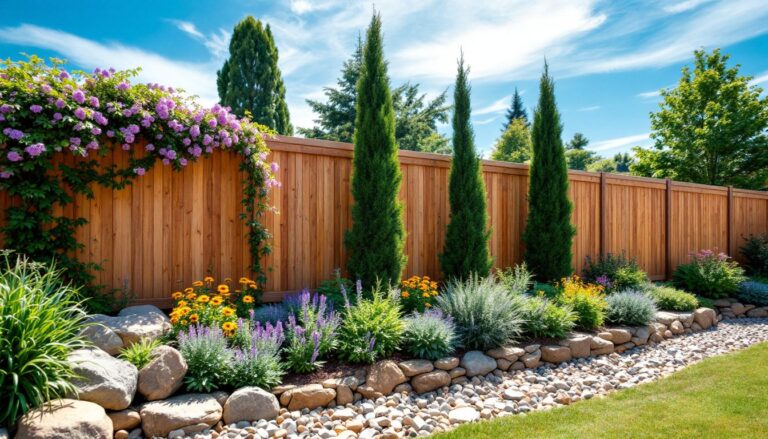
Ornamental fencing combined with vines is another route. A 4–6 foot fence of cedar pickets or vinyl-coated chain link gives instant structure. Grow Clematis, Honeysuckle (Lonicera, non-invasive cultivars), or climbing roses (if thorns aren’t a concern) up the fence for seasonal interest. Use galvanized wire or trellis netting to support vines. Resources like design-focused garden sites often showcase vine-and-fence combinations that work in small yards.
Hardscaping and Pathway Ideas
Kids don’t tiptoe to the trampoline, they run. High-traffic routes from the house or patio to the trampoline turn into worn dirt trails within weeks. A defined pathway prevents that and keeps mud out of the house.
Gravel paths (¾-inch crushed stone or decomposed granite) are the budget-friendly choice. Excavate 3–4 inches deep, lay landscape fabric to suppress weeds, then fill with stone. Edge with steel or aluminum landscape edging (it’s more durable than plastic and less prone to frost heave). A 3-foot-wide path is wide enough for kids running side by side. Cost: about $1.50–$3 per linear foot for materials.
Stepping stone paths work in less-trafficked yards. Use flagstone, concrete pavers, or natural stone set in sand or directly on compacted soil. Space stones 4–6 inches apart (one comfortable stride for adults, close enough for kids to hop between). Surround stones with low groundcover like Creeping Thyme (Thymus serpyllum) or leave them in turf. Stepping stones don’t handle sprinting kids as well as continuous paths, so consider traffic volume.
Mulch paths (same wood fiber or rubber mulch used under the trampoline) blend seamlessly with the safety zone. Edge them with 4×4 pressure-treated timbers or composite landscape timbers staked every 3 feet with ½-inch rebar driven through pre-drilled holes. Mulch paths need topping off annually but drain well and feel softer underfoot than stone. Projects incorporating stone elements in play areas often pair natural stone with mulch for contrast.
Paver patios adjacent to the trampoline create a spot for parents to sit and supervise. A 10×10 foot patio in concrete pavers costs $600–$1,200 in materials (depending on paver style) and takes a weekend to install. Excavate 6–8 inches, lay 4 inches of compacted gravel base, then 1 inch of leveling sand, and set pavers with polymeric sand in the joints. Slope the patio ¼ inch per foot away from the trampoline to avoid runoff pooling under the mat.