Table of Contents
ToggleA fence doesn’t have to be just a property line, it can be the backbone of a beautiful backyard design. Whether it’s a tired chain-link barrier or a plain wood panel, the right landscaping turns a functional structure into a focal point. With strategic planting, lighting, and materials, homeowners can soften hard edges, add privacy, and create visual interest along their perimeter. The key is treating the fence as part of the landscape, not something separate. This guide walks through practical, actionable ideas that work for various budgets, skill levels, and yard conditions.
Key Takeaways
- Backyard fence landscaping transforms a functional property line into a focal point through strategic planting, lighting, and materials that soften edges and add visual interest.
- Vertical gardens with climbing plants like clematis and clematis ivy, supported by trellises spaced 2-3 inches from the fence, provide fast coverage and maximize space efficiency.
- Layered border plantings using a three-tier approach—tall shrubs in back, mid-height perennials in middle, and groundcovers in front—create depth and make fences blend seamlessly into the landscape.
- Low-voltage 12-volt landscape lighting systems with uplights, path lights, and string lights extend outdoor usability and highlight fence plantings after dark without requiring permits or electricians.
- Budget-friendly projects like pallet planters, painted murals, salvaged architectural elements, and gravel paths deliver stunning results using inexpensive materials and DIY techniques.
- Privacy hedges planted 3-4 feet from the fence with proper spacing and twice-yearly trimming provide superior screening while allowing maintenance access and air circulation.
Vertical Garden Walls and Climbing Plants
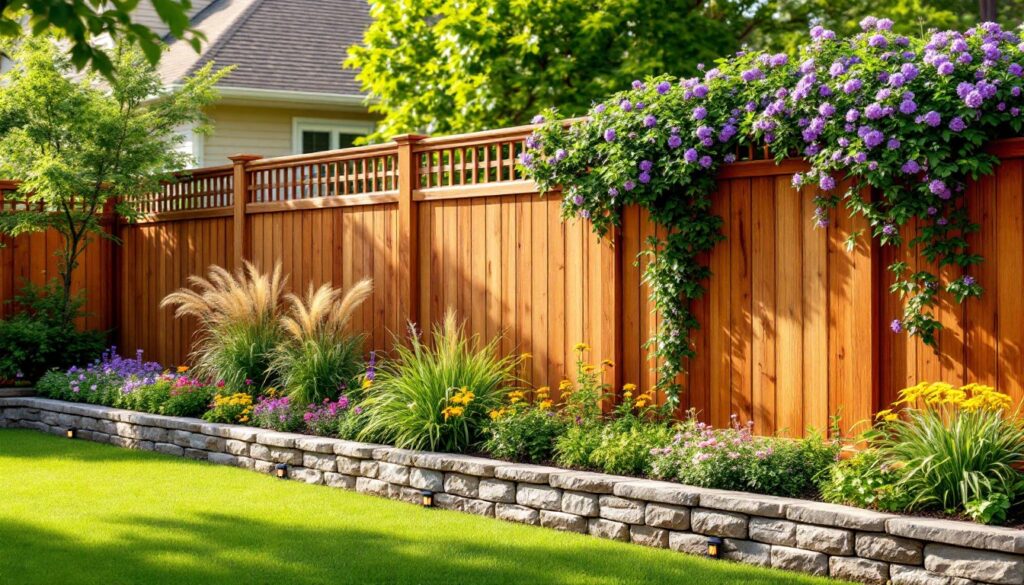
Vertical greenery transforms flat fence surfaces into living walls. Climbing plants like clematis, climbing roses, honeysuckle, and jasmine soften wood or vinyl fencing while adding color and fragrance. Install galvanized wire trellises or wooden lattice panels 2-3 inches away from the fence to allow air circulation and prevent moisture damage to the wood.
For faster coverage, plant Boston ivy or Virginia creeper, both self-clinging varieties that attach via tendrils without additional support. They’ll cover a 6-foot fence in two to three seasons. Space plants 12-18 inches apart for dense coverage.
Modular vertical planters work well for renters or those with limited ground space. Pocket planters made from UV-resistant fabric or cedar slats mount directly to fence posts. Fill them with herbs, succulents, or trailing annuals. Ensure the fence structure can handle the added weight, a saturated vertical garden adds roughly 5-10 pounds per square foot.
Water vertical plantings more frequently than ground beds, as they dry out faster. Installing a drip irrigation line along the top rail simplifies maintenance and keeps plants hydrated during summer heat.
Layered Border Plantings for Depth and Color
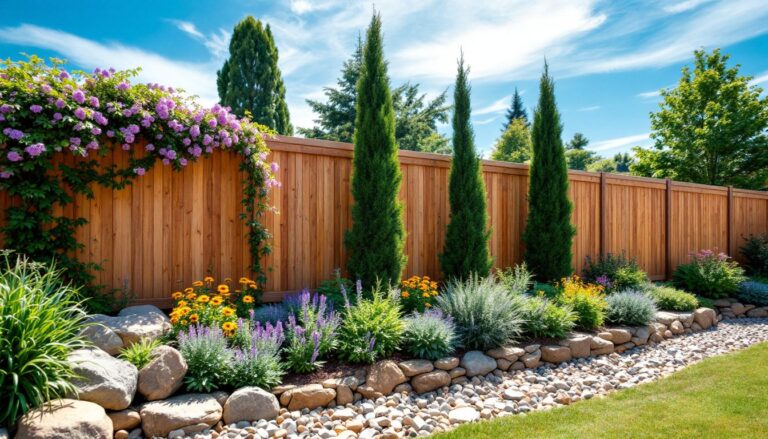
Single-row plantings look flat. Layered beds create depth and make fences disappear into the landscape. Start with a three-tier approach: tall shrubs or ornamental grasses in back, mid-height perennials in the middle, and low groundcovers or annuals up front.
For the back row, use plants that reach 4-6 feet at maturity, things like arborvitae, boxwood, or dwarf Alberta spruce for evergreen structure, or butterfly bush, hydrangeas, or ornamental grasses like miscanthus for seasonal interest. Space them according to their mature width, typically 3-4 feet on center for shrubs.
The middle tier works with 18-30 inch perennials: coneflowers, black-eyed Susans, salvia, or Russian sage. These add color without blocking the taller plants. Front-edge plantings, hostas, creeping phlox, or sedum, finish the transition from bed to lawn.
Prepare the bed properly. Strip sod, amend soil with 2-3 inches of compost, and edge with metal or plastic landscape edging to contain mulch. Apply 3-4 inches of shredded hardwood mulch to suppress weeds and retain moisture. Skip landscape fabric, it creates more problems than it solves once roots establish.
Consider different landscaping approaches when planning the overall design of your beds.
Decorative Lighting Along Your Fence Line
Low-voltage landscape lighting extends the usability of outdoor spaces and highlights fence plantings after dark. A 12-volt system is DIY-friendly and safe, no electrician or permit required for most jurisdictions.
Start with a transformer sized for the total wattage of your lights (add 20% buffer). Most residential setups use a 150-300 watt transformer with built-in timers and photocells. Run 12-gauge wire for runs over 50 feet to prevent voltage drop.
Uplights placed at the base of the fence create dramatic shadows when aimed at plants or fence texture. Space them 6-8 feet apart for even coverage. Path lights along the fence line work for functional walkways, mount them 12-18 inches off the ground and space them 8-10 feet apart.
String lights add ambiance without a dedicated lighting system. Use commercial-grade Edison bulbs with rubber-insulated cords rated for outdoor use. Secure them to the top fence rail with screw-in cup hooks spaced every 2-3 feet. Avoid stapling directly into the cord, it’s a fire hazard.
For fences near patios or decks, popular outdoor lighting techniques often combine multiple fixture types for layered illumination.
Solar lights work for supplemental accent lighting but lack the brightness and reliability of wired systems. If using solar, choose models with separate panels you can position in full sun, even if the fixture sits in shade.
Natural Wood and Stone Accents
Mixing materials breaks up monotony and adds texture. Stacked stone or brick borders at the base of a fence create a transition between planting beds and the fence line. A 12-18 inch high stone wall provides structure and defines the bed edge while offering a place to sit or set planters.
For a dry-stack wall, use flagstone or fieldstone with flat surfaces. Lay the first course slightly below grade for stability, then stack subsequent layers with the largest stones at the bottom. Tilt each stone slightly backward into the bed for drainage and stability. No mortar needed for walls under 2 feet, gravity and proper stacking do the work.
Cedar or redwood timbers (actual dimension 5.5 x 5.5 inches) work as rustic raised borders. Anchor them with ½-inch rebar driven through pre-drilled holes every 4 feet. These naturally rot-resistant woods last 10-15 years in contact with soil.
For a more polished look, incorporating stone materials into fence landscaping creates permanence and reduces maintenance. Alternatively, using bricks as edging or in decorative patterns adds color and structure.
River rock or pea gravel (¾ to 1½ inches) works as mulch alternative in arid climates or under eaves where organic mulch stays too wet. Lay landscape fabric underneath and edge the area to prevent migration. Calculate coverage: one ton covers roughly 100 square feet at 2 inches deep.
Creating Privacy with Strategic Hedge and Shrub Placement
A dense hedge provides more privacy than most fences and softens the yard’s edge. Evergreen shrubs like Thuja ‘Green Giant’, Leyland cypress, or skip laurel grow quickly and maintain year-round screening. Plant them 3-4 feet away from the fence to allow maintenance access and air circulation.
For a formal hedge, space plants at half their mature width. A shrub that spreads 6 feet should be planted 3 feet on center. This creates overlap as they mature. Trim twice yearly, once in late spring after the first growth flush, again in mid-summer, to maintain shape.
Mixed hedging with multiple species looks more natural and is less vulnerable to disease. Combine holly, viburnum, and boxwood at varied spacing. This approach requires less precision but creates a fuller, cottage-style screen.
For faster privacy, use bamboo, but only clumping varieties like Bambusa multiplex or Fargesia. Running bamboo (Phyllostachys) spreads aggressively and requires root barriers sunk 24-30 inches deep. Even with barriers, expect maintenance.
Privacy shrubs perform best in well-draining soil. If the area stays soggy, amend with coarse sand or install a French drain before planting. Most evergreens won’t tolerate wet feet.
Budget-Friendly DIY Fence Landscaping Projects
Upgrading fence landscaping doesn’t require a contractor’s budget. Pallet planters repurpose free or cheap materials into vertical gardens. Sand the wood, treat with exterior stain, and staple landscape fabric to the back before filling with potting mix. Lean them against the fence or mount with L-brackets.
Painted murals or stencils on wood fences add personality. Use exterior acrylic paint or solid stain for longevity. Prep the surface by power washing (let dry 48 hours), then apply a bonding primer before painting. Stencils cut from Mylar sheets last longer than cardboard and are reusable.
Salvaged window frames, shutters, or old gates mounted on fences create architectural interest. Secure them with exterior-grade screws into fence posts or crossbeams, not just into the fence boards, which won’t hold weight.
Gravel or mulch paths along the fence line cost pennies per square foot. Excavate 3-4 inches, tamp the base, lay landscape fabric, then spread 2-3 inches of material. Edge with steel or aluminum for clean lines.
For budget inspiration, many creative landscaping techniques use inexpensive materials in clever ways. Also, big-box retailers often carry affordable fencing accessories and plantings during seasonal sales.
Seed over transplants for annuals and groundcovers. Wildflower mixes or clover seed establish along fence lines for $10-15 per 1,000 square feet. Scratch the soil surface, broadcast seed, and water daily until germination.
Conclusion
Fence landscaping isn’t about hiding mistakes, it’s about maximizing an existing structure. Whether adding climbing vines, layered plantings, stone accents, or lighting, each improvement makes the yard more functional and visually appealing. Start with one section, test what works in the specific conditions, then expand. The fence line offers consistent structure that’s easier to work with than open lawn. With proper prep and smart plant choices, it becomes one of the yard’s strongest features.