Table of Contents
ToggleA well-designed front yard shouldn’t demand every Saturday morning and half your paycheck. Low maintenance front yard landscaping delivers curb appeal without the constant mowing, watering, and pruning that traditional landscapes demand. For homeowners juggling work, family, and actual weekends, smart landscaping means choosing plants that thrive on neglect, hardscaping that lasts decades, and design strategies that look intentional year-round. Whether working with a compact urban lot or a sprawling suburban frontage, the right approach cuts maintenance hours by 60-80% while boosting home value and neighbor envy in equal measure.
Key Takeaways
- Low maintenance front yard landscaping reduces weekly upkeep from 2-3 hours to just 30 minutes monthly while cutting water use by 50-70% and saving $300-800 annually.
- Smart design principles like hydrozoning, limiting turf, and using repetition with native perennials and evergreen shrubs eliminate constant pruning and create intentional year-round appeal.
- Replace traditional grass with drought-tolerant alternatives such as clover lawns, creeping thyme, or sedges to drastically reduce mowing, watering, and maintenance demands.
- Drip irrigation systems deliver 90%+ efficiency compared to sprinklers and cost only $100-200 to install, paired with 3-4 inches of mulch to suppress weeds and retain soil moisture.
- Hardscaping solutions like gravel pathways, pavers, and raised beds provide decade-long durability with minimal upkeep while boosting curb appeal and home value.
Why Choose Low Maintenance Landscaping for Your Front Yard?
Traditional lawns consume roughly 30-60 gallons of water per square foot annually in most climates, plus weekly mowing, seasonal fertilizing, and constant edging. That’s 40+ hours yearly for an average 1,200 sq ft front lawn. Low maintenance landscaping flips that equation.
Time savings rank first for most DIYers. Replacing turf with native perennials, mulched beds, and hardscaping drops weekly upkeep from 2-3 hours to maybe 30 minutes monthly during growing season. That’s yard work measured in minutes, not mornings.
Water bills drop noticeably. Drought-tolerant plants and efficient irrigation can cut outdoor water use by 50-70%, saving $300-800 annually depending on region and lot size. Municipal rebates in water-stressed areas sometimes offset conversion costs entirely.
Property value holds or improves. Mature, well-designed low maintenance landscaping signals “move-in ready” to buyers. Overgrown foundation plantings and patchy lawns do the opposite. Simple front yard landscaping ideas that emphasize structure and evergreens photograph well and appeal broadly.
Environmental benefits matter too. Native plants support pollinators, reduce chemical runoff, and don’t require gas-powered equipment every week. If local codes allow, trading a lawn for a meadow or rock garden eliminates emissions from mowers entirely.
Essential Design Principles for Easy-Care Front Yards
Good design does half the maintenance work before a single plant goes in the ground. Start by zoning the yard into functional areas: entry path, foundation plantings, street-facing display beds, and transition zones.
Limit turf to high-impact areas only. If grass is non-negotiable, confine it to a central strip or entry frame. Borders should be clean hardscape edges (steel, aluminum, or concrete mow strips set flush with grade) to eliminate string trimming.
Group plants by water and sun needs, hydrozoning, so irrigation targets only what needs it. Shade-tolerant hostas don’t belong next to sun-loving sedums. Mixing them guarantees one zone stays overwatered or underwatered.
Use repetition and mass plantings instead of one-of-everything collector gardens. Three groupings of five plants each look intentional and mature faster than fifteen different specimens. Repetition also simplifies care: you’re not juggling fifteen different pruning schedules.
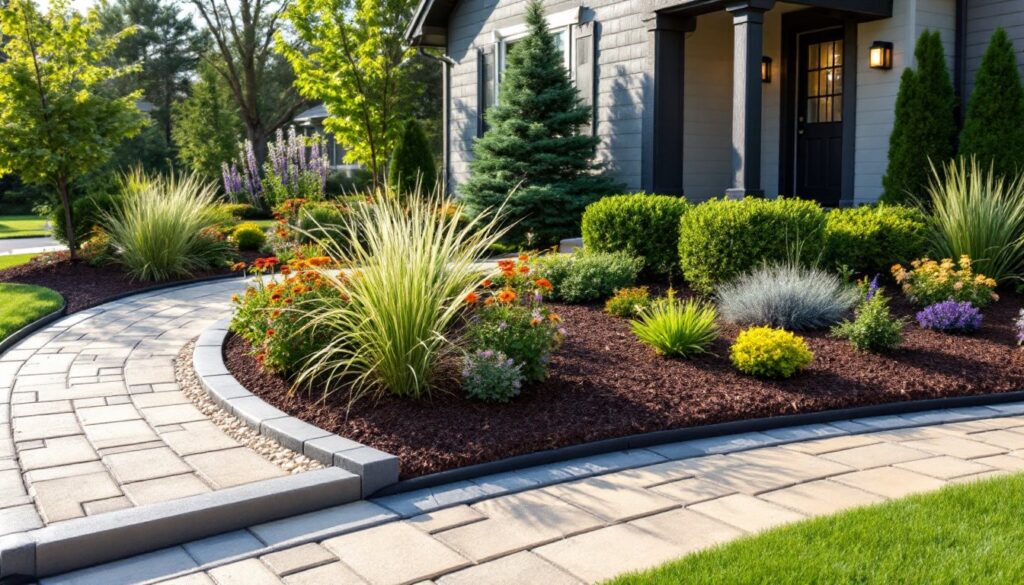
Build in hardscape structure. Pathways, retaining walls, and borders define beds and reduce the area needing active care. A 12-inch mulched border along the driveway and foundation eliminates the grass-meets-concrete headache entirely.
Plan for mature size. Small front yard landscaping ideas often cram too many shrubs too close. A 3-foot-wide dwarf spirea planted six inches from the foundation will smother windows in three years. Check plant tags for spread at maturity, then believe them. Temporary gaps fill with mulch or short-lived annuals while perennials establish.
Best Low Maintenance Plants for Front Yard Landscapes
The right plants thrive on benign neglect and look good across three or four seasons. Local climate and USDA hardiness zone dictate specifics, but patterns hold nationwide.
Evergreen shrubs anchor low maintenance designs. Boxwood (Buxus), dwarf conifers (Hinoki cypress, mugo pine), and inkberry holly (Ilex glabra) provide year-round structure without seasonal cleanup. They need pruning once annually or less. Avoid fast growers like privet unless you enjoy monthly shearing.
Native perennials adapted to regional rainfall and soil handle weather extremes without intervention. Coneflowers (Echinacea), black-eyed Susans (Rudbeckia), sedums, and ornamental grasses (fountain grass, blue fescue) come back yearly, spread slowly, and feed pollinators. Many self-seed modestly, filling gaps naturally. Drought-tolerant varieties found in comprehensive home improvement how-tos work well in water-restricted climates.
Groundcovers replace mulch and suppress weeds. Creeping thyme, ajuga, creeping phlox, and vinca spread to form living mats that choke out competition. They handle foot traffic better than turf in low-traffic zones and never need mowing.
Ornamental grasses deliver height, movement, and winter interest with zero deadheading. Maiden grass (Miscanthus), little bluestem, and switchgrass tolerate poor soil and drought. Cut them back once in early spring: that’s the annual maintenance.
Avoid plants requiring constant deadheading (roses, most annuals), aggressive spreaders (mint, bamboo, English ivy), or anything labeled “vigorous” without checking local invasiveness. A plant that self-sows enthusiastically is only low maintenance if you want fifty seedlings.
Hardscaping Solutions That Minimize Upkeep
Hardscaping replaces plants, and plant care, with stone, concrete, gravel, and pavers. Done right, it’s decade-long durability with near-zero upkeep.
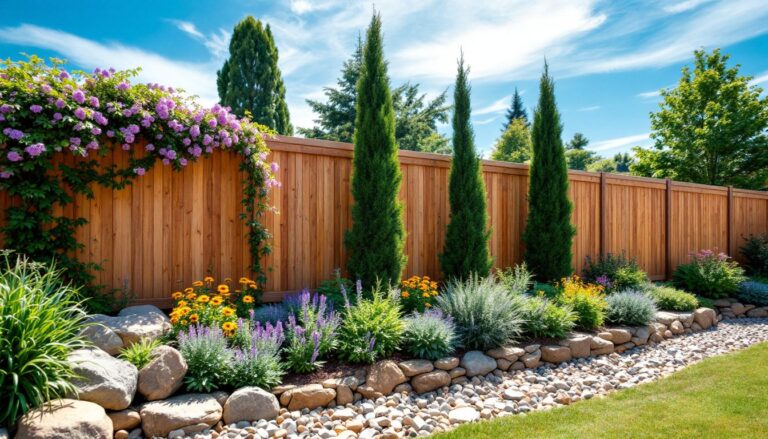
Gravel and crushed stone work for pathways, borders, and dry riverbeds. Three-quarter-inch crushed granite or pea gravel over landscape fabric stays put, drains instantly, and never needs watering. Edging (steel, plastic, or stone) keeps it contained. Gravel doesn’t crack like concrete or heave like pavers in freeze-thaw climates. Topdress every 2-3 years to refresh appearance.
Pavers and flagstone create formal walkways and patios. Set them in sand with polymeric jointing sand to lock them in place and prevent weed growth. Concrete pavers cost $3-6 per square foot installed (DIY), natural flagstone runs $15-25. Both last 20+ years with minimal releveling. Permeable pavers allow drainage and often satisfy stormwater codes.
Retaining walls and raised beds made from concrete block, natural stone, or timber define planting zones and solve grade issues. A 2-3 foot raised bed filled with quality soil eliminates fighting clay or compacted fill. Walls under 4 feet typically don’t require engineering in most jurisdictions, but check local codes. Structural walls need proper base prep: compacted gravel, geogrid reinforcement, and drainage behind the wall.
Mulched beds with stone edging bridge hardscape and plantings. Quality hardwood mulch ($30-50 per cubic yard) lasts 2-3 years, suppresses weeds, and moderates soil temperature. Decorative stone options like river rock or lava rock never decompose but don’t improve soil. Choose based on aesthetic and whether you want permanent or renewable ground cover.
Drip lines and low-voltage lighting conduit install easily under mulch or gravel before final surfacing. Plan ahead: retrofit is harder.
Smart Ground Cover Alternatives to Traditional Lawns
Ripping out grass sounds radical, but small area cheap simple front yard landscaping ideas often start here. Turf alternatives match or beat lawn aesthetics while slashing water, mowing, and chemical use.
Clover lawns (microclover varieties like Trifolium repens) stay green through summer drought, fix nitrogen naturally, and grow only 4-6 inches tall, meaning mowing drops to monthly or less. Seed costs $8-12 per 1,000 sq ft. It handles moderate foot traffic and never needs fertilizer. Flowers attract bees: if that’s a concern, mow before bloom.
Creeping thyme (Thymus serpyllum) forms a fragrant, drought-proof mat in full sun. It tolerates light foot traffic, needs no mowing, and blooms purple in early summer. Establish plugs on 6-12 inch centers: coverage takes one season. Not suitable for heavy play areas, but perfect for hell strips and parking borders.
Sedges (Carex species) mimic fine fescue in shade where grass struggles. They stay low, need no mowing, and tolerate dry shade under maples and oaks where nothing else survives. California and Pacific Northwest natives handle no summer water once established.
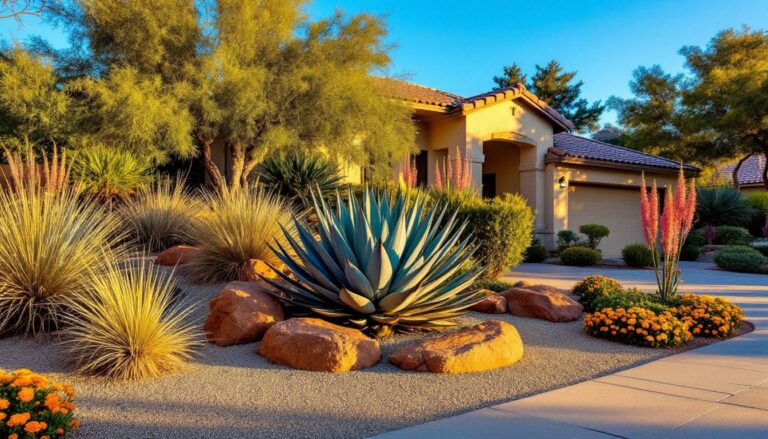
Mulched or graveled beds eliminate ground cover plants entirely. A front yard composed of defined hardscape paths, island beds filled with shrubs and perennials, and gravel or mulch between is legitimate landscape design. Lawnless front yard examples from drought-tolerant garden resources show this approach looks intentional, not neglected.
Transitioning turf requires killing existing grass (sheet mulching or glyphosate, depending on philosophy), amending soil, and planting or surfacing. Permit requirements vary: some HOAs and municipalities restrict or require approval for front yard lawn removal. Check before demo.
Water-Saving Irrigation and Mulching Strategies
Even drought-tolerant plants need establishment watering. The difference is how you water and how long you keep doing it.
Drip irrigation delivers water at the root zone with 90%+ efficiency versus 50-60% for sprinklers. A basic drip setup, half-inch mainline tubing, quarter-inch distribution lines, and emitters, costs $100-200 for a typical front yard and installs in an afternoon. Run it on a timer (battery or AC) for set-it-and-forget convenience. Most small front yard landscaping ideas low maintenance designs use drip exclusively.
Emitter spacing depends on soil. Clay soils spread water laterally: space emitters 18-24 inches apart. Sandy soils need tighter spacing, 12-18 inches, since water moves vertically. Match emitter flow rate (0.5, 1, or 2 GPH) to plant size and type.
Mulch depth matters more than type. Three to four inches of organic mulch (shredded hardwood, pine bark, or cedar) keeps soil moist, moderates temperature swings, and suppresses weeds. Under three inches, weed control suffers. Over four inches risks root rot and creates habitat for voles. Pull mulch 2-3 inches back from plant stems and tree trunks to prevent crown rot.
Inorganic mulches, gravel, lava rock, rubber, don’t decompose, so they don’t need annual topdressing. They also don’t improve soil or moderate temperature as effectively. Use inorganic mulch over landscape fabric in permanent beds where you won’t be planting or dividing. For evolving gardens, organic mulch offers more flexibility and makes it easier to integrate larger hardscape elements.
Rain barrels and cisterns capture roof runoff for irrigation. A 50-gallon barrel costs $80-150 and provides supplemental water during dry spells. Connect multiple barrels in series for more capacity. Most regions allow residential rainwater harvest: commercial or large-scale collection sometimes requires permitting.
Group high-water plants near the house or entry where they’re seen daily and hand-watering is convenient. Push low-water plants to the periphery where forgetting them for two weeks won’t matter.
Conclusion
Low cost low maintenance front yard landscaping isn’t about cutting corners, it’s about designing smarter from the start. Choosing regionally adapted plants, incorporating durable hardscaping, and installing efficient irrigation eliminates the weekly grind without sacrificing curb appeal. Front yard landscaping pictures from regional design inspiration show that less maintenance often means more visual impact, not less. The best landscapes work with climate and site conditions instead of fighting them, leaving homeowners free to enjoy their yards rather than serve them.