Table of Contents
ToggleWater restrictions aren’t going anywhere. Whether it’s municipal mandates, rising utility costs, or the simple reality of climate shifts, homeowners in 2026 are rethinking their relationship with turf grass and water-hungry ornamentals. Modern drought tolerant landscaping offers a practical solution that doesn’t sacrifice curb appeal, in fact, done right, it elevates it. Think clean lines, architectural plants, and hardscaping that works year-round without constant maintenance or irrigation guilt. This guide walks through design principles, plant selections, and installation strategies to create a contemporary front yard that thrives on minimal water while turning heads on the block.
Key Takeaways
- Modern drought tolerant landscaping cuts household water use by 30-60% while reducing maintenance time by 40-50% compared to traditional turf-based yards.
- Mass plantings of architectural plants like agaves, yuccas, and ornamental grasses paired with hardscape create contemporary curb appeal without sacrificing water efficiency.
- Proper site preparation—including sod removal, soil testing, and 30-40% drainage amendments in clay—is essential for drought tolerant landscaping success.
- Drip irrigation with rain sensors and weather-based controllers delivers 90-95% water efficiency during the 12-18 month establishment period.
- Most municipalities now offer $1-$3 per square foot rebates for turf removal and drought-conversion projects, making modern landscaping more affordable.
- After establishment, native and adapted plants in appropriate zones survive on rainfall alone, creating a truly sustainable front yard.
Why Drought Tolerant Landscaping Is Essential for Modern Front Yards
Traditional lawn-centric front yards can consume 30-60% of household water use in arid regions. That’s thousands of gallons annually for a landscape that browns out the moment irrigation stops. Drought tolerant landscaping flips that model by selecting plants and materials adapted to local rainfall and soil conditions.
Beyond water savings, there’s the labor factor. Native and adapted plants typically need less mowing, edging, fertilizing, and pest control than conventional turf. Homeowners report cutting landscape maintenance time by 40-50% after converting to xeriscaping principles.
Property value matters too. Well-executed modern drought tolerant designs signal smart resource management and contemporary taste. Buyers in water-scarce markets increasingly favor homes with established, low-water landscapes over high-maintenance lawns that come with sticker shock utility bills.
Local ordinances are catching up. Many municipalities now offer rebates for turf removal and drought-conversion projects, ranging from $1-$3 per square foot replaced. Check with your water district before starting, rebate programs often require pre-approval and plant lists that meet regional standards.
Key Design Principles for Modern Drought Tolerant Front Yards
Modern aesthetics thrive on simplicity, repetition, and contrast. Start by zoning the front yard into functional areas: entry path, focal plantings, privacy screening, and hardscape transitions. This isn’t about cramming every inch with plants, it’s about intentional negative space.
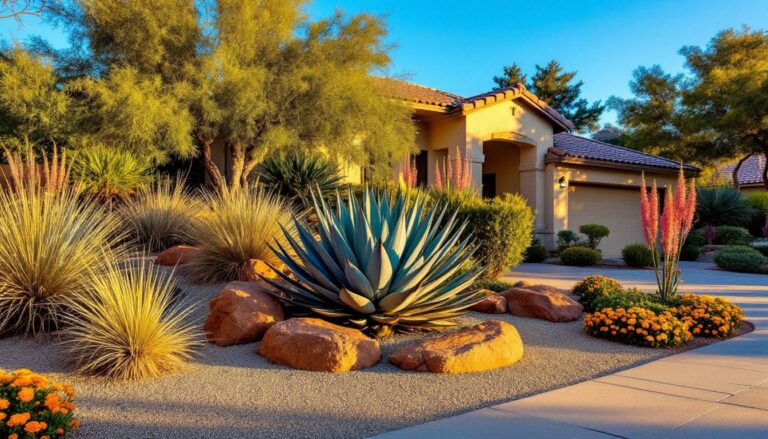
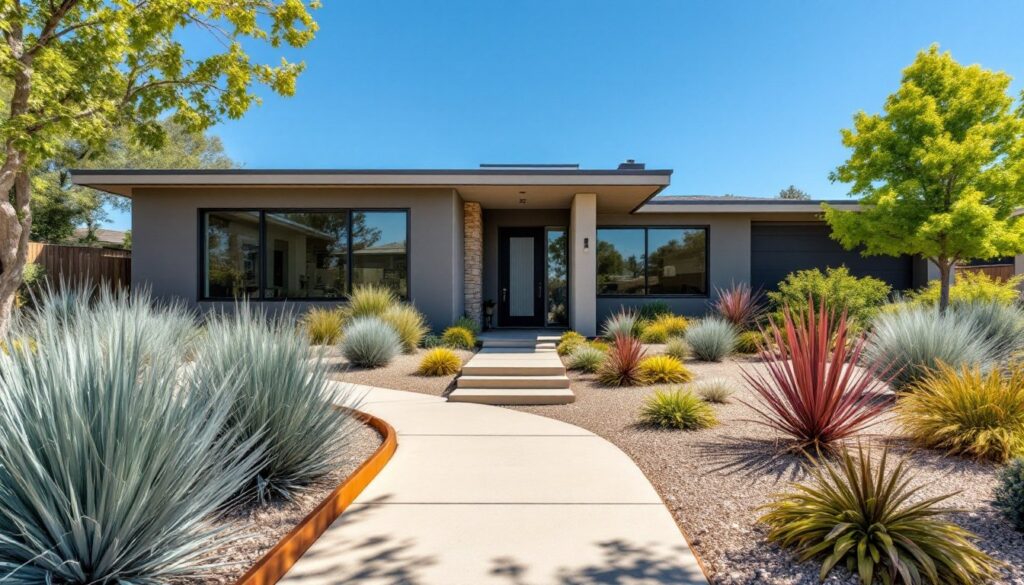
Mass plantings work better than mixed borders for contemporary looks. Grouping five to seven of the same species creates visual impact and simplifies watering zones. Pair bold, architectural specimens (agaves, yuccas, ornamental grasses) with low groundcovers for layered texture without clutter.
Color palette should lean restrained. Modern schemes often use two to three plant colors plus foliage tones, think silver-blue succulents against rust-colored gravel, or purple-toned grasses punctuated by chartreuse sedums. Avoid the “collector’s garden” look with too many competing hues.
Hardscape defines the bones. Use clean-edged materials like poured concrete, steel edging, or stacked stone in consistent geometric shapes. Curves can work, but keep them sweeping and minimal rather than fussy. The hardscape-to-planting ratio in successful modern designs often runs 60:40 or even 70:30, which naturally reduces water demand while amplifying architectural plants.
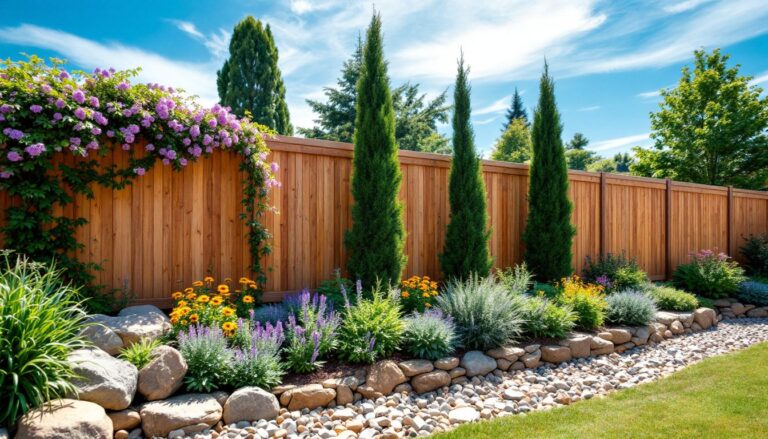
Grade and drainage matter as much as aesthetics. Ensure the yard slopes away from the foundation at 1/4 inch per foot minimum. Swales or dry creek beds can manage runoff while adding visual interest, just size them for actual storm volume, not decoration.
Best Drought Tolerant Plants for Contemporary Curb Appeal
Plant selection should balance water efficiency with year-round structure. In USDA zones 7-10, blue fescue (Festuca glauca) and Mexican feather grass (Nassella tenuissima) provide movement and soft texture with almost zero supplemental water after establishment. Space them 12-18 inches on center for full coverage within a season.
For vertical accents, desert spoon (Dasylirion wheeleri) and red yucca (Hesperaloe parviflora) deliver bold form without the aggression of larger agaves. Both handle full sun and need water only during extreme drought once roots are down, typically 6-12 months after planting.
Succulent groundcovers like Sedum ‘Angelina’ or Delosperma (ice plant) spread readily and tolerate foot traffic near pathways. They’re excellent for front yard inexpensive solutions, often available in 4-inch pots for $3-$5 each at big-box nurseries. Plant on 8-10 inch spacing for coverage in one growing season.
Shrubs add mass without bulk. Texas sage (Leucophyllum frutescens) blooms after summer rains with purple or white flowers and needs pruning only once annually to maintain shape. Manzanita (Arctostaphylos) offers sculptural branching and evergreen foliage but requires well-drained soil, amend clay with 30-40% pumice or decomposed granite before planting.
Avoid plants that look drought tolerant but aren’t. Lavender, for instance, needs excellent drainage and can rot in heavy soils even though low water needs. When combining stone elements with plantings, place the most water-efficient species in the hottest, driest zones, typically near paving or south-facing exposures.
Hardscaping Elements That Define Modern Xeriscaping
Hardscaping isn’t filler, it’s the structural vocabulary of modern drought tolerant design. Decomposed granite (DG) remains a workhorse material: permeable, affordable at $35-$50 per cubic yard, and available in neutral tones. Stabilized DG blends include a polymer binder that resists erosion and tracks less than loose types. Compact it in 2-3 inch lifts over compacted base rock for durability.
Gravel mulches in 3/8-inch to 3/4-inch sizes provide excellent weed suppression and soil temperature moderation. Dark gravels (basalt, lava rock) absorb heat, great for heat-loving plants but brutal near seating areas. Light-colored crushed granite or river rock reflects heat and stays cooler underfoot.
Concrete can be contemporary without being stark. Broom-finished or light sandblasted surfaces add texture while maintaining clean lines. Poured-in-place edging eliminates the maintenance gap between beds and pathways. For residential landscaping projects, a 4-inch thick, 3,000 PSI mix handles foot traffic and occasional vehicle crossings if reinforced with 6×6 W1.4xW1.4 welded wire mesh.
Corten steel edging weathers to a stable rust patina and provides crisp bed definition at 1/4-inch thickness. It costs more upfront, $8-$12 per linear foot installed, but lasts decades and pairs beautifully with decorative rock.
Permeable pavers deserve consideration for driveways and front paths. They meet stormwater ordinances in many jurisdictions while maintaining modern aesthetics. Install over 4-6 inches of open-graded base and sweep polymeric sand or fine gravel into joints for stability.
Smart Irrigation and Water-Saving Strategies
Even drought tolerant landscapes need establishment irrigation, typically 12-18 months of supplemental water while roots develop. Drip irrigation delivers water directly to root zones with 90-95% efficiency versus 50-70% for spray heads.
Design zones by plant water needs. Group high-water specimens (if any) on a separate valve from low-water areas. Use 1/2-inch polyethylene mainline with 1/4-inch distribution tubing and emitters rated at 0.5 to 2 gallons per hour depending on plant size. Space emitters 12-18 inches apart for groundcovers, 2-3 per shrub for established specimens.
Pressure-compensating emitters maintain consistent output across elevation changes and long runs, critical for sloped front yards. Inline drip tubing works well for mass plantings and costs less per linear foot than individual emitters.
Controllers should have rain and soil moisture sensor inputs. Models with weather-based adjustments (ET controllers) modify watering based on evapotranspiration data and can cut water use another 20-30% compared to fixed schedules. Many water districts offer rebates on smart controllers.
Mulch over drip lines with 2-3 inches of organic material in planting beds, gravel elsewhere. Mulch reduces evaporation, moderates soil temperature, and hides irrigation components. Don’t pile it against plant crowns, leave 2-3 inches clear to prevent rot.
After establishment, many native and adapted plants in appropriate climates survive on rainfall alone. Gradually extend watering intervals during the second growing season, monitoring plant stress. Slight leaf curl or color change signals it’s time to water: permanent wilting means you’ve waited too long.
DIY Installation Tips for Homeowners
Site prep determines success. Remove existing turf by cutting 2-3 inch deep sod sections with a flat spade or renting a sod cutter ($75-$100/day). Strip down to native soil, don’t just cover grass with fabric and rock, decomposing turf creates uneven settling and nutrient problems.
Test soil before amending. Most drought tolerant plants prefer lean, well-drained soils. If working with heavy clay, incorporate 30-40% coarse sand or pumice to a depth of 8-12 inches in planting beds. Avoid fine sand, it can cement clay tighter. For rock-based designs, focus drainage amendments only in plant pockets, not under hardscape.
Landscape fabric is optional and often problematic. It degrades, surfaces through gravel, and roots penetrate it within a few years. If you use it, choose commercial-grade woven polypropylene (3-4 oz. per square yard minimum), not the flimsy box-store rolls. Cut generous X-shaped slits for plants.
Layout hardscape first, plants second. Stake pathways and bed edges with marking paint, then install edging and base materials. For gravel beds over fabric, lay fabric, add 2-3 inches base rock, then top with decorative gravel. Without fabric, install 3-4 inches total depth of gravel directly over compacted soil.
Plant installation timing matters. Fall planting gives roots all winter to establish before summer stress. Dig holes 2-3 times the root ball width but no deeper, plants should sit at grade or slightly high in amended soils. Backfill with native soil unless you’ve amended the entire bed.
Watering during establishment is critical. Even succulents need consistent moisture for the first 4-8 weeks. Taper frequency as roots spread, shifting from daily to weekly, then biweekly, then monthly over the first year. Deep, infrequent watering builds drought resilience better than frequent shallow watering.
PPE and tools: Wear leather gloves when handling agaves, yucca, or cactus, spines are vicious. Safety glasses prevent eye injury from debris when cutting steel edging or breaking rock. A plate compactor ($60-$80/day rental) is essential for DG and gravel paths over 200 square feet. Hand tampers work for smaller areas but demand more time and elbow grease.
Conclusion
Modern front yard drought tolerant landscaping isn’t a compromise, it’s a design advantage. Clean lines, bold plants, and durable materials create landscapes that perform in heat, cold, and water scarcity while demanding less time on weekends. Start with a clear plan, invest in proper site prep, and choose regionally adapted plants that match the aesthetic you’re after. The upfront effort pays back in lower water bills, less maintenance, and a front yard that works with the climate instead of fighting it.